

Illustrative dental hygienist demonstrating home care to an implant patient
Restorative Dentistry

Dental Implant Cleaning

Keep implant care connected to the tissues that support your restoration. Arrange dental implant cleaning in Milton to review plaque control, cleaning access, and changes that may need more than a routine maintenance visit.

A closer look at implant cleaning

The replacement tooth still needs a daily care routine.

Dental implant cleaning focuses on the restoration and the tissues around it. An implant-supported tooth cannot develop a cavity in the same way a natural tooth can, but the surrounding gum and bone can still develop problems. Keeping the area clean and reviewing its condition remain important.

The right home-care method depends on the design you have. Cleaning around a single implant crown is different from reaching beneath a fixed bridge or caring for attachments under a removable denture. A routine should be demonstrated for your restoration rather than copied from a general product recommendation.

At Milton Dental Clinic, tell us which areas are difficult to reach and whether you have noticed bleeding, tenderness, or a change in taste. A cleaning appointment can include a discussion of access and technique, while findings suggesting disease or a mechanical problem may need a separate treatment plan.

Arrange implant cleaning and review
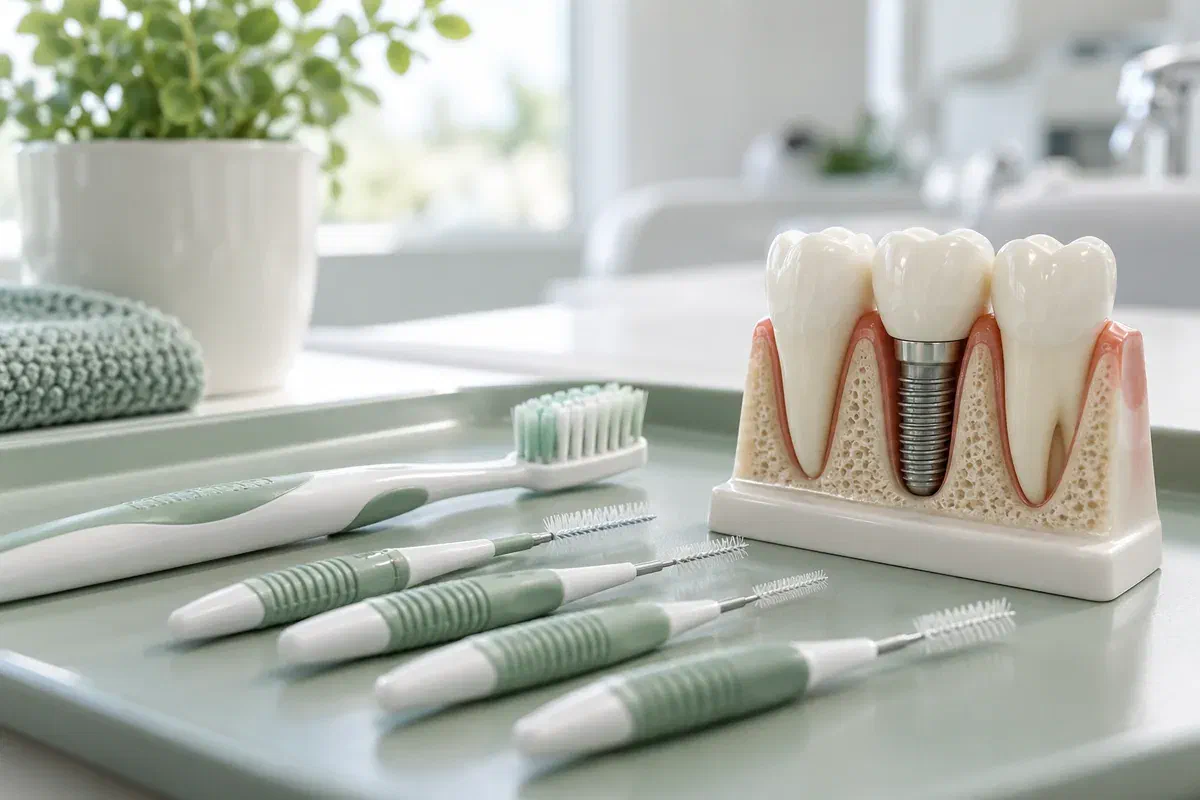
Soft toothbrush and interdental brushes beside an implant teaching model
What deserves attention

Comfort alone does not tell you how the area is doing.

Implant maintenance combines your daily observations with professional assessment. Bring concerns about the tissues and the restoration itself, even if the implant tooth still feels comfortable during meals.

Bleeding or tenderness around the implant

Report bleeding during brushing or cleaning between the teeth. The team can assess the tissues and help distinguish a technique issue from inflammation that needs attention, rather than advising you simply to avoid the area.

An area you cannot clean confidently

Describe where a brush or cleaning aid will not pass comfortably. The design and available space matter, and forcing a tool into a tight area is not a substitute for a suitable demonstration.

Food collection or a changing restoration

Persistent food trapping, a new gap, or movement in a crown or bridge should be discussed. These concerns may involve the restoration as well as hygiene, so a maintenance visit should not treat every problem as a need for more cleaning.

A loose implant restoration, swelling, discharge, or increasing discomfort needs assessment. Contact the clinic rather than waiting for a routine cleaning appointment to address a changing concern.

The purpose of ongoing maintenance

Combine professional care with a routine you can actually use.

Professional implant maintenance can address deposits and review the condition of the surrounding tissues. It also gives you an opportunity to check whether the tools and techniques used at home are reaching the areas they are intended to clean.

Cleaning is not a guarantee against implant complications, and established disease may require more than a routine maintenance appointment. The team should explain concerning findings and any need for further assessment, treatment, or specialist input.

Patient information: American Academy of Periodontology — peri-implant diseases

A review tailored to your restoration

The appointment can take account of whether you have a crown, bridge, or removable implant-retained appliance. Bring details of previous treatment if the restoration was made elsewhere so the team can understand the existing arrangement.

Practical help with difficult access

A demonstration can make the routine more manageable than a list of products alone. Tell the team if dexterity, vision, or gagging makes a suggested method difficult so alternatives can be discussed.

A record of changes over time

Regular review allows current findings to be considered alongside earlier records where available. Ask what is being monitored and how the recommended interval relates to your history and present needs.

Your implant maintenance visit

Review the tissues, clean appropriately, and practise the routine.

The appointment should reflect your implant history and current findings. If the area has recently been treated surgically, make sure the team knows so care can be coordinated with the clinician overseeing healing.

  1. Update the implant and health history

    Discuss the type of restoration, previous maintenance, any past gum disease, and changes in symptoms or health. Mention how you clean the area and which parts of the routine are difficult to maintain.

  2. Assess the tissues and restoration

    The clinician checks relevant findings around the implant and considers whether additional records or investigations are indicated. Any concern about inflammation, support, or the restoration should be explained before assuming routine cleaning is sufficient.

  3. Provide cleaning suited to the implant

    The team uses an approach appropriate to the implant surfaces, restoration, and clinical findings. Let them know if an area is sensitive and ask about the purpose of any additional care recommended during the visit.

  4. Demonstrate home care and agree on review

    Practise the recommended technique for your restoration and clarify which tools fit the available spaces. The follow-up interval is discussed in relation to your needs, with instructions about changes that should prompt an earlier call.

Between maintenance appointments

Make daily access part of the plan.

A consistent routine needs to be comfortable enough to use and specific enough to reach the right areas. Ask for help with the technique rather than repeatedly buying products that do not fit your restoration.

Use the demonstrated tools and sizes

A cleaning aid should suit the space and restoration. Follow the clinician’s guidance on placement and movement, and ask for another demonstration if you are uncertain instead of forcing a brush or threader through resistance.

Care for removable components as instructed

If your appliance comes out, ask how to clean both the appliance and the attachments in the mouth. Confirm which products are suitable for its materials and avoid using a household cleaner as a substitute.

Keep track of persistent changes

Bleeding, soreness, recurring food trapping, or a change in how the restoration feels deserves attention. Contact the team if a problem persists, even when your next planned maintenance visit is some time away.

Choosing the level of care

Maintenance and treatment serve different purposes.

The findings determine whether a routine cleaning plan is appropriate or whether a specific problem needs further care. Ask what has been identified and which part of the recommendation addresses it.

When the site is stable

Routine professional maintenance

Ongoing review and cleaning can be planned around a healthy or appropriately managed implant site. The interval and home-care instructions should reflect your individual history rather than a single schedule for everyone.

When the tissues need treatment

Care for inflammation around the implant

Inflammation requires assessment of its extent and contributing factors. The clinician can explain whether improved plaque control and professional care are sufficient or whether further investigations and treatment are indicated.

When cleaning alone cannot solve the concern

Review of the restoration or specialist care

A difficult-to-maintain design, loose component, or disease affecting support may need a broader response. Ask whether restorative changes or specialist assessment should be considered alongside your ongoing hygiene routine.

Questions about keeping implants clean

Build a routine around the restoration you have.

There is no need to guess which tool belongs in which space. Use your appointment to practise the technique and understand what signs should bring you back for a review.

(905) 876-4488
Why does an implant need cleaning if it cannot get a cavity?
The implant and restoration do not decay like natural tooth structure, but plaque can affect the tissues around them. Cleaning and review help address that separate concern. The surrounding natural teeth also continue to need their usual preventive care.
Is a water flosser enough to care for every implant restoration?
No single product should be assumed to meet every cleaning need. Ask the clinician to assess your restoration and demonstrate a suitable routine. A water flosser may be discussed as part of that routine, but its role depends on access, technique, and other care requirements.
Should I stop cleaning around an implant because the gum bleeds?
Arrange an assessment and ask for guidance on a gentle, appropriate technique. Avoid simply abandoning the area or scrubbing more aggressively. Bleeding can indicate inflammation or another concern, and the team needs to understand why it is happening.
Does a fixed implant bridge have to be removed at every cleaning visit?
Not necessarily. The design, access, condition, and clinical findings determine what is appropriate. Ask whether the restoration can be adequately assessed and maintained in place and why removal is or is not recommended. Never attempt to detach a fixed bridge yourself.
Can implant maintenance be arranged if my implants were placed elsewhere?
Contact the clinic to discuss the restoration and available records. Details of the implant system, previous treatment, and maintenance history can be helpful. The team will need to assess the current situation and explain whether any additional information or referral is required.
How often should my implant cleaning appointments be scheduled?
The interval should be individualized. Previous gum disease, current tissue findings, plaque control, health factors, and the restoration’s design can influence the plan. Ask why a particular schedule is recommended and whether it should change if your condition or ability to clean changes.
Dental implant cleaning in Milton

Let’s make ongoing implant care manageable.

Arrange a visit at our Bronte Street clinic to review your implant restoration and daily cleaning routine. We can discuss access, assess areas of concern, and help you understand the maintenance or additional care your mouth needs.

Mention swelling, discharge, movement, or increasing discomfort when calling so the team can discuss an assessment rather than assuming the visit is routine maintenance.

Visit Milton Dental Clinic
Unit 1, 342 Bronte St. S, Milton, ON L9T 5B7
Get directions Clinic hours
Monday–Thursday
11am–7pm
Friday–Sunday
By appointment only

How can we help?

Milton Dental Clinic

Have a question about your smile? Choose the option that works best for you.

For urgent dental concerns, please call.
Messages are reviewed during clinic hours.