

Illustrative dental hygienist demonstrating home care to an implant patient
Restorative Dentistry

Dental Implant Cleaning in Campbellville

Implant trouble does not always hurt. A faint metallic or sour taste, a little puffiness at the gumline, a crown that seems slightly different: from Campbellville, bring those quiet signs to our team for cleaning, a careful exam and straight answers.

Quiet signs around an implant

No pain is not the same as no problem

Many people judge an implant by one test: does it hurt? Unfortunately, inflammation around an implant can develop with little or no discomfort. A taste you cannot place, tissue that looks a bit swollen, or occasional bleeding may be the only early hints.

That inflammation happens in the gum and bone rather than the crown, which cannot decay. Plaque is the usual trigger, and where it builds depends on your restoration. Single crowns, bridges spanning a gap and dentures that clip onto implants each leave different hard-to-reach surfaces.

At your appointment, describe even the faint changes, including taste, odour, puffiness or bleeding. Our team cleans around the restoration, reviews how you reach each surface and explains honestly if the exam suggests disease or a component issue that needs a dedicated plan.

Have those quiet signs checked
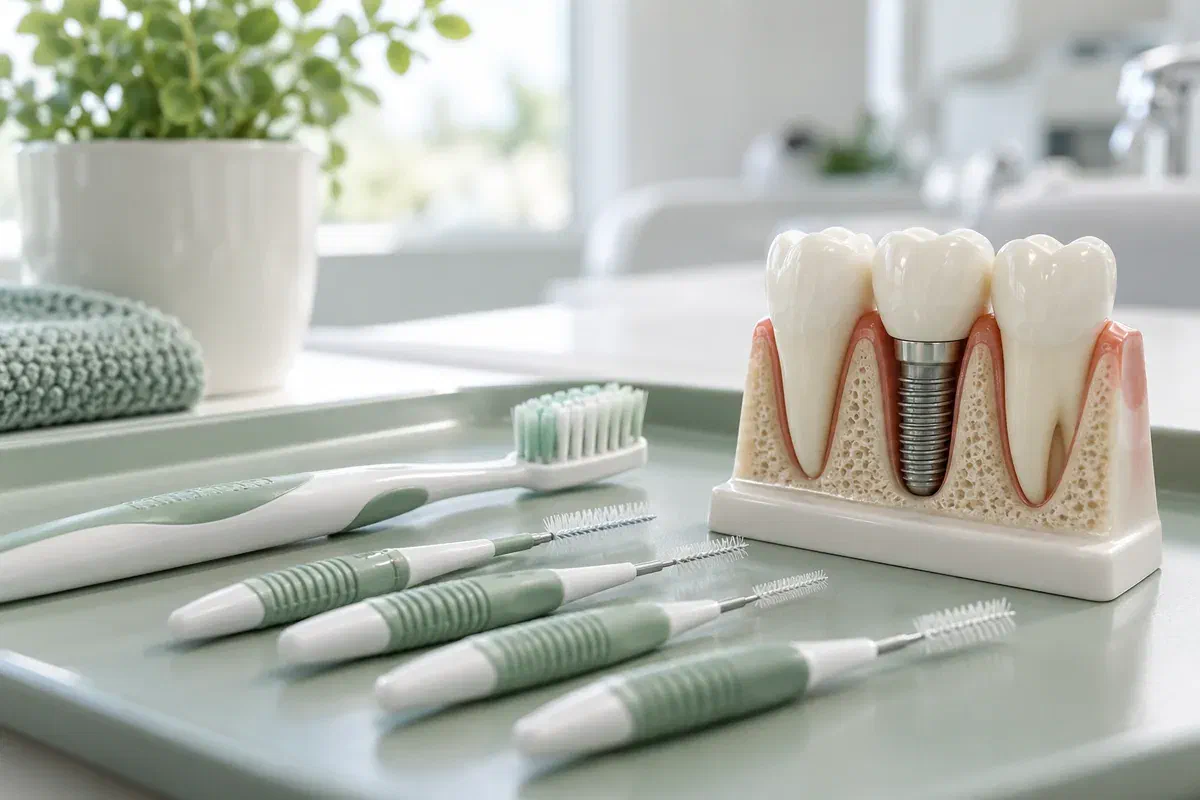
Soft toothbrush and interdental brushes beside an implant teaching model
Easy to overlook

Subtle changes worth a closer look

You may be the first to notice something small; the exam shows what is happening beneath. Mention changes to the gum or restoration even if the tooth still feels entirely normal to chew on.

Puffy, tender or bleeding gum

Gum that looks fuller than usual or bleeds when you clean near the implant is worth raising. An examination can sort out whether the cause is your method or inflammation that requires care, so the area is not simply left alone.

Surfaces you have quietly given up on

If a brush will not go somewhere, that spot may be collecting plaque unnoticed. Restoration shape and spacing decide what fits; a demonstration on your own mouth helps far more than force.

Odd tastes, odours or a shifting crown

A persistent taste or smell, food packing or any looseness in a crown or bridge may involve the restoration as well as hygiene. Such changes deserve investigation, not just extra cleaning.

Swelling, discharge, a restoration that moves or discomfort that keeps growing should be seen promptly. Phone the clinic rather than holding out for your next routine visit.

Why routine checks earn their place

Catching what you cannot feel

Professional maintenance clears deposits and gives the clinician a regular, careful look at the tissue around your implant, which is where quiet changes tend to show first. It also confirms whether your home aids are reaching the surfaces they are supposed to clean.

No schedule of cleanings can rule out implant complications, and established disease may need more than maintenance. When something concerning is found, we explain it and talk about whether further assessment, treatment or specialist care is the sensible next step.

Patient information: American Academy of Periodontology — peri-implant diseases

An exam suited to your restoration

What we check depends on whether you have a crown, a bridge or an implant-supported denture that comes out. If another office did the work, bring details so we know how the restoration was built.

Methods that fit your hands and habits

Being shown a technique usually makes it easier to keep doing. Tell us if grip, sight or gagging makes a method awkward, and we will look for an alternative.

A record that reveals slow change

Quiet problems often show up as small differences between visits. Comparing findings with earlier records, where available, helps. Ask what is being watched and how your interval was set.

A visit from Campbellville

Looking carefully, then cleaning

The appointment reflects your implant history and what the exam shows. If you have had recent surgery near the implant, let us know so our care fits with the clinician following that healing.

  1. Describe the small things

    We ask about the restoration, past maintenance, any history of gum disease and changes in your health. Mention tastes, odours or puffiness, however minor they seem.

  2. Examine the tissue closely

    The clinician assesses the gum and restoration and decides if images would add useful information. Any sign of inflammation, support loss or a restoration fault is explained before cleaning is accepted as enough.

  3. Clean around the implant

    Our methods suit the implant surfaces, the restoration and today's findings. Flag tender areas, and ask what each extra step of care is meant to do.

  4. Practise and set the next date

    You try out the method in the chair while we confirm the aid sizes that suit each gap. We agree on a return interval and go over the subtle signs that should prompt an earlier call.

Between visits at home

Keep looking, keep cleaning

A good routine is gentle, regular and aimed at the right places. If something is not working, ask us to adjust your technique rather than buying products that do not match your restoration.

Use the tools you practised with

Interdental brushes or threaders should match each space. Place them as shown, and if one catches or you feel unsure, ask for a refresher rather than pushing it through.

Care for a removable denture properly

If your appliance comes out, follow the instructions for cleaning the denture and the implant posts. Use products suited to its materials and skip household cleaners.

Take a weekly look in the mirror

Puffiness, bleeding, soreness, recurring trapped food or a new taste are worth noting. If a change persists, call us, even if your next visit is a while off.

Making sense of the findings

What the exam may point to

Your findings decide whether ongoing maintenance is the right plan or a specific issue calls for treatment. Ask us to explain what we saw and how each recommendation relates to it.

Tissue is healthy

Routine maintenance

Regular cleaning and review suit an implant that is stable or well managed. Your interval and home instructions should reflect your own history rather than a general schedule.

Tissue is inflamed

Treatment for early inflammation

We assess how far the inflammation extends and what is contributing. The clinician can explain whether better plaque control with professional care may resolve it or whether further investigation and treatment are indicated.

Beyond hygiene

Restoration or specialist assessment

A design that resists cleaning, a loose part or bone loss around the implant may need a broader plan. Ask whether restorative work or specialist input should accompany your routine.

Campbellville implant questions

Spotting quiet implant changes

You do not need to diagnose anything yourself. Bring what you have noticed, practise your routine with us and learn which signs mean you should call.

(905) 876-4488
Can an implant have a problem even when it does not hurt?
Yes. Inflammation around an implant can develop with little discomfort. That is why regular examinations matter, along with reporting changes like bleeding, puffiness or an unusual taste.
What does a metallic or bad taste near my implant mean?
A taste can have several causes, including trapped debris or tissue changes. Raise it during the appointment; an exam of the area will show whether it needs further investigation.
Should the gum around my implant look a certain way?
Healthy tissue around an implant varies between people. Rather than comparing with a picture, notice changes such as swelling, redness or bleeding and ask the clinician to check them.
Can I see inflammation around an implant on my own?
Some signs, such as bleeding or swelling, may be visible, but others need a clinical examination and sometimes X-rays. Home observations are useful but do not replace a professional assessment.
If my implant feels fine, can I skip a maintenance appointment?
Feeling fine is not a reliable measure on its own. Keep to your recommended interval, and ask the clinician whether it should change based on your findings and home care.
Can rural households in Campbellville book several family members at once?
Mention it when you call, and the team can look at arranging back-to-back visits. Each person’s care will still be planned around their own needs and findings.
Implant care close to Campbellville

Bring us the small signs

Our Bronte Street practice can check the tissue around your implant, clean the restoration and review how you care for it at home. We will explain what we find and whether routine upkeep or additional treatment makes sense.

When you call, mention swelling, discharge, movement or increasing pain, so the team can set up an assessment rather than a routine maintenance visit.

Visit Milton Dental Clinic
Unit 1, 342 Bronte St. S, Milton, ON L9T 5B7
Get directions Clinic hours
Monday–Thursday
11am–7pm
Friday–Sunday
By appointment only

Areas we serve

  • Milton
  • Oakville
  • Mississauga
  • Georgetown
  • Halton Hills
  • Acton
  • Campbellville
  • Brampton
  • Burlington
  • Puslinch
  • Rockwood
  • Erin
  • Caledon
  • Etobicoke
  • Old Milton
  • Bronte Meadows
  • Timberlea
  • Dorset Park
  • Dempsey
  • Clarke
  • Beaty
  • Coates
  • Harrison
  • Scott
  • Willmott
  • Ford
  • Bowes
  • Cobden
  • Walker
  • Mountain View
  • Milton Heights
  • Hawthorne Village
  • Valley View
  • Fallingbrook
  • Nassagaweya
  • Trafalgar
  • Esquesing
  • Nelson
  • Brookville
  • Moffat
  • Glen Williams
  • Norval
  • Limehouse
  • Stewarttown
  • Ashgrove
  • Hornby
  • Silver Creek
  • Speyside
  • Scotch Block
  • North Oakville
  • River Oaks
  • Glen Abbey
  • West Oak Trails
  • Palermo
  • Bronte Creek
  • College Park
  • Joshua Creek
  • Uptown Core
  • Preserve
  • Iroquois Ridge
  • Lisgar
  • Meadowvale
  • Meadowvale Village
  • Churchill Meadows
  • Erin Mills
  • Central Erin Mills
  • Streetsville
  • East Credit
  • Creditview
  • Heartland
  • Sheridan
  • Mount Pleasant
  • Credit Valley
  • Huttonville
  • Churchville
  • Springbrook
  • Northwest Brampton
  • Bram West
  • Fletcher's Meadow
  • Fletcher's Creek South
  • Alton Village
  • Orchard
  • Millcroft
  • Headon Forest
  • Tansley
  • Brant Hills
  • Tyandaga
  • Kilbride
  • Lowville
  • Aberfoyle
  • Morriston
  • Arkell
  • Hillsburgh
  • Freelton
  • Carlisle
  • Waterdown
  • Flamborough
  • Mountsberg

How can we help?

Milton Dental Clinic

Have a question about your smile? Choose the option that works best for you.

For urgent dental concerns, please call.
Messages are reviewed during clinic hours.