

Illustrative dental hygienist demonstrating home care to an implant patient
Restorative Dentistry

Dental Implant Cleaning in Erin

Helping a parent or partner look after their implants? Bringing them in from Erin, you can both learn the routine at our Milton practice. We clean the restoration, check the gum and show the person helping exactly where and how to reach.

For the person who helps

Cleaning implants in someone else's mouth

Brushing another adult's teeth is awkward for both of you, and implants add questions. Which surfaces matter? How firm should you be? What is normal, and what should prompt a phone call? Many family helpers end up guessing, or quietly skipping the hard parts.

The key fact is simple: the implant crown or bridge cannot decay, but the gum and bone around it can become inflamed if plaque is left in place. Where plaque gathers depends on the restoration. A single crown has open sides, a fixed bridge has an underside, and a removable overdenture has attachments that remain in the mouth.

If you can, come to the appointment together. Describe any bleeding, tenderness, odd taste or reluctance to eat that you have seen. We clean the restoration, examine the tissue and demonstrate a routine you can manage as a helper, and we will explain if the findings need a separate treatment plan.

Book a visit you can attend together
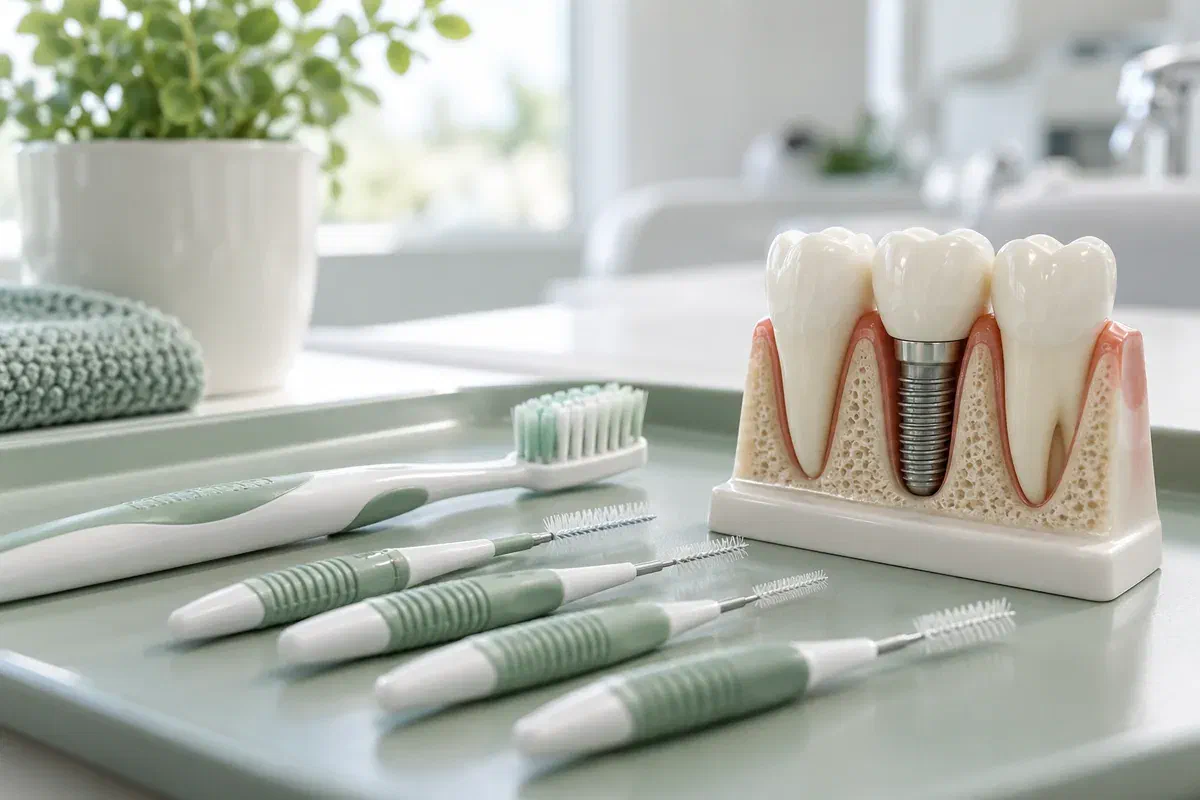
Soft toothbrush and interdental brushes beside an implant teaching model
What helpers may notice

You might see changes before they mention them

Someone who relies on help may not report discomfort or may not notice it. Your observations, combined with a clinical exam, give the clearest picture, even if the implant still seems fine at meals.

Bleeding or wincing during cleaning

If the gum bleeds or the person flinches when you clean near an implant, mention it. An exam can show whether your technique needs adjusting or the tissue is inflamed, so the area is not simply avoided out of caution.

Areas you cannot see or reach

Light, angle and the person's comfort all affect access. Tell us which spots are hardest, and we can show positions and aids that help rather than having you push a tool where it will not go.

Changes in eating, fit or food trapping

Food left around the implant, a denture that no longer clicks firmly, a new gap or a crown that moves may involve the restoration. Those changes need assessment, not just extra cleaning.

Swelling, discharge, a loose restoration or signs of increasing pain, including refusing to chew on one side, should be checked promptly. Call the clinic rather than waiting for the next routine visit.

Why professional visits matter

Support for the patient and for you

Maintenance appointments remove deposits that are hard to reach from outside the mouth and give the clinician a close look at the tissue around each implant. They are also a chance for you, as the helper, to check that the routine at home is reaching the right surfaces.

Careful cleaning cannot guarantee that complications will not occur, and established disease may need treatment beyond maintenance. When the team finds something concerning, it will be explained to both of you, along with any need for further assessment, care or specialist input.

Patient information: American Academy of Periodontology — peri-implant diseases

A routine matched to the restoration

Crowns, bridges and removable implant dentures each need a different approach from a helper. If the work was done elsewhere, bring any records or cards so the team understands the design.

Hands-on coaching for the helper

Practising on the actual person, with guidance, is far easier than following written steps. Let us know about mobility, memory, vision or gagging concerns so the method can be adapted.

A shared record of changes

Each visit adds findings that can be compared with earlier notes where available. Ask what is being watched, so you know what to keep an eye on between appointments.

Coming in from Erin

How a shared appointment works

We plan the visit around the implant history, today's findings and the support available at home. If there has been recent surgery near the implant, let us know so we can align our care with the clinician overseeing that recovery.

  1. Hear from both of you

    We review the restoration, past maintenance, any gum disease, medications and health changes. The patient and helper can each describe what happens at home and what feels difficult.

  2. Examine the tissue and restoration

    The clinician checks around each implant and the restoration itself, and decides whether imaging is useful. Signs of inflammation, reduced support or a component problem are explained before cleaning is considered sufficient.

  3. Clean, with comfort in mind

    Methods are chosen to suit the implant and restoration, and we pause when needed. Mention anything that seems to cause discomfort, and ask what any added care is for.

  4. Teach the helper and plan ahead

    The helper practises positioning and the recommended aids with our guidance. We agree on a return interval and list the changes that should prompt a call before then.

Helping at home

Gentle, regular, and shared

A routine works when it is comfortable for the person receiving care and realistic for the person giving it. If a step is not working, call to ask about technique before trying new products that may not suit the restoration.

Position for a clear view

Use the seating and lighting arrangement you practised, along with the recommended aids and sizes. If an aid catches or you are unsure, ask for another demonstration instead of forcing it.

Clean a removable denture and its posts

If the appliance comes out, clean it as instructed and also brush the implant attachments left in the mouth. Use products suited to its materials, never household cleaners.

Keep a simple note of changes

Bleeding, soreness, food trapping, a change in fit or reluctance to eat is worth writing down. Contact us if it continues, even when the next maintenance visit is weeks away.

If the exam finds a problem

Care that fits the finding

Whether ongoing upkeep is enough or a specific problem needs treatment depends on the exam. Ask the clinician to explain what was seen and how each recommendation relates to it, so you can plan as a family.

The implant is stable

Ongoing maintenance

Regular cleaning and review suit a healthy or managed implant. The interval can take into account how much help is available at home and the person's history.

The gum needs care

Treatment for inflamed tissue

We assess how far the inflammation reaches and what may be contributing. You will both hear if stronger home care alongside professional cleaning looks likely to help, or if tests and treatment should follow.

The design or support is the issue

Restorative or specialist options

When a helper simply cannot reach beneath the restoration, a part has worked loose or bone has receded, a broader plan may be needed. Ask whether design changes or specialist assessment would make care more manageable.

Questions from helpers in Erin

Caring for implants as a family helper

Neither of you should have to work this out alone. Practise together during the appointment, and leave knowing which signs should lead to a phone call.

(905) 876-4488
Can I attend my parent's implant appointment to learn the routine?
Yes, with the patient’s agreement. Being present lets you watch the demonstration, practise with guidance and ask questions about what you see at home.
What is the safest position for cleaning someone else's implants?
It depends on mobility and comfort. Many helpers find it easier to stand behind or beside a seated person with good lighting. The team can show you positions that suit your situation.
How can I tell if the gum around an implant is inflamed?
Bleeding, swelling, redness or tenderness may be signs, though some changes are only visible on examination. Note what you see and mention it so the clinician can check the tissue.
What if the person I care for resists having their mouth cleaned?
Mention it at the appointment. The team can suggest shorter sessions, different aids or timing, and if memory or behavioural changes are involved, may discuss coordinating with their other care providers.
Should a removable implant denture be taken out at night?
Follow the specific instructions for the appliance. Ask the clinician how long it should be left out each day and how it should be stored.
How do we plan visits from Erin when the patient needs extra assistance?
Mention any mobility needs or the time required when you call, and the team will suggest how to arrange the appointment so it is as comfortable as possible.
Implant care for Erin families

Learn the routine together

At our Bronte Street practice, we can review the implant restoration, clean around it and coach both patient and helper on a routine for home. We will check access, look at any concerns and explain what ongoing maintenance or further care is needed.

If you notice swelling, discharge, movement or increasing pain, mention it when calling, and the visit can be set up as an assessment rather than routine care.

Visit Milton Dental Clinic
Unit 1, 342 Bronte St. S, Milton, ON L9T 5B7
Get directions Clinic hours
Monday–Thursday
11am–7pm
Friday–Sunday
By appointment only

Areas we serve

  • Milton
  • Oakville
  • Mississauga
  • Georgetown
  • Halton Hills
  • Acton
  • Campbellville
  • Brampton
  • Burlington
  • Puslinch
  • Rockwood
  • Erin
  • Caledon
  • Etobicoke
  • Old Milton
  • Bronte Meadows
  • Timberlea
  • Dorset Park
  • Dempsey
  • Clarke
  • Beaty
  • Coates
  • Harrison
  • Scott
  • Willmott
  • Ford
  • Bowes
  • Cobden
  • Walker
  • Mountain View
  • Milton Heights
  • Hawthorne Village
  • Valley View
  • Fallingbrook
  • Nassagaweya
  • Trafalgar
  • Esquesing
  • Nelson
  • Brookville
  • Moffat
  • Glen Williams
  • Norval
  • Limehouse
  • Stewarttown
  • Ashgrove
  • Hornby
  • Silver Creek
  • Speyside
  • Scotch Block
  • North Oakville
  • River Oaks
  • Glen Abbey
  • West Oak Trails
  • Palermo
  • Bronte Creek
  • College Park
  • Joshua Creek
  • Uptown Core
  • Preserve
  • Iroquois Ridge
  • Lisgar
  • Meadowvale
  • Meadowvale Village
  • Churchill Meadows
  • Erin Mills
  • Central Erin Mills
  • Streetsville
  • East Credit
  • Creditview
  • Heartland
  • Sheridan
  • Mount Pleasant
  • Credit Valley
  • Huttonville
  • Churchville
  • Springbrook
  • Northwest Brampton
  • Bram West
  • Fletcher's Meadow
  • Fletcher's Creek South
  • Alton Village
  • Orchard
  • Millcroft
  • Headon Forest
  • Tansley
  • Brant Hills
  • Tyandaga
  • Kilbride
  • Lowville
  • Aberfoyle
  • Morriston
  • Arkell
  • Hillsburgh
  • Freelton
  • Carlisle
  • Waterdown
  • Flamborough
  • Mountsberg

How can we help?

Milton Dental Clinic

Have a question about your smile? Choose the option that works best for you.

For urgent dental concerns, please call.
Messages are reviewed during clinic hours.