Irritated gum near the implant
Trapped food often leaves the gum sore or prone to bleeding. Let us examine it and help tell apart a cleaning gap from inflammation that needs treatment, rather than leaving the area to settle on its own.

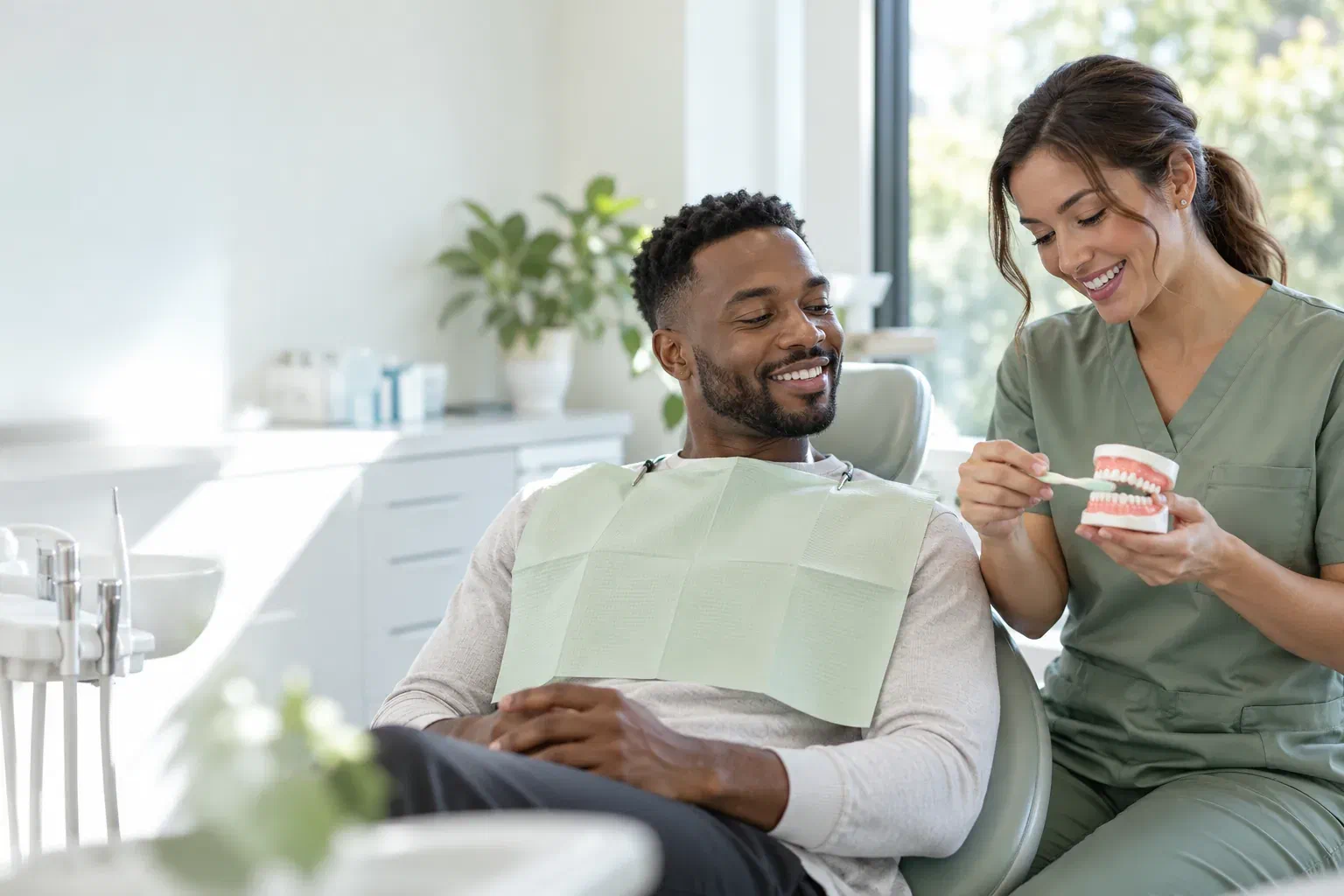
Food keeps wedging beside your implant crown after dinner. From Mississauga, our Milton team can help you find out why, clean the area properly and check whether the gum, the contact or the restoration itself needs attention.
Reaching for a toothpick after every meal can become a habit before anyone mentions it. Around an implant, though, food that packs in repeatedly is a signal. It may reflect a small space between the crown and its neighbour, the shape of the restoration, or changes in the gum.
Debris left in place feeds plaque, and while the implant crown cannot decay, the gum and bone around the implant can still become inflamed. Single crowns, bridges spanning several implants and removable dentures held by attachments each create their own pockets where food settles, so the right fix depends on your design.
Tell us which side catches food, what kinds of meals cause it, and whether you have had bleeding, tenderness or a lingering taste. We clean the site, check the contacts and restoration, and explain if the cause is mechanical or needs its own treatment plan.
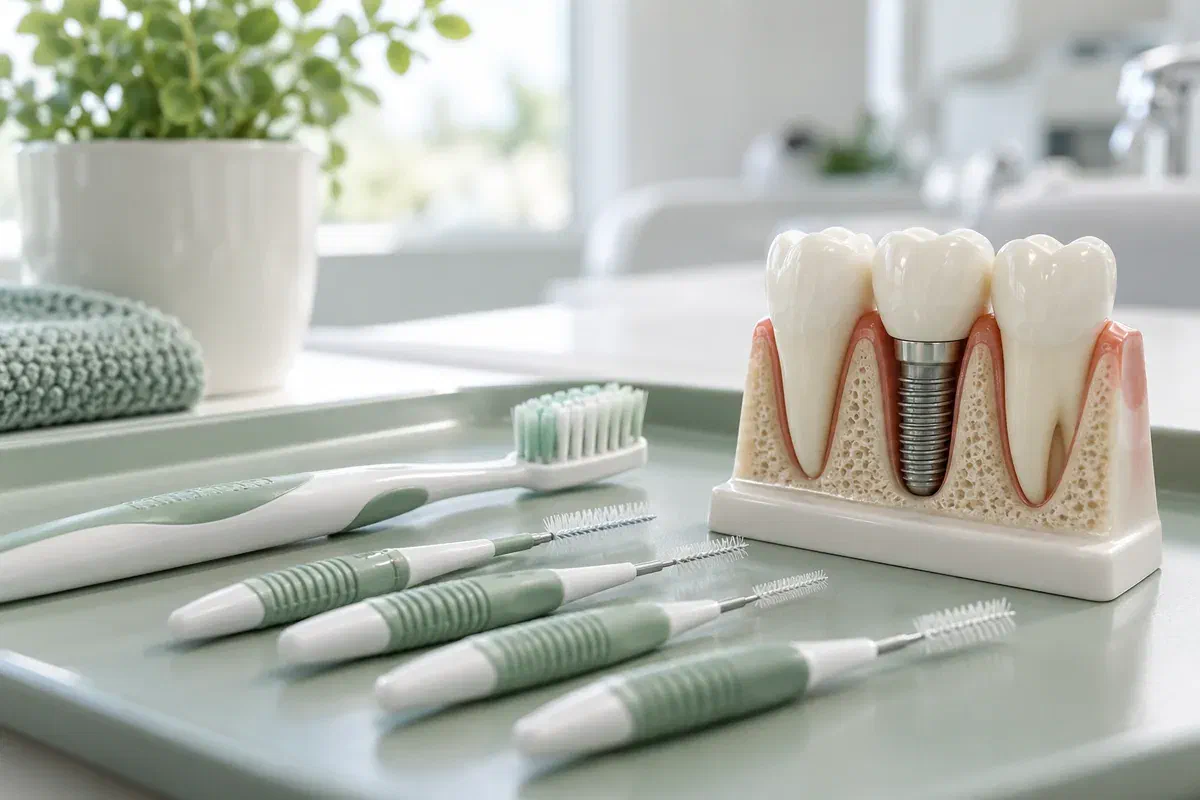
You notice the trapping; the clinician can see whether the tissue or the restoration is behind it. Share every detail you can, even if the implant still feels solid when you chew.
Trapped food often leaves the gum sore or prone to bleeding. Let us examine it and help tell apart a cleaning gap from inflammation that needs treatment, rather than leaving the area to settle on its own.
Floss that tears or an interdental brush that jams suggests the space and the aid are mismatched. Restoration shape and spacing decide what will work, and a demonstration beats pushing harder.
A gap that was not there before, or a crown or bridge that seems to shift, may mean the restoration needs attention. In that case more cleaning alone will not stop the food from collecting.
Call the clinic about swelling, discharge, a moving restoration or pain that is building. Those changes need assessment sooner than your next scheduled maintenance visit.
A maintenance visit removes deposits from places home aids struggle to reach and lets the clinician study the tissue around the implant. It also checks your routine, showing whether the aids in your bathroom actually clear the spaces where food is collecting.
Keeping up with cleaning does not guarantee an implant will avoid complications, and established disease may need care beyond maintenance. If we find something concerning, we will explain it and whether further assessment, treatment or a specialist's input is needed.
Patient information: American Academy of Periodontology — peri-implant diseases
Food traps differently under a bridge than beside a single crown or around denture attachments. If your implant was restored at another clinic, bring any details so we understand how it was designed and fitted.
Being shown how to angle an aid usually helps more than buying a new one. Mention if hand strength, vision or gagging makes a method difficult, so we can work out an alternative together.
Notes from each visit let later findings be compared against earlier ones. Ask what we are monitoring and how your recommended interval connects to your history and current condition.
Every visit reflects the history of your implant and what the exam reveals. If surgery has recently been done in that area, let us know first so your care stays aligned with the person monitoring your healing.
We ask which restoration you have, how it has been maintained, whether you have had gum disease and what has changed lately. Describe when food catches and how you currently clear it.
The clinician checks the gum, the spaces beside the implant and the restoration itself, and considers whether X-rays or other records are needed. Inflammation, reduced support or a restoration fault is explained before cleaning is treated as the answer.
The approach suits the implant surfaces, the restoration and what was found. Tell the team if an area is tender, and ask the purpose of any added care offered.
You try the technique for the trapping site and confirm which aids fit. We set a follow-up interval that suits you and explain which changes should bring you back early.
Comfort and accuracy keep a routine going. If something is not working, ask us to refine your technique rather than collecting products that do not suit your restoration.
Use the aid and size shown for that space, moving it the way the clinician demonstrated. If it snags or you feel unsure, ask for another look instead of forcing it through.
If your appliance comes out, learn how to clean the appliance and the attachments that remain in your mouth. Confirm which products suit its materials, and do not use household cleaners.
Food that catches every day, bleeding, soreness or a restoration that feels different all need follow-up. Get in touch if it continues, even if your next visit is a long way off.
You should not have to figure out the right aid by trial and error. Practise with us and learn which changes should prompt a call.
Book an appointment at our Bronte Street practice for a review of your implant restoration and how you clean it. We will check access and contacts, examine any area of concern and explain whether maintenance or further care is the next step.
If you notice swelling, discharge, movement or worsening pain, mention it when calling so the team can arrange an assessment instead of routine maintenance.
