

Illustrative dental hygienist demonstrating home care to an implant patient
Restorative Dentistry

Dental Implant Cleaning in Oakville

Noticed pink in the sink after brushing near your implant? From Oakville, you can bring that question to our Milton team. We look at the gum around the restoration, find out why it bleeds and show a gentle way to keep the area clean.

When the gum bleeds

Should you brush gently, harder, or not at all?

Most people react to a bleeding spot in one of two ways: they scrub it harder or they leave it alone. Neither is ideal around an implant. Bleeding usually tells you the soft tissue is irritated, and the reason is worth finding before you change anything.

An implant crown cannot decay, but the gum and bone that anchor it can still become inflamed when plaque lingers. How that plaque collects depends on the restoration. A single crown, a bridge with a space beneath it and attachments for a removable denture all trap debris in different places, and each needs its own cleaning approach.

Bring the details with you: where the bleeding shows up, how long it has been happening, and whether you have noticed tenderness or a bad taste. We clean the area, review your technique, and tell you clearly if the findings point to disease or a mechanical issue that needs a separate plan.

Book a gum and implant check
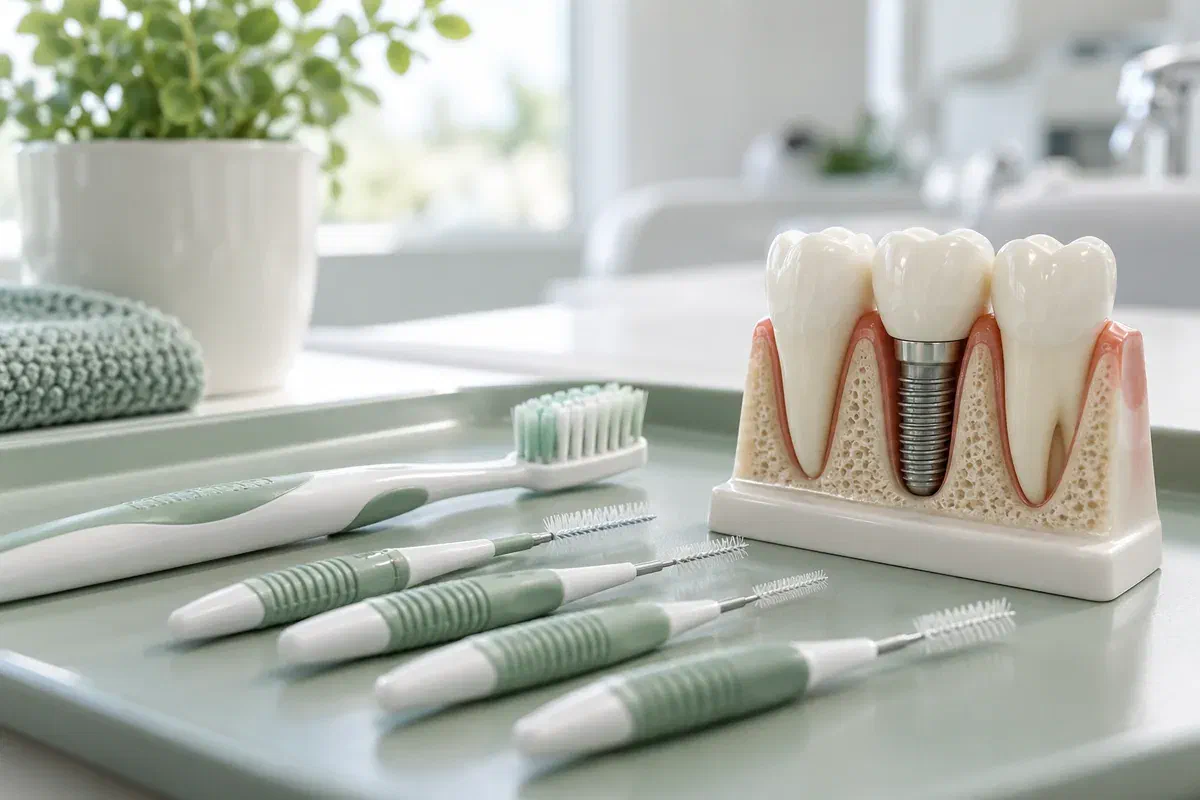
Soft toothbrush and interdental brushes beside an implant teaching model
Clues worth reporting

An easy bite is only part of the story

Implant care works best when what you notice at home meets what the clinician can measure. Mention concerns about the gum or the restoration, even if the implant tooth chews like any other.

Bleeding gums or soreness at the site

Tell us if the gum bleeds while you brush or clean between teeth. The clinician can examine it and help separate a technique problem from inflammation that needs care, rather than telling you to steer clear of the spot.

A gap you cannot clean with confidence

Point out any space where a brush or floss threader catches or will not go. The restoration's shape and the room available decide what fits, and jamming a tool in is not a fair substitute for proper guidance.

Food packing or a restoration that feels altered

Food that wedges in repeatedly, a new space or movement in a crown or bridge should be raised. Such changes can involve the restoration itself, so the fix may not simply be cleaning more often.

Swelling, discharge, a loose implant crown or pain that keeps increasing needs to be seen. Call us before your next routine visit instead of waiting it out.

What maintenance can do

Your effort at home, backed by a professional look

In the chair, the team can clear away deposits and assess the tissue surrounding your implant. The visit also tests your routine, giving you a chance to learn whether your brush, threader or other aids are really reaching their target surfaces.

Cleaning cannot promise you will avoid implant problems, and disease that is already present may need more than maintenance. If something concerning turns up, we will explain it and whether you need further assessment, treatment or a specialist's view.

Patient information: American Academy of Periodontology — peri-implant diseases

A review shaped to your restoration

A crown, a bridge and a removable implant-retained appliance each change what we look for. If another office restored the implant, bring the details so we can understand how it was put together.

Help with spaces that resist cleaning

A demonstration tends to work better than a list of products. If limited dexterity, poor vision or a gag reflex makes a method hard, tell us and we can look at other options together.

Findings you can compare over time

Each review can be read against earlier records where we have them. Ask what is being watched and how the timing of your visits relates to your history and how things look today.

Inside the appointment

Listen, examine, clean, then practise

We plan the visit around your implant's history and today's findings. If the site has had recent surgery, mention it so your care can be coordinated with the clinician managing that healing.

  1. Talk through what has changed

    We ask about the restoration, past maintenance, any history of gum disease and recent changes in symptoms or health. Describe your current cleaning steps and which ones are hardest to keep doing.

  2. Check the gum and restoration

    The clinician examines the tissue around the implant and decides whether images or other records are needed. Concerns about inflammation, support or the restoration are explained before anyone assumes a cleaning is all you need.

  3. Clean with care for implant surfaces

    Our approach is chosen to suit the implant, the restoration and what the exam found. Let the team know about tender areas, and ask what any extra care offered during the visit is for.

  4. Try the technique and set a follow-up

    You practise the method for your restoration and confirm which aid sizes fit. We discuss when to return based on your needs and which changes should bring you back sooner.

Looking after it at home

Gentle, consistent and well aimed

A routine sticks when it feels comfortable and reaches the right surfaces. If something is not working, ask us about technique rather than trying one new product after another that does not suit your restoration.

Keep to the recommended aids

Each cleaning aid should fit its space and suit the restoration. Use it as the clinician showed you, and if you are unsure or meet resistance, ask for a refresher instead of forcing a brush or threader through.

Clean removable components carefully

If your appliance comes out, find out how to clean it and the attachments in your mouth. Confirm which products are safe for its materials, and avoid household cleaners in their place.

Track bleeding that does not settle

Bleeding, tenderness, food that keeps trapping or a restoration that feels different all deserve follow-up. Get in touch if something continues, even when your next maintenance appointment is weeks or months away.

Sorting out the next step

Three paths, depending on what we find

The exam decides whether regular maintenance is enough or a particular issue needs treatment. Ask what was found and which part of the plan responds to it.

Stable implant

Professional maintenance on a schedule

Regular cleaning and review can be planned for a healthy or well-managed implant. Your interval and instructions should come from your own history, not a one-size timetable.

Tissue needs care

Treatment for inflamed gum tissue

When inflammation is found, we assess how far it goes and what is contributing. The clinician will explain whether better plaque control and professional care are likely to be enough, or further tests and treatment are needed.

Cleaning alone falls short

Restorative changes or specialist referral

A design that resists cleaning, a loose component or disease affecting support may need a wider response. Ask whether changes to the restoration or a specialist's assessment belong alongside your daily routine.

Questions from Oakville

Bleeding, brushing and implant upkeep

You should not have to guess at the right tool or pressure. Use the visit to practise, and leave knowing which signs mean you should call.

(905) 876-4488
How much bleeding around an implant is too much to ignore?
Any bleeding that keeps happening is worth mentioning, even if it seems minor. Book an assessment so the clinician can check the tissue, and call sooner if bleeding comes with swelling, discharge or growing pain.
Could my brushing technique be causing the bleeding?
It can be part of the picture, for example if plaque is being missed or pressure is too heavy, but inflammation has other causes too. The team can watch your technique and examine the tissue to understand what is going on.
Will cleaning around a bleeding implant make it worse?
Gentle, appropriate cleaning is usually part of the answer, while scrubbing harder or avoiding the area altogether are not. Ask us to show you a suitable method, and arrange an assessment so the cause can be found.
Is a mouth rinse a substitute for cleaning between implants?
A rinse does not physically clear plaque from the spaces around a restoration. Ask whether a rinse has any role in your routine, and rely on the mechanical cleaning method the clinician demonstrates for your restoration.
What happens if the clinician finds inflammation around my implant?
They will explain what was found, how extensive it appears and what might be contributing. Depending on the findings, the next step may be improved home care with closer follow-up, further investigation or treatment, or a referral.
Can I book maintenance from Oakville if the implant was done elsewhere?
Yes. Call to describe the restoration and share any records you have, such as the implant system or past maintenance notes. The team will assess the current situation and let you know if more information or a referral is needed.
Implant cleaning for Oakville

Bring the bleeding question to us

Book a visit at our Bronte Street practice to have the tissue around your implant checked and your cleaning routine reviewed. We will look at access, examine what worries you and explain whether maintenance or further care is needed.

If the area is swollen, has discharge, feels loose or hurts more each day, say so when you call so the team can arrange an assessment rather than routine care.

Visit Milton Dental Clinic
Unit 1, 342 Bronte St. S, Milton, ON L9T 5B7
Get directions Clinic hours
Monday–Thursday
11am–7pm
Friday–Sunday
By appointment only

Areas we serve

  • Milton
  • Oakville
  • Mississauga
  • Georgetown
  • Halton Hills
  • Acton
  • Campbellville
  • Brampton
  • Burlington
  • Puslinch
  • Rockwood
  • Erin
  • Caledon
  • Etobicoke
  • Old Milton
  • Bronte Meadows
  • Timberlea
  • Dorset Park
  • Dempsey
  • Clarke
  • Beaty
  • Coates
  • Harrison
  • Scott
  • Willmott
  • Ford
  • Bowes
  • Cobden
  • Walker
  • Mountain View
  • Milton Heights
  • Hawthorne Village
  • Valley View
  • Fallingbrook
  • Nassagaweya
  • Trafalgar
  • Esquesing
  • Nelson
  • Brookville
  • Moffat
  • Glen Williams
  • Norval
  • Limehouse
  • Stewarttown
  • Ashgrove
  • Hornby
  • Silver Creek
  • Speyside
  • Scotch Block
  • North Oakville
  • River Oaks
  • Glen Abbey
  • West Oak Trails
  • Palermo
  • Bronte Creek
  • College Park
  • Joshua Creek
  • Uptown Core
  • Preserve
  • Iroquois Ridge
  • Lisgar
  • Meadowvale
  • Meadowvale Village
  • Churchill Meadows
  • Erin Mills
  • Central Erin Mills
  • Streetsville
  • East Credit
  • Creditview
  • Heartland
  • Sheridan
  • Mount Pleasant
  • Credit Valley
  • Huttonville
  • Churchville
  • Springbrook
  • Northwest Brampton
  • Bram West
  • Fletcher's Meadow
  • Fletcher's Creek South
  • Alton Village
  • Orchard
  • Millcroft
  • Headon Forest
  • Tansley
  • Brant Hills
  • Tyandaga
  • Kilbride
  • Lowville
  • Aberfoyle
  • Morriston
  • Arkell
  • Hillsburgh
  • Freelton
  • Carlisle
  • Waterdown
  • Flamborough
  • Mountsberg

How can we help?

Milton Dental Clinic

Have a question about your smile? Choose the option that works best for you.

For urgent dental concerns, please call.
Messages are reviewed during clinic hours.