Gum that bleeds or stays tender
Bleeding that keeps returning near the implant is a key piece of information. An exam can show whether better technique will help or whether the tissue is inflamed and needs care, rather than you simply avoiding it.


Is a cleaning enough, or does your implant need treatment? Travelling in from Rockwood, you get a clear answer from our Milton team: we examine the gum and restoration, clean what is routine, and explain plainly when a finding calls for more.
Implant maintenance and implant treatment sound similar but answer different questions. Maintenance keeps a stable site healthy. Treatment responds to something that has gone wrong, such as inflamed tissue, lost support or a loose part. Sorting out which applies is the first job of any visit.
Everything hinges on the tissue. The crown or bridge on top cannot decay, while the gum and bone around the implant can become inflamed when plaque is left behind. Where it gathers depends on whether you have one crown, a bridge spanning several implants, or a denture that clips onto attachments.
Come prepared to describe bleeding, soreness, unusual tastes or any change in how the restoration sits. We clean, examine and coach your technique, and if the findings suggest disease or a mechanical fault, you will hear why a dedicated plan is needed and what it might involve.
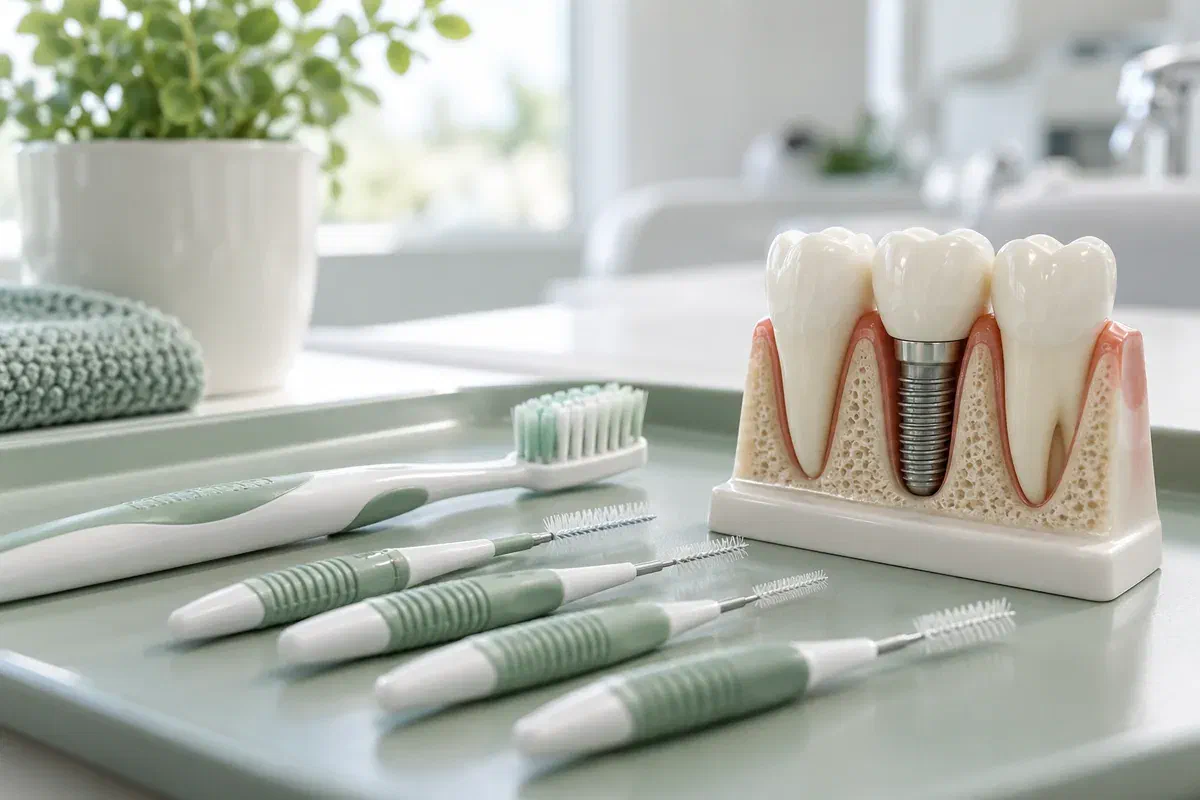
Some findings turn maintenance into treatment. Share what you notice about the gum or the restoration, even if the implant still handles meals without a problem.
Bleeding that keeps returning near the implant is a key piece of information. An exam can show whether better technique will help or whether the tissue is inflamed and needs care, rather than you simply avoiding it.
If no brush or threader passes comfortably, the issue may be the restoration's shape rather than your effort. Show us where, and we will look at whether a different tool or a design change makes sense.
Food packing, a new gap or any looseness in a crown or bridge often involves the restoration. Extra cleanings will not fix a mechanical problem, so these need to be assessed directly.
Swelling, discharge, a restoration that moves or discomfort that is building should be checked soon. Call us instead of saving it for a routine cleaning.
In the chair, the team removes deposits and takes a careful look at the tissue surrounding the implant. That look is what tells us whether maintenance is doing its job. The visit also tests whether your home tools are reaching every surface they should.
Maintenance cannot promise that complications will not develop, and established disease generally needs more than routine cleaning. When something concerning shows up, we explain it and talk through what further assessment, treatment or a referral would look like for you.
Patient information: American Academy of Periodontology — peri-implant diseases
What counts as normal differs between crowns, bridges and implant-retained dentures. If your implant was restored at another clinic, bring any records so we can judge findings in context.
Whether the plan is maintenance or treatment, home care plays a role. Tell us if dexterity, vision or gagging limits what you can do, and we can adjust the approach.
Records from earlier visits, where available, help show whether a site is stable, improving or changing. Ask what is being measured and why your interval was chosen.
The visit is shaped by your implant history and what the exam reveals. If there has been recent surgery around the implant, tell us so our care fits with the clinician following that healing.
We ask about the restoration, past maintenance, any gum disease and health changes, including new medications. Describe your routine and any symptoms, including when they started and whether they come and go.
The clinician assesses the tissue and restoration and decides whether imaging would clarify things. If inflammation, reduced support or a restoration fault is present, it is discussed before any cleaning is labelled routine.
Instruments and methods are chosen for implant surfaces and for what the exam showed. Point out sensitive spots, and ask what each additional step is designed to address.
You practise the method that suits your restoration and leave with the right aid sizes. We explain whether you are on a maintenance path or a treatment path, and when to return.
Daily care matters on a maintenance path and during recovery from treatment alike, and it is the part only you can do. When a step feels wrong, check in with us about technique before trying new products that may not fit your restoration.
Use the aids and sizes recommended for each space and move them as demonstrated. If one catches or you are unsure, ask for a second demonstration instead of forcing it.
If your appliance comes out, clean it and its attachments according to your instructions. Ask which products suit its materials, and keep household cleaners away from it.
Ongoing bleeding, soreness, food that keeps lodging or a crown that sits oddly may mean the plan needs revisiting. Call if it persists, even if your next appointment is months away.
You should not have to guess which category your implant falls into. Ask us during the visit, practise your routine, and leave knowing what would change the plan.
Our Bronte Street practice can examine your implant, clean the restoration and review your home routine. We will tell you whether you are on a maintenance path or need further care, and what the next step involves.
If you have swelling, discharge, movement or worsening pain, mention it when calling, and the appointment can be booked as an assessment rather than routine upkeep.
