Current medical care
Bring a full list of the medicines and supplements you take and any recent treatments. This lets the dentist think about healing and planning, and decide whether hearing from your physician or a specialist would be useful.


Lost a back tooth and unsure whether to replace it? Seniors coming from Burlington can use an implant consultation to compare an implant, a bridge, a partial denture or simply monitoring the gap, with health and upkeep in view.
A molar comes out after years of fillings, and suddenly there is a space. Some people barely notice it. Others find food catching, the bite feeling different, or a neighbouring tooth starting to tilt. A consultation helps you decide whether the gap is worth treating and, if so, how.
Years on the calendar are not the deciding factor. The dentist weighs your general health, the bone and gum where the tooth used to be, the condition of the teeth on either side, the treatment you would accept, and the cleaning a replacement would need. Together these point toward a sensible choice.
For Burlington seniors, the first visit can focus on that single question before anything larger is considered. Bring a companion if you wish. You will hear what an implant, a bridge, a partial denture or watchful waiting could offer, what each would ask of you, and the care that follows.
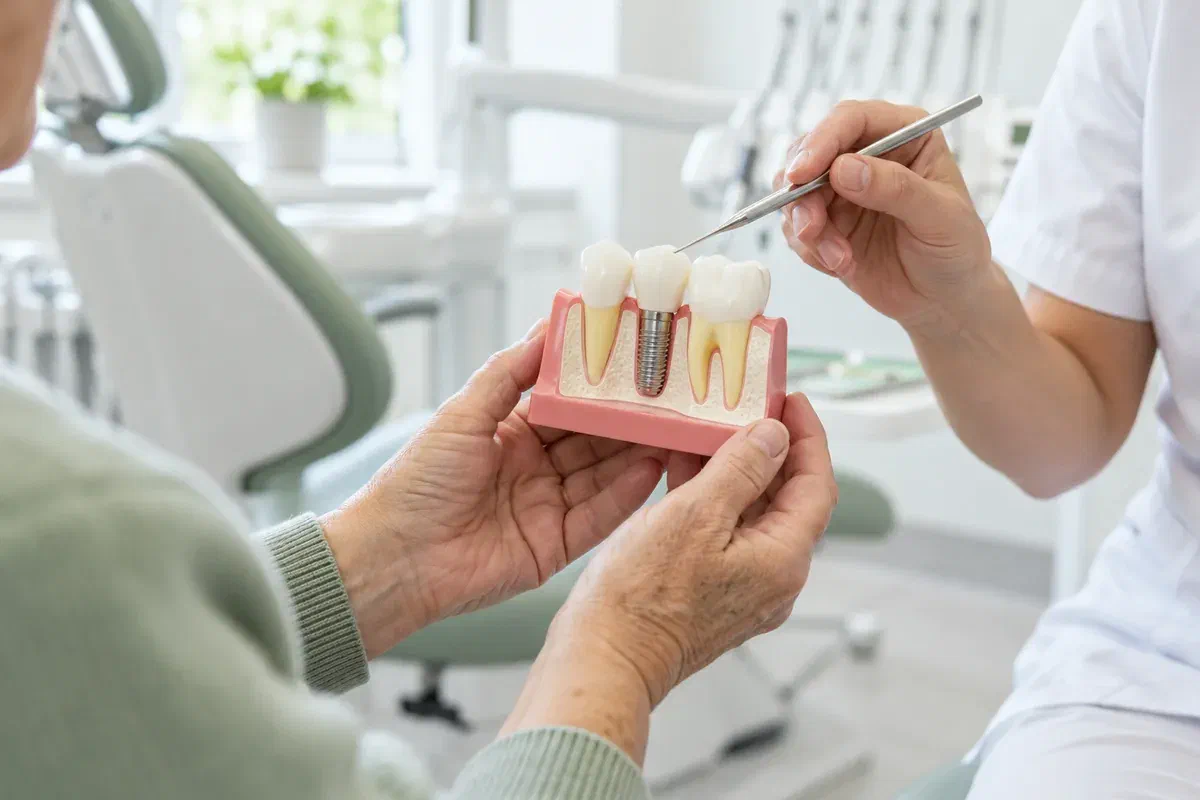
Replacing a tooth is about more than filling space. It means visits, perhaps a healing period, new cleaning habits and future maintenance, and those practical parts should be weighed alongside the examination results.
Bring a full list of the medicines and supplements you take and any recent treatments. This lets the dentist think about healing and planning, and decide whether hearing from your physician or a specialist would be useful.
If you wear a partial elsewhere in your mouth, bring it and say how well it works. Sometimes adding a tooth to an existing partial is a reasonable alternative, so its condition matters before implants are assumed.
Tell the team about hand dexterity, eyesight, mobility, how you get to appointments, or help you have at home. These details simply guide which replacement would be practical to care for and how checkups should be arranged.
Keep taking your medicines as prescribed while you consider treatment. If any adjustment were ever needed for dental care, it would be planned individually with the clinicians responsible for your health.
It helps to name exactly what the missing tooth is costing you. Perhaps it is chewing on one side, food trapping, or worry about the nearby teeth shifting. With that named, you can judge whether the improvement from any replacement is worth the work involved.
An implant is not automatically the right choice because it is the newest-sounding option, and being older does not exclude it. A fair comparison takes in your health and preferences, the examination, and how the replacement would be looked after as the years go by.
Patient information: ITI — advanced age and medical conditions in implant care
For some gaps, monitoring may be reasonable. Ask what the risks of waiting would be for your bite and neighbouring teeth, so that choosing not to replace the tooth is an informed decision rather than a default.
Bridges rely on the teeth beside the gap, while an implant does not. Ask how the condition of those teeth affects each option and what preparing them for a bridge would involve.
Flossing under a bridge, cleaning around an implant crown, and caring for a partial each take a different routine. Ask to have each explained so you can choose something you will comfortably keep up.
You are welcome to have anything repeated, written down, or explained to a person you bring. This appointment is about understanding the route ahead, and there is no obligation to agree to treatment.
Explain when the tooth was lost, what has changed since, and any appliances you wear. Mention concerns about surgery, fees, healing or maintenance early so they become part of the comparison.
The dentist goes over your medical history and medicines and examines the gap, the gums, the neighbouring teeth and your other dental work. An X-ray or scan may be suggested to see the bone where an implant would sit.
Look at an implant crown, a bridge, a partial denture and monitoring side by side, with the stages, effort and maintenance each involves. If a referral is suggested, ask what particular question it is meant to answer.
You might want time to think, more details, or to begin planning. Ask for a written summary of any agreed visits, and find out whether other teeth need attention regardless of your decision about the gap.
A consultation can bring up several unfamiliar terms and more than one sensible route. Keep the written notes and the clinic's contact information together so you can reread them, compare, and ask about anything that is unclear.
Consider whether the proposed option fixes what actually bothered you about the gap. List any questions about cost, healing time, a temporary tooth or upkeep rather than trying to recall every detail.
If you would need a ride, a second listener, or someone around after a procedure, settle those arrangements before treatment begins. A trusted helper can take on the logistics while you remain the decision-maker.
Changes in medication, a medical procedure, or new difficulty with cleaning can affect the advice you receive. Let the dentist know before treatment and at follow-up visits so the plan continues to suit you.
People arrive with different goals and varying help at home. These questions focus on the practical side of replacing a tooth as well as the examination.
Come to our Bronte Street clinic to talk through replacing a tooth with your health, preferences and routine in mind. Bring any partial denture you use, your medication list, and the questions you want answered.
Let the clinic know if a support person, extra time, or help with communication or mobility would make the appointment more comfortable.
