Your medical picture today
Bring a complete list of your medicines and supplements, and note any recent or upcoming treatment. This helps the dentist think about healing and timing, and decide whether a conversation with your doctor would help.


Not ready to decide, but curious? Seniors from Bolton and the villages of Caledon can use an implant consultation simply to learn where they stand, what can safely wait, and which dental problems are worth treating now.
Plenty of people book an implant consultation without any intention of starting treatment soon. They want to know whether it is possible, what it would involve, and whether waiting a year carries any risk. That kind of fact-finding is a sensible use of the visit and can make a later decision much easier.
What you learn will centre on one question: would implant care be appropriate and worthwhile for you, now or in future? Age is not the measure. The dentist considers your health, the condition of your gums and jaw, your remaining teeth, the commitment treatment would take, and the cleaning it would require.
From Bolton or one of Caledon's smaller villages, a single visit can give you a clear baseline. Bring a partner or friend if that helps. You will hear about potential gains, limitations, alternatives and long-term care, along with an honest view of what can wait and what should not.
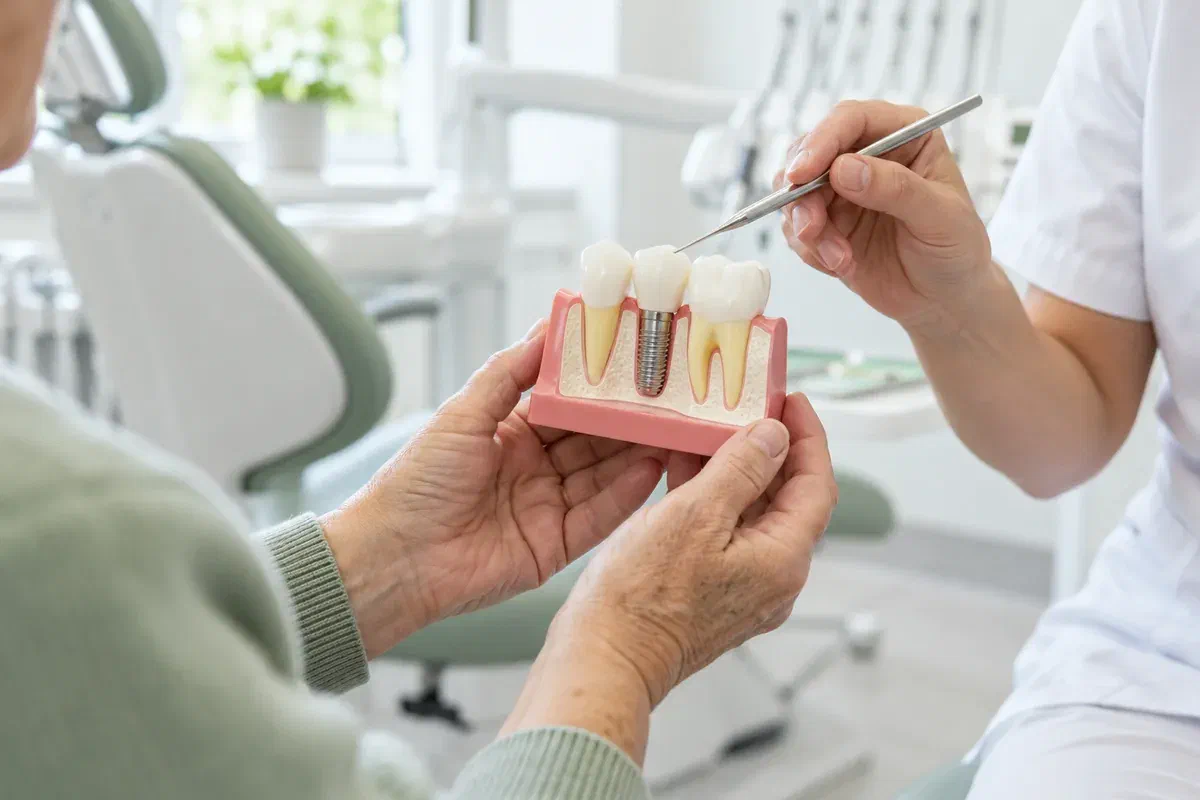
Better chewing is the long-term hope, but any replacement also brings visits, healing, cleaning and maintenance. Knowing those demands, and whether something in your mouth needs attention sooner, makes timing easier to judge.
Bring a complete list of your medicines and supplements, and note any recent or upcoming treatment. This helps the dentist think about healing and timing, and decide whether a conversation with your doctor would help.
Describe what is happening: looseness, sore areas, cracks, or meals you avoid. Bring it with you. A damaged or poorly fitting denture may need attention now, even if the implant question is left for later.
Mention anything about grip, vision, mobility, driving or support at home, and any changes you expect, such as moving or giving up the car. These shape which option would stay practical and when to act.
Keep taking all prescribed medicines as normal while you consider implants. If dental treatment ever made a change sensible, it would be planned individually with the clinicians who manage that medicine.
Even if you are not ready, it helps to name a goal, such as one day having a lower denture that stays still, or eventually replacing a back tooth. With that goal noted, you can later judge whether the expected improvement would be worth the treatment it requires.
Implants are not the right choice simply because they are offered, and getting older does not automatically close the door. A clear discussion covers your wishes, your health, the findings, and how a replacement could be maintained if your situation changed.
Patient information: ITI — advanced age and medical conditions in implant care
Ask whether waiting would affect your options, for example through gradual bone changes after tooth loss. The dentist can explain what to watch for so that delaying is an informed choice rather than drift.
Decay, gum infection or a broken tooth should not sit untreated while you think about implants. A consultation can identify anything that deserves care soon, independent of the replacement decision.
Learning now how each option is cleaned, repaired and reviewed helps you choose well when the time comes. It also shows which designs might stay manageable if your circumstances shift.
Ask for anything to be explained again, set down in writing, or shared with your companion. Leaving with information alone is a completely acceptable outcome of this visit.
Describe the missing teeth, your current appliance and what made you curious about implants. Mention any hesitation about surgery, cost, recovery or upkeep so it is part of the conversation from the start.
The dentist considers your history and medicines, then examines your gums, natural teeth and current restorations. Imaging may be suggested to see the bone, which also gives a useful record for later comparison.
Compare implant and non-implant approaches, their stages, demands and maintenance, and what waiting would mean for each. If a referral is suggested, ask what it would tell you and whether it can wait too.
You may want nothing more than information for now, or you may decide to begin planning. In either case, get a written note of what needs attention soon and what can safely be revisited at a later checkup.
Fact-finding visits can bring up new terms and several possible routes. Store the written notes with the clinic's number so you can come back to them months from now, compare options and follow up.
Write down what you hoped to improve and whether the options discussed would achieve it. Add any questions about cost, recovery, temporary teeth or maintenance you might want answered next time.
If treatment would eventually need a driver, help with communication or someone at home afterward, think about who could help. A trusted person can manage logistics while you stay in charge.
A new diagnosis, new medicines or more difficulty with daily cleaning may change the advice. Bring these up at regular checkups so your options are reviewed against your current health.
Goals, health and support differ for everyone. These questions explore the timing of implant decisions alongside the clinical assessment.
Visit our Bronte Street practice to learn about tooth replacement with your health, wishes and timing in mind. Bring your current denture, a medication list, and whatever questions are on your mind.
Let the clinic know about mobility, hearing, vision or companion arrangements that would make the visit more comfortable.
