

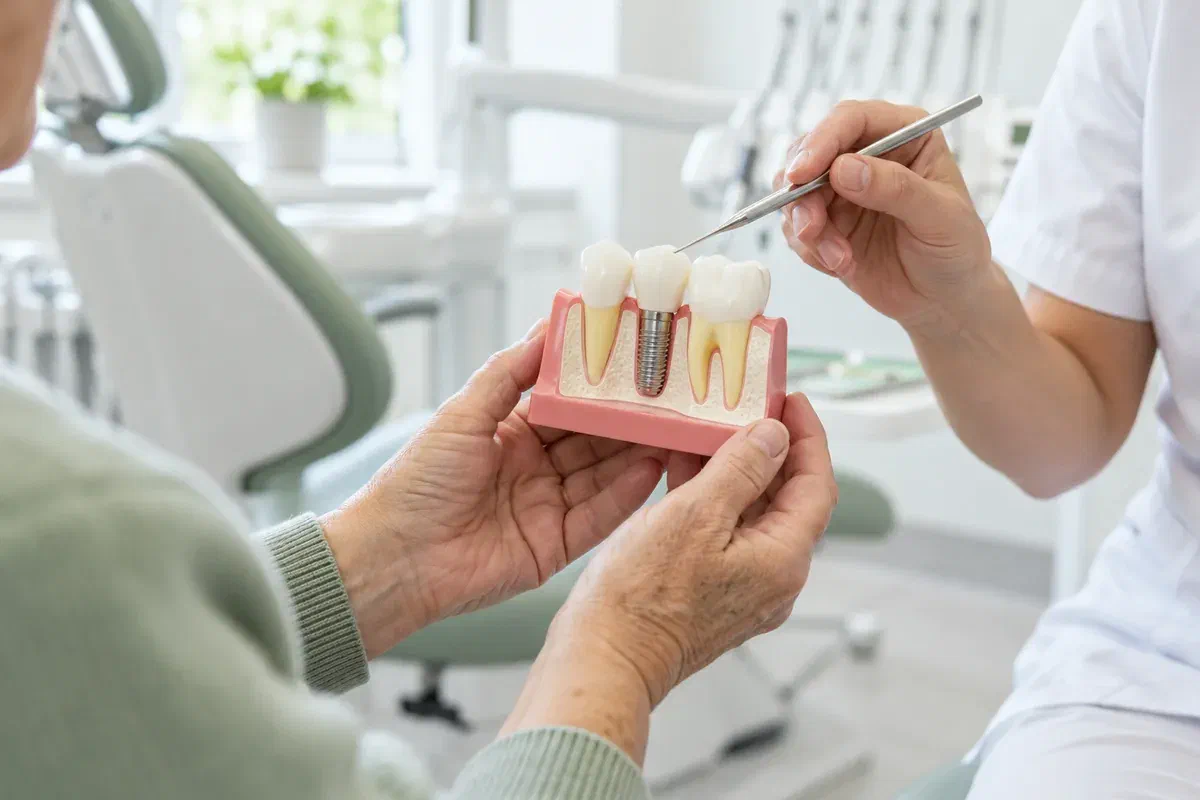
Illustrative older adult discussing implant options with a dentist
Restorative Dentistry

Dental Implant Consultations for Seniors in Milton

Find out whether implants fit the life you lead now. A senior implant consultation in Milton gives you unhurried time to talk through your denture or gaps, your health history, the stages of treatment, and the care that follows.

Implant questions, close to home in Milton

Start with the meal that keeps going wrong.

For many people the question about implants begins at the table. A lower denture lifts when you bite into toast, a gap makes you chew on one side, or you quietly skip foods you used to enjoy. Naming that moment gives the consultation a clear purpose from the first minute.

Your birthday does not decide whether implants make sense. What matters is your general health, the condition of your gums, bone and remaining teeth, how much treatment you are prepared to go through, and whether the finished replacement could be kept clean year after year. Each of those deserves an honest look.

Since you are already in Milton, the visit can be one relaxed step rather than a big undertaking. Bring a son, daughter, spouse or friend if a second set of ears would help. The dentist will lay out the possibilities, the limits of each, and the upkeep involved, while the choice stays yours.

Describe the change you are hoping for
Older patient's hands holding an implant teaching model during a consultation
Details worth raising

Health, habits and the denture you wear today.

Chewing comfort is only part of the picture. Any implant plan also means appointments, a healing period, a cleaning routine and checkups for years to come, so those practical parts belong in the same conversation as the examination.

Your medicines and medical care

Write down every prescription, supplement and recent medical treatment before you come in. The dentist uses that list to think about healing and planning, and to judge whether a word with your physician or another specialist would be sensible.

What the current denture is doing

Is it loose, rubbing a sore spot, showing too much, or making certain foods impossible? Wear or bring the appliance so its fit and condition can be checked, because sometimes the existing denture can be improved without implants at all.

Keeping up with care later on

Mention anything about grip, eyesight, getting around, rides to appointments, or help you already have at home. None of this limits who you are, yet it can shape which design is realistic and how its upkeep should be arranged.

Please keep taking your medicines exactly as prescribed while you consider implants. If treatment ever calls for a change, that decision belongs to your own physician working with the dental team.

Why a consultation helps

Balance what you could gain with everything it asks of you.

A good consultation ties any proposed replacement to one concrete aim, such as steadying a lower denture or closing a gap that traps food. With that aim written down, it becomes much easier to judge whether the expected improvement is worth the treatment it would take.

Implants are not the right answer simply because they exist, and being older does not put them out of reach. A fair discussion brings together your health, your wishes, what the examination shows, and how the restoration would be looked after if your situation changed down the road.

Patient information: ITI — advanced age and medical conditions in implant care

The comparison follows your goals

Say what you most want to improve and what you would rather avoid, whether that is surgery, extra visits or a fiddly routine. The options can then be measured against your list instead of treating the biggest plan as the starting point.

Everyday logistics come up early

Who drives you, how long appointments run, what recovery looks like and who can help at home all affect how a plan is built. Talking about them before treatment lets the team explain what is needed and what can be adjusted.

Long-term upkeep shapes the choice

Ask how the replacement would be cleaned, fixed if something breaks, and checked over the years. Thinking about this at the start can steer you toward an approach that still feels manageable well after the initial work is done.

How the appointment unfolds

Four steps, taken at your speed.

Ask for anything to be explained again, written out, or talked over with someone you trust. The first appointment is meant to show you the route ahead, not to rush you into agreeing to a procedure.

  1. Share what is bothering you

    Talk about the missing teeth, the appliance you wear, and the everyday tasks that have become awkward. Mention worries about surgery, cost, healing or upkeep now, so they shape the plan from the start rather than surfacing at the end.

  2. A health review and a careful examination

    Your medical history and prescriptions come first. Next the dentist studies the soft tissue, the natural teeth you still have and any crowns, fillings or bridges. Radiographs might be recommended to see the bone where an implant could go and how it relates to everything else.

  3. Weigh the realistic options side by side

    Look at implant and non-implant approaches together, including how many stages each involves, how demanding it is, and what maintenance follows. If a referral to another clinician is suggested, ask exactly what that opinion is meant to settle.

  4. Choose what happens next

    Some people want more detail, some want time to think, and some are ready to keep planning. Whatever you pick, request a written list of any appointments you agree to, and find out which existing problems, such as decay or gum concerns, should be treated regardless of what you decide about replacement.

Once you are home again

Turn the conversation into notes you can use.

Consultations can bring up new terms and more than one route forward. Keep the written plan, any diagrams and the clinic's phone number in one place so you can reread them, compare choices and follow up on anything still unclear.

Hold the plan up against your goals

Ask yourself whether the suggested treatment would actually fix the problem that brought you in. Jot down questions about fees, healing time, temporary teeth or upkeep so you are not trying to decide from memory alone.

Line up help only if you want it

If you will need a ride, help understanding instructions, or someone around after a procedure, sort out those details before treatment is booked. A family member can handle arrangements while the decision itself stays with you.

Let the dentist know when things change

A new prescription, a hospital stay, or a change in how easily you manage daily care can affect what is advisable. Share updates before any procedure and at later checkups so the recommendations keep fitting your situation.

Replacement paths to compare

Match the option to the problem you described.

Each approach trades stability, treatment effort, cleaning and cost in its own way. An assessment decides what is suitable, and the most involved option is not automatically the one that serves you best.

When the appliance itself is the issue

Refit, reline or remake the denture

The examination may reveal a fit or design problem that can be corrected without placing implants. Ask what an adjustment, a reline or a new denture could realistically improve, and which limitations would still be there afterward.

When extra grip deserves a closer look

A removable denture held by implants

Where the bone and gums allow, a few implants may give certain removable dentures something to grip. Talk about the surgery, the attachments that need servicing, and taking the denture out to clean it, not just how firmly it might stay put.

When your mouth and routine can support it

Fixed teeth or a conventional alternative

An implant crown or fixed bridge may be considered for the right gap, while a traditional bridge or another approach could also fit. Compare how easy each is to clean, what repairs might involve, and the full sequence of visits.

Common questions from older adults

Straight answers for your situation.

Everyone arrives with different goals and different levels of support at home. These questions cover the practical side of implant care alongside the clinical side.

(905) 876-4488
Am I too old to be considered for implants?
There is no birthday that automatically rules you out. The dentist looks at your health, the state of your mouth, the benefit you are hoping for, and how demanding treatment and upkeep would be. Ask how those points apply to you specifically.
Does a consultation mean I am agreeing to surgery?
No. The first visit is for gathering information and understanding your choices. You can leave with a written summary, take as long as you need, and decide later whether any further planning or treatment is right for you.
Should I wear my denture to the appointment or bring it in a case?
Wear it as you normally would, and bring any older dentures too if you still have them. Seeing the appliance in your mouth helps the dentist understand how it fits, where it rubs, and whether it could be improved before implants are discussed.
What should I tell the dentist about my medical history?
Share all prescriptions, over-the-counter products, supplements and past treatments, including any for bone health or blood clotting. Some details may affect planning or call for input from your physician. Never stop a medicine on your own because of dental plans.
How many visits might a full implant plan involve?
It varies with the mouth and the design. Implant treatment usually happens in stages with healing time in between, plus follow-up visits afterward. A rough timeline from the dentist will help you judge whether the sequence suits your routine.
Since I live in town, can I book short appointments close together?
Being local can make it easier to fit in shorter visits. Mention your preferred times and how long you are comfortable sitting in the chair. Some steps can be flexible, but healing periods and essential checkups should not be cut short to save trips.
Senior implant consultations for Milton

Tell us what you would like eating and smiling to feel like again.

Come to our Bronte Street practice to explore tooth replacement with your health, wishes and daily routine in mind. Bring the denture you wear, an up-to-date medication list, and the questions you most want answered.

If you would like extra time, help with communication or mobility, or a support person in the room, let the clinic know when you book.

Visit Milton Dental Clinic
Unit 1, 342 Bronte St. S, Milton, ON L9T 5B7
Get directions Clinic hours
Monday–Thursday
11am–7pm
Friday–Sunday
By appointment only

Areas we serve

  • Milton
  • Oakville
  • Mississauga
  • Georgetown
  • Halton Hills
  • Acton
  • Campbellville
  • Brampton
  • Burlington
  • Puslinch
  • Rockwood
  • Erin
  • Caledon
  • Etobicoke
  • Old Milton
  • Bronte Meadows
  • Timberlea
  • Dorset Park
  • Dempsey
  • Clarke
  • Beaty
  • Coates
  • Harrison
  • Scott
  • Willmott
  • Ford
  • Bowes
  • Cobden
  • Walker
  • Mountain View
  • Milton Heights
  • Hawthorne Village
  • Valley View
  • Fallingbrook
  • Nassagaweya
  • Trafalgar
  • Esquesing
  • Nelson
  • Brookville
  • Moffat
  • Glen Williams
  • Norval
  • Limehouse
  • Stewarttown
  • Ashgrove
  • Hornby
  • Silver Creek
  • Speyside
  • Scotch Block
  • North Oakville
  • River Oaks
  • Glen Abbey
  • West Oak Trails
  • Palermo
  • Bronte Creek
  • College Park
  • Joshua Creek
  • Uptown Core
  • Preserve
  • Iroquois Ridge
  • Lisgar
  • Meadowvale
  • Meadowvale Village
  • Churchill Meadows
  • Erin Mills
  • Central Erin Mills
  • Streetsville
  • East Credit
  • Creditview
  • Heartland
  • Sheridan
  • Mount Pleasant
  • Credit Valley
  • Huttonville
  • Churchville
  • Springbrook
  • Northwest Brampton
  • Bram West
  • Fletcher's Meadow
  • Fletcher's Creek South
  • Alton Village
  • Orchard
  • Millcroft
  • Headon Forest
  • Tansley
  • Brant Hills
  • Tyandaga
  • Kilbride
  • Lowville
  • Aberfoyle
  • Morriston
  • Arkell
  • Hillsburgh
  • Freelton
  • Carlisle
  • Waterdown
  • Flamborough
  • Mountsberg

How can we help?

Milton Dental Clinic

Have a question about your smile? Choose the option that works best for you.

For urgent dental concerns, please call.
Messages are reviewed during clinic hours.