Health and medication
Bring a current list of medicines and supplements and any recent treatment. The dentist uses it to consider healing and planning, to think about comfort options, and to judge whether advice from your physician would help.


Uneasy about the idea of oral surgery? Older adults coming from Rockwood can explore implants at a gentle pace, hear about non-surgical options first, and ask every question about comfort and recovery before deciding anything.
Some people put off asking because the word surgery makes their stomach turn. That is a common feeling, and it is worth saying out loud at the start. A consultation is a conversation and an examination, nothing more. You can explore what is possible without agreeing to any procedure.
The dentist's first job is to work out whether implant treatment would even be suitable and worthwhile for you, and that has little to do with how old you are. It depends on your health, gums, bone and remaining teeth, the effort of treatment, and how easily you could clean the result.
Coming from Rockwood, you may want to hear the non-surgical choices before anything else, and that is a perfectly reasonable request. Bring a calm companion if it helps. You will learn what each option might offer, its drawbacks, how comfort is managed and what aftercare involves, and the choice remains yours.
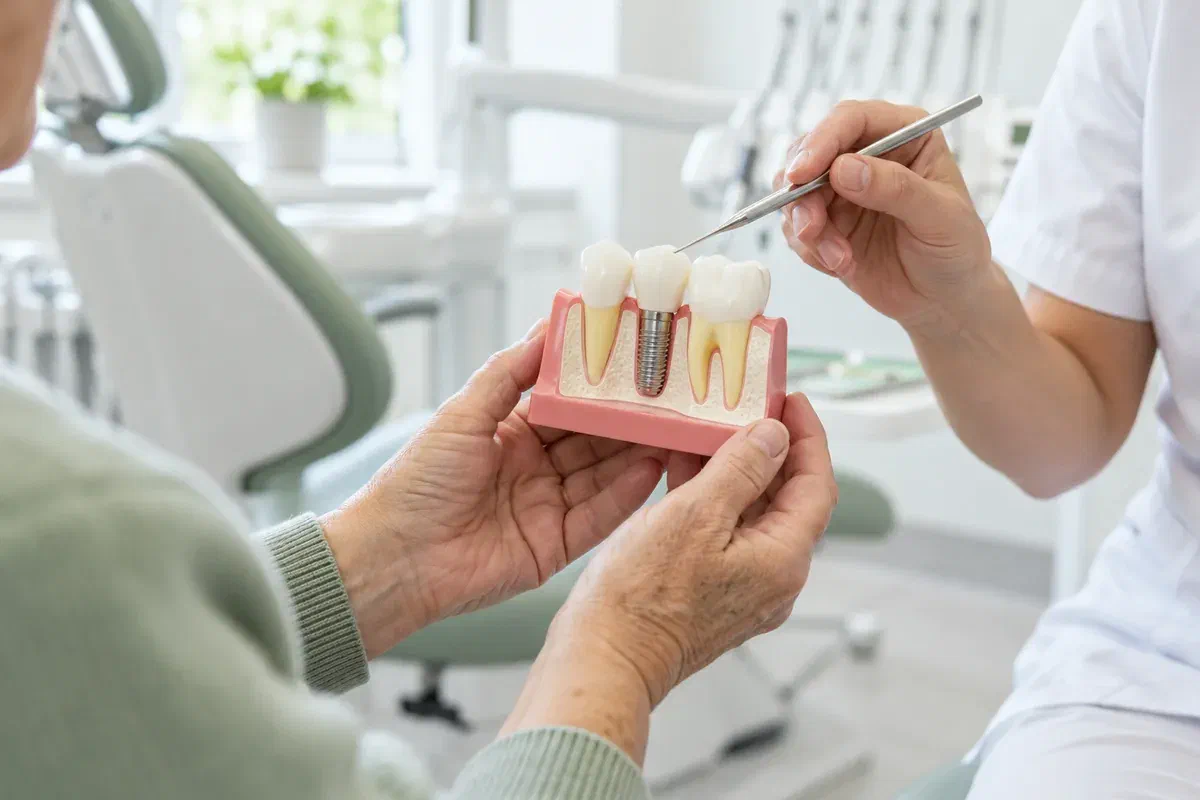
Comfort while eating is the goal, but any replacement also involves visits, recovery, cleaning and ongoing care. Talking openly about those parts, including your nerves, helps produce a plan you can live with.
Bring a current list of medicines and supplements and any recent treatment. The dentist uses it to consider healing and planning, to think about comfort options, and to judge whether advice from your physician would help.
Explain the main frustration, whether it is looseness, soreness, how it looks or foods you skip. Bring it with you. A better-fitting denture can sometimes ease the problem without anything surgical.
Tell the team about anxiety, past dental experiences, grip, eyesight, mobility, transport or help at home. These details shape how appointments are run and which replacement would be realistic to maintain.
Keep taking prescribed medicines as usual, including any for anxiety or sleep, while you think about implants. Changes for dental reasons need an individual plan with the clinicians who prescribe them.
Focusing on one clear goal, such as a lower denture that slips or a gap you chew around, keeps the discussion grounded. You can then ask whether any surgery proposed would bring enough improvement to be worth facing, or whether a gentler step would do.
Implants are not the right choice just because they exist, and age alone does not rule them out. A balanced talk weighs your feelings and preferences, your health, the examination, and how a replacement would be maintained if life changed.
Patient information: ITI — advanced age and medical conditions in implant care
Ask the dentist to explain what could be achieved without surgery before discussing implants. That way you can compare from a starting point that feels comfortable rather than from the most invasive plan.
Ask how numbness, discomfort and anxiety are usually managed during and after each step, and what options might be available for you. Knowing what to expect can make the decision feel more manageable.
Find out what the first days after a procedure typically involve, how swelling or tenderness is handled, and when to call. A clear picture of recovery helps you judge whether the benefit is worth it.
Pause whenever you need, ask for points to be repeated, or have things explained to your companion. This appointment is about understanding, and it involves no procedure beyond an examination and any records you agree to.
Share which teeth are missing, the appliance you wear and the moments it lets you down. Say clearly how you feel about surgery, cost, healing or upkeep so those feelings guide the discussion.
The dentist reviews your history and medicines and looks at your gums, remaining teeth and existing work. X-rays or other records may be suggested, and you can ask what each one is for before agreeing.
Compare non-implant and implant approaches, their stages, effort and maintenance. If a specialist opinion is suggested, ask what it would clarify and what that appointment would involve.
You can go home with information, take time to think, or continue planning. A written list of any agreed visits is useful, as is knowing which existing problems should be treated anyway.
A first conversation can bring up unfamiliar terms and several paths. Keep the written plan with the clinic's number so you can reread it calmly, talk it over with someone you trust, and call back with questions.
Ask whether the proposed treatment would address what bothered you most. Write down any further questions about cost, recovery, temporary teeth or upkeep while they are fresh.
If transport, help with communication or company after a procedure would ease your mind, arrange it before booking. A trusted person can handle the logistics while the decision stays yours.
New medicines, medical treatment or changes in how you manage daily cleaning may affect the plan. Mention them before procedures and at later checkups so recommendations stay appropriate.
Everyone's goals, comfort levels and support differ. These questions cover the feelings and practicalities around implant care alongside the clinical assessment.
Visit our Bronte Street practice for a relaxed conversation about tooth replacement that respects your comfort, health and daily life. Bring your denture, your medication list, and any worries you want to talk through.
Let the clinic know if you feel anxious, need extra time, or would like a companion with you so the visit can be planned around you.
