Biting feels a bit off
Heavy contact on the implant tooth or tenderness after eating can sometimes go hand in hand with irritated tissue. Tell us about recent dental work elsewhere, which can change how the teeth come together.


Gum that looks puffy or bleeds around an implant is easy to overlook, yet it deserves attention. Implant maintenance for Acton reviews the tissue first, along with the restoration, the bite and how you clean.
You might notice it in the mirror: the gum next to your implant looks a little redder than elsewhere, or there is a trace of pink in the sink after brushing. It may not hurt at all. Even so, the soft tissue around an implant acts as its seal, and changes there are among the things maintenance is designed to pick up.
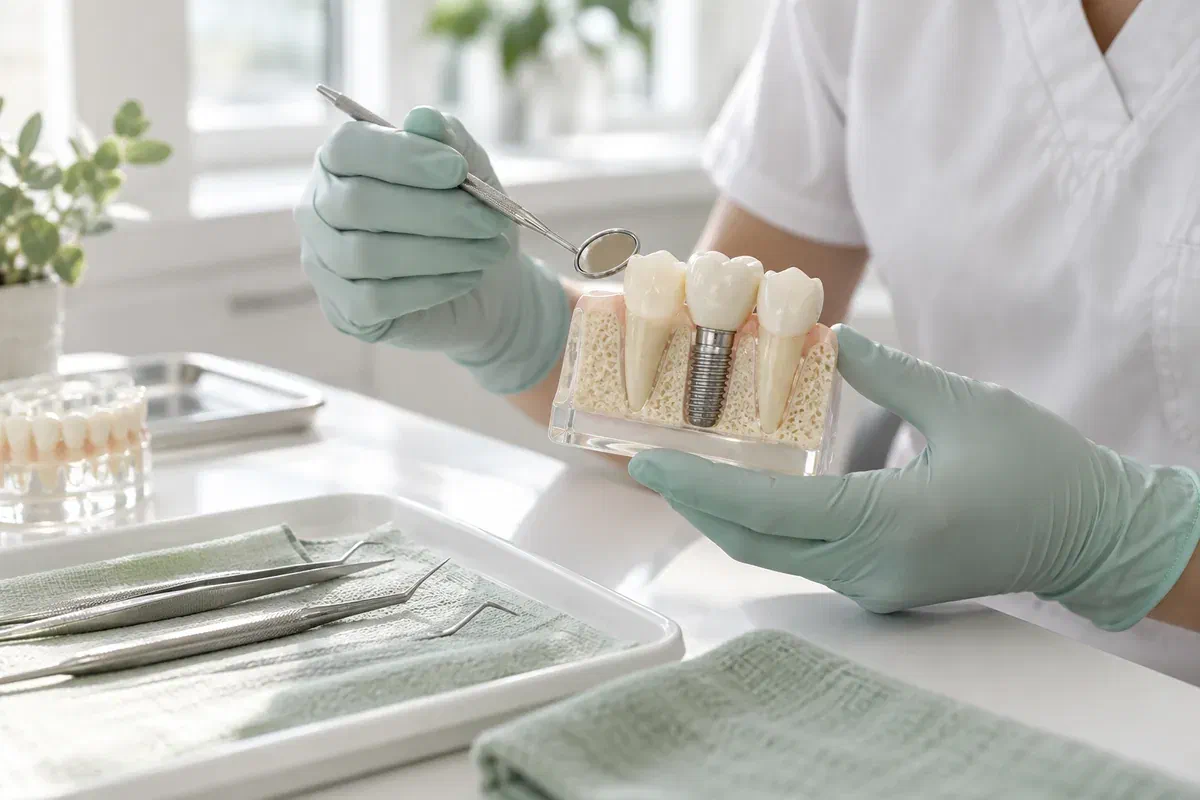
Gum is only one layer. Above it sits the crown, bridge or appliance, connected by components to a fixture held in bone. A review looks at each of these and at your bite and routine, because tissue irritation can come from trapped food, an awkward contour, a loose part or a cleaning gap, and each needs a different response.
If you are travelling from Acton, take a moment before the visit to note what you have seen and when. Bring your implant records and a list of any health or medication changes. That gives the clinician a head start on understanding the tissue and planning maintenance that suits your restoration.
Nobody expects you to know what is causing a change. Describe it plainly, including how long it has been there and whether it comes and goes, so the restoration and the tissue around it can be examined together.
Heavy contact on the implant tooth or tenderness after eating can sometimes go hand in hand with irritated tissue. Tell us about recent dental work elsewhere, which can change how the teeth come together.
A crown, bridge, attachment or connecting part that has loosened can trap debris and irritate the gum. This does not mean the fixture is failing. It does mean the moving part should be found and addressed.
Health changes, new medicines or stiffer hands can make it harder to clean right at the gum line. Let us know, so the plan suits the care you can comfortably give the area every day.
Swelling, discharge, a restoration that has worked loose or pain that keeps building should be seen soon. Please ring the clinic rather than waiting for the next scheduled visit.
Reviews over time let the team see whether the gum around your implant is settling, staying stable or showing signs of change. They also help separate a routine cleaning matter from inflammation or a mechanical cause that needs its own assessment or treatment.
Maintenance cannot guarantee an implant will never develop complications. Your plan should be personal, and new findings may change the interval or the care provided. You can ask at any visit what is being measured and how it compares with before.
Patient information: European Federation of Periodontology — dental implants
Notes from each review and earlier records give the clinician a basis for comparison. If your implant was placed elsewhere, details about the system and the restoration help in planning care around it.
Irritated tissue might trace back to a loose part, a design that traps food or a cleaning gap. Checking both sides prevents blaming hygiene for everything, or assuming the whole implant is at risk.
Ask what would happen if the tissue did not improve, who would treat it and whether a part might need replacing. Understanding the route ahead makes a setback easier to handle.
Your restoration shapes the visit. Caring for one implant crown differs from looking after a bridge or a snap-in appliance, and the gum around each design behaves a little differently too.
We review the implant’s history, past repairs and cleanings, and how you look after it now. You tell us about health or medicine changes, plus any bleeding, tenderness, movement or trouble with an appliance.
The clinician examines the gum around the implant, the restoration, its contours and your bite. An X-ray or other record might be advised if your history and the tissue findings make it useful.
Professional care is matched to the design in your mouth. If the gum, a part or the shape of the restoration needs something beyond maintenance, you are told what was found and what is recommended.
We show the cleaning steps that reach the gum line on your restoration, describe the signs that should prompt a call and agree when to return. If other clinicians are part of your care, we clarify their role.
Your routine works best when you understand the reason for each step. Ask to see techniques, keep your implant details safe and call when you notice a change in the gum instead of waiting for a reminder.
Clean along the gum line with the brushes and method recommended for your restoration. If an area bleeds more, feels harder to reach or a tool starts to catch, mention it; reassessment usually helps more than scrubbing.
Do not try to tighten anything, adjust an attachment or glue a crown. A loose part needs proper assessment and equipment, and a home fix can hide what caused it or damage something that might be reused.
Store any information about the implant system, notes on repairs and contacts for the clinicians who have treated you. These help whenever a new team needs to understand your restoration.
The gum around an implant is a useful indicator of how things are going. These answers focus on tissue health and on keeping the whole restoration in good condition over time.
Our Bronte Street practice can review your implant restoration, the gum and bone that support it and your home routine. We will explain what we see, investigate tissue or component changes and arrange the right next step when cleaning is not the full answer.
If a component has come off, keep it in a safe place and phone us. Let us know about swelling, discharge, movement or growing discomfort.
