Chewing feels uneven
An implant tooth that touches first or aches after meals is worth raising. Dental work elsewhere since your last visit, or changes in jaw comfort, can alter the bite, so list what you can remember.


A new diagnosis or prescription can change what your implant needs from you. Implant maintenance for Georgetown reviews the restoration, the gum, your bite and your routine in light of your health as it is today.
When an implant is planned, your health history is reviewed carefully. Years later, that history may look quite different. New conditions, new medicines, surgery or simply getting older can affect the gum, how you heal and how easy it is to keep a routine going. Those changes belong in the maintenance conversation.
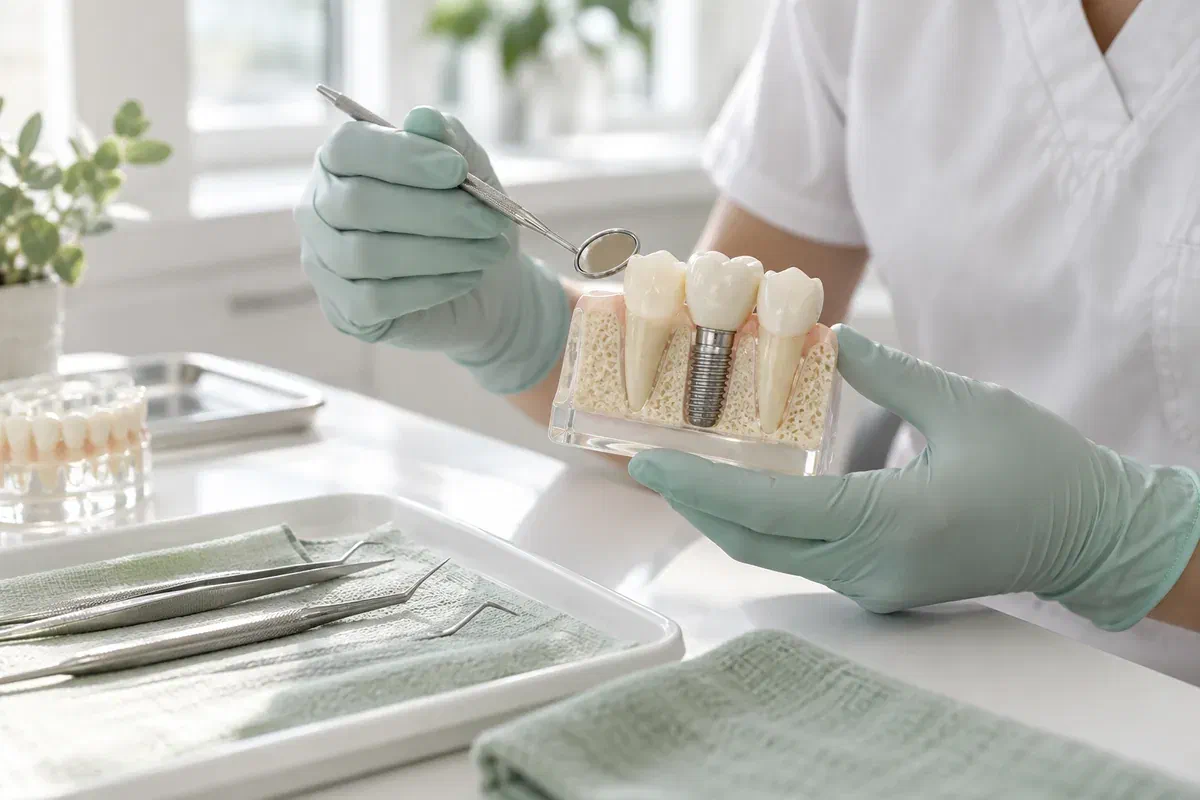
Maintenance itself covers several layers. There is the crown, bridge or appliance you can see, the components connecting it to the fixture, the soft tissue sealing around it and the bone beneath. Each can be affected differently, and a review aims to work out whether a concern is about cleaning, mechanics or tissue health.
Coming in from Georgetown, bring a current list of your medicines and a note of any diagnoses since your last visit, along with whatever implant records you have. Tell us honestly how cleaning is going. With that, the team can suggest a plan that reflects both the restoration and the person looking after it.
It is not your job to decide what matters. Mention what feels different in your mouth, and also what has changed in your health, and the clinician can weigh both when assessing the restoration and surrounding tissue.
An implant tooth that touches first or aches after meals is worth raising. Dental work elsewhere since your last visit, or changes in jaw comfort, can alter the bite, so list what you can remember.
Movement may come from a crown, bridge, attachment or another component. It is not a verdict on the fixture, but it should be examined promptly so the source can be found and dealt with properly.
Some conditions and medications can affect the gum, healing or how you manage brushing and flossing. Share an updated list, so recommendations are realistic and appropriate for you now.
Swelling, discharge, a loose restoration or worsening pain needs a call, not a wait. If you have had a recent health change, mention that when you phone.
A series of reviews shows the team how your tissue, restoration and routine respond over time, including after changes in your health. That makes it easier to spot when something falls outside normal cleaning and should be assessed or repaired on its own terms.
No maintenance programme can guarantee an implant will be free of complications. Your plan should be built for you and may shift with new findings or a new diagnosis. Ask what is being watched, and how your health history shapes the interval recommended.
Patient information: European Federation of Periodontology — dental implants
Clinical notes, earlier records and an accurate medical history help the clinician interpret change. If your implant was placed elsewhere, information from that office about the system and restoration helps keep care joined up.
A worn part and inflamed gum can feel similar yet need different responses. Examining both prevents every complaint being put down to hygiene, or a single loose component being treated as a failed implant.
Talk about replacement parts, cleaning aids you can comfortably use and who would repair the restoration. If your health makes long appointments harder, mention that too, so visits can be planned sensibly.
Every restoration brings its own needs. A lone implant crown, a bridge spanning implants and a removable appliance that clips on are not cared for in exactly the same way, so the visit follows your design.
We talk about your implant treatment, any repairs, earlier hygiene visits and your current routine. Then we go through health and medication changes, plus any new symptoms, movement or appliance difficulties.
The clinician checks the restoration, its fit, the bite and the tissue around it. When your history or what we see points that way, an X-ray or other record may be proposed to answer a specific question.
Care during the visit suits the restoration you have. If we find a part, a gum problem or a design feature that needs separate treatment, we tell you what it is and what we would suggest.
We settle on cleaning steps that work with your health and hands, the symptoms that mean you should ring us and when to return. If a physician or other dentist is involved, we clarify how information will be shared.
A plan is most useful when it fits your life as it is. Ask for demonstrations, keep a short summary of your implant details and phone when your mouth or your health changes, rather than holding questions for a recall.
Follow the technique and aids suggested for your implant. If a medical change makes them harder to use, or a spot becomes tricky to reach, let us know; an easier tool or a reassessment may help more than effort.
Do not try to tighten screws, move attachments or glue a crown that has loosened. These need correct assessment and equipment, and home attempts can hide the cause or damage a part that might still be serviceable.
A single page listing your medicines, the implant system if known, major repairs and the clinicians involved can be very useful. It helps any team that needs to assess your implant in the future.
Your general health and your implant care are linked more closely than many people expect. These questions focus on that connection and on the long-term care of the restoration.
Book time at our Bronte Street practice to look at your implant restoration, the supporting tissue, your health changes and your daily routine. We can explain what needs monitoring, look into changes and coordinate further care when more than cleaning is called for.
If part of your implant restoration has come away, keep it safe and phone us. Mention any movement, swelling, rising discomfort or recent health change.
