The way your teeth meet
An implant tooth that seems to strike first, or a sore feeling after chewing, should be mentioned. So should recent treatment by any dentist, because the restoration has to work alongside the rest of your bite.


A surgeon placed the implant, another dentist made the crown, and now you are unsure who checks it. Implant maintenance for Halton Hills sorts out roles while reviewing the restoration, gum, bite and home care.
Implant treatment is frequently shared. One clinician may place the fixture, another designs and fits the crown, and a hygienist sees you for cleanings. Once the treatment ends, people are often left unsure which of them they should call about a niggle, or whether anyone is actually reviewing the whole thing.
Maintenance is where those threads come together. A review considers the visible restoration, the connecting components, the gum that seals around it and the supporting bone, along with how you bite and clean. Because each part can develop a different kind of problem, it matters that someone is looking at all of them and knows whom to involve.
From Georgetown, Acton, Glen Williams or anywhere else in Halton Hills, bring the names of everyone who has treated your implant and any records you hold. Describe changes in comfort, chewing or cleaning, and any health updates. We can then suggest a plan that suits your restoration and makes responsibilities clear.
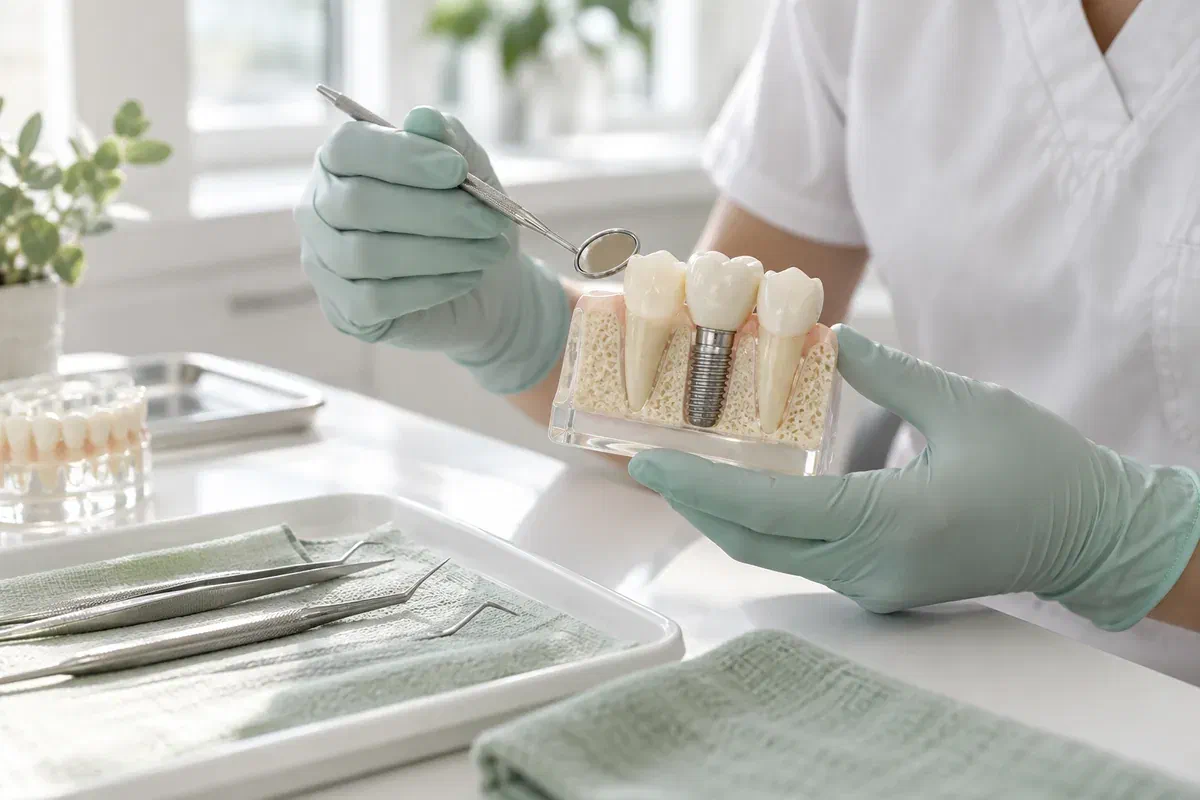
Whoever placed or restored the implant, you can describe a problem without knowing its source. Tell the clinician what feels different and when, and the restoration and surrounding tissue can be assessed together.
An implant tooth that seems to strike first, or a sore feeling after chewing, should be mentioned. So should recent treatment by any dentist, because the restoration has to work alongside the rest of your bite.
A crown, bridge, attachment or connecting component could be moving. That is different from the implant fixture failing, but it still needs to be found and explained. Tell us who made the restoration, as it may help with parts.
New medication, a health condition or less confidence with fine movements can make cleaning harder. Share this, so advice matches what you are able to keep up without strain.
Please phone about a loose restoration, swelling, discharge or worsening pain, whichever clinician normally sees you. These should be assessed rather than left for a routine date.
Regular reviews build a record of how the tissue, restoration and routine are doing. When several clinicians are involved, that record is also what lets them compare notes and decide whether a concern is ordinary cleaning or needs a specific assessment or repair.
No schedule can promise that an implant will avoid complications. The plan should fit you, and new findings may change how often you are seen or by whom. Ask what is being monitored, who is monitoring it and how the interval relates to your history.
Patient information: European Federation of Periodontology — dental implants
Findings from each visit, together with information from the surgeon or restoring dentist, help any clinician involved understand change. With your permission, details about the system and restoration can be passed between offices.
A worn component may go back to the restoring dentist, while a tissue concern may involve the surgeon or a periodontist. Considering both avoids treating every symptom as hygiene or every loose part as implant loss.
Ask who supplies replacement parts, how cleaning access can be improved and who repairs what. Settling this before a problem appears makes an unexpected change much easier to handle.
The visit is shaped by the restoration and by who else is involved. A single implant crown, a fixed bridge and a removable implant-retained appliance each call for different attention.
We ask who placed and restored the implant, what repairs and professional care have followed, and how you clean at home. Health and medicine changes, new symptoms, movement or appliance trouble are all recorded.
The clinician checks the implant tooth or appliance, the bite and the surrounding gum. Where the picture is incomplete, we may recommend an image or ask another office for its records before deciding anything.
Routine care is planned around your restoration. Should a part, the gum or the way the restoration was built call for something more, you hear what was found and whether we, the original team or a specialist should handle it.
You leave knowing your home routine, the signs that warrant a call and when to return. Most importantly, it is clear who is responsible for routine reviews, tissue concerns and the restoration itself.
Shared care is simpler when you hold the key information. Ask for a demonstration of cleaning, keep the contacts for every clinician together and get in touch when something changes rather than waiting.
Use the aids and method you were shown. If a spot becomes harder to clean or a tool stops fitting comfortably, mention it, since a reassessment is usually more helpful than added force.
Please do not tighten screws, alter attachments or glue a loose crown. These parts need the right assessment and equipment, and changes made at home can mask the cause or harm components that could be reused.
Note the implant system if you know it, major repairs, and the phone numbers of the surgeon, restoring dentist and hygienist. When care is shared, having this list ready saves time for everyone.
Implant care is easier to follow when everyone’s role is clear. These answers focus on coordination between clinicians and the ongoing care of the whole restoration.
At our Bronte Street practice we can review your implant restoration, the tissue supporting it and your daily routine, and help clarify who does what. We can explain maintenance needs, investigate changes and coordinate with other clinicians when care beyond cleaning is needed.
If a component has come off, keep it safe and call us. When booking, mention movement, swelling or increasing discomfort, and who placed the implant.
