A new feeling when you bite
A click, a high spot or soreness under pressure can come before a component loosens. Mention any recent work on nearby teeth, since changes in the bite affect how the implant restoration is loaded.


A crown or attachment that comes away is unsettling, but it is often a component issue that can be assessed. Implant maintenance for Rockwood covers what to do next, plus routine review of the gum, bite and cleaning.
It might happen over dinner or while flossing: the implant crown lifts away, or a small part of an appliance drops into your hand. The natural fear is that the implant itself has failed. Often the issue is with a crown, a screw or an attachment, which is a repair question rather than a lost implant, though only an examination can confirm it.
Maintenance is how these moments are both prevented where possible and handled well when they occur. Regular review looks at the visible restoration, the components linking it to the fixture, the gum that seals around it and the supporting bone. A loose part, an inflamed gum and a bite problem each lead somewhere different.
If you are coming from Rockwood after something has come away, store the piece safely, avoid chewing on that side and call before you set off. Bring any records about your implant system, as they can make a repair simpler. For routine visits, mention changes in comfort, cleaning or health, and we can plan care around your restoration.
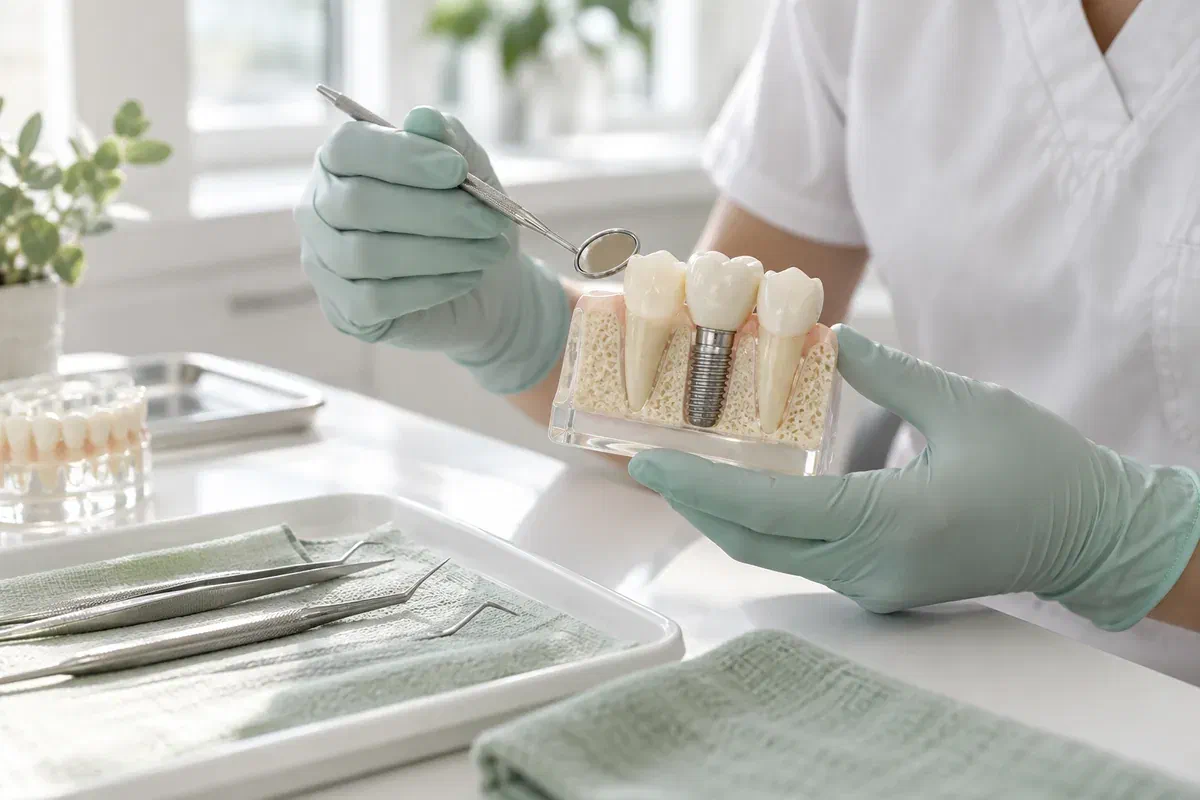
Problems often give some warning. You do not have to know which piece is involved; describe what you notice and when, and the clinician can examine the restoration and surrounding tissue for a cause.
A click, a high spot or soreness under pressure can come before a component loosens. Mention any recent work on nearby teeth, since changes in the bite affect how the implant restoration is loaded.
The give you feel could be in the crown, a bridge, a clip or the abutment beneath. It is not proof that the fixture is failing, but it is the right time to call, before the part comes away completely.
New health issues, medicines or difficulty handling cleaning tools can affect your routine. Tell us, so the maintenance plan reflects what you are able to do comfortably now.
If a restoration has come off or loosened, or there is swelling, discharge or worsening pain, contact the clinic promptly. Do not wait for the next routine review.
Routine reviews give the team the chance to notice early mechanical changes, as well as following the gum and your cleaning over time. That makes it easier to see when something needs a specific assessment or repair rather than ordinary care.
No plan can guarantee that a component will never loosen or that complications will not occur. Recommendations should suit your situation and may change as findings do. Ask what is being checked and how your history shapes the advice.
Patient information: European Federation of Periodontology — dental implants
Records of the implant brand, components and earlier repairs make it quicker to assess a problem. If treatment was done elsewhere, gathering this information now can save time later.
A crown coming off is a different problem from gum inflammation, though the two can overlap. Reviewing both avoids treating every symptom as a hygiene issue or assuming a lost crown means a lost implant.
Ask what to do if a part comes away, whether spares or replacements are available and who would carry out the repair. Having a plan makes an unexpected moment far more manageable.
The approach depends on your restoration and what has happened. A screw-retained crown, a cemented crown, a bridge and a removable appliance can each come loose for different reasons.
We ask when and how the part came away, what you were doing and whether there was pain or swelling. We also review the implant’s history, repairs and your routine, along with any health changes.
The clinician looks at the restoration or component you brought, the implant site, your bite and the gum. If the findings suggest it, an image or further record may be recommended to check what lies beneath.
Sometimes a part can be refitted or serviced at that visit; sometimes parts or more information are needed first. If the tissue or the design calls for different treatment, you will hear what was found and what is proposed.
We go over cleaning, any habits that place stress on the restoration, the signs worth a call and your next visit. If another clinician placed or restored the implant, we clarify how information will be shared.
Good habits reduce strain and catch problems sooner. Ask to see the cleaning technique, keep your implant details safe and contact us at the first sign of change instead of waiting for a recall.
Follow the method recommended for your restoration. If an area feels harder to clean or an aid starts catching, mention it; reassessment may be needed rather than more force.
Household glue or a home screwdriver can damage components and hide the cause of the problem. Keep the part safe in a small container and bring it with you instead.
Write down the implant system if known, repairs and contact information for each clinician involved. This is especially helpful when a part has come away and needs to be identified quickly.
Knowing the steps ahead of time takes much of the stress out of a component coming loose. These answers cover that situation and the longer-term care of the restoration.
Book at our Bronte Street practice for routine review of your implant restoration, its supporting tissue and your cleaning, or call if a component has already come away. We can explain what we find, carry out or arrange repairs and coordinate further care when needed.
Store any piece that has come off in a small container and bring it with you. Mention movement, swelling or increasing discomfort when you call.
