

Illustrative patient discussion of a second opinion about implant treatment
Restorative Dentistry

Dental Implant Second Opinions in Acton

A cracked or broken tooth can lead quickly to talk of extraction and an implant. For people coming from Acton, a second opinion takes a careful look at the damaged tooth, the reasoning behind the plan and whether other paths are realistic.

After a crack, a break, or bad news

A cracked tooth and a quick verdict.

You bit into something, felt a sharp crack, and a few days later heard the words “this tooth can’t be saved.” Sometimes that is exactly right. Sometimes the picture is less clear, and it is reasonable to want another dentist to examine the tooth before it is removed and an implant is planned.

An implant second opinion is that additional examination. The dentist looks at the damaged tooth, reviews imaging and the proposed plan, and explains how the recommendation connects to what can be seen. It is not a challenge to your first dentist. It is a way to understand the reasoning, and to learn whether other options deserve a closer look.

From Acton, a little planning goes a long way: ask your current office for the treatment plan and recent X-rays, and jot down when the problem started and what it feels like. We will be straightforward about what the examination can confirm, what it cannot, and whether anything further would help.

Have the damaged tooth reassessed
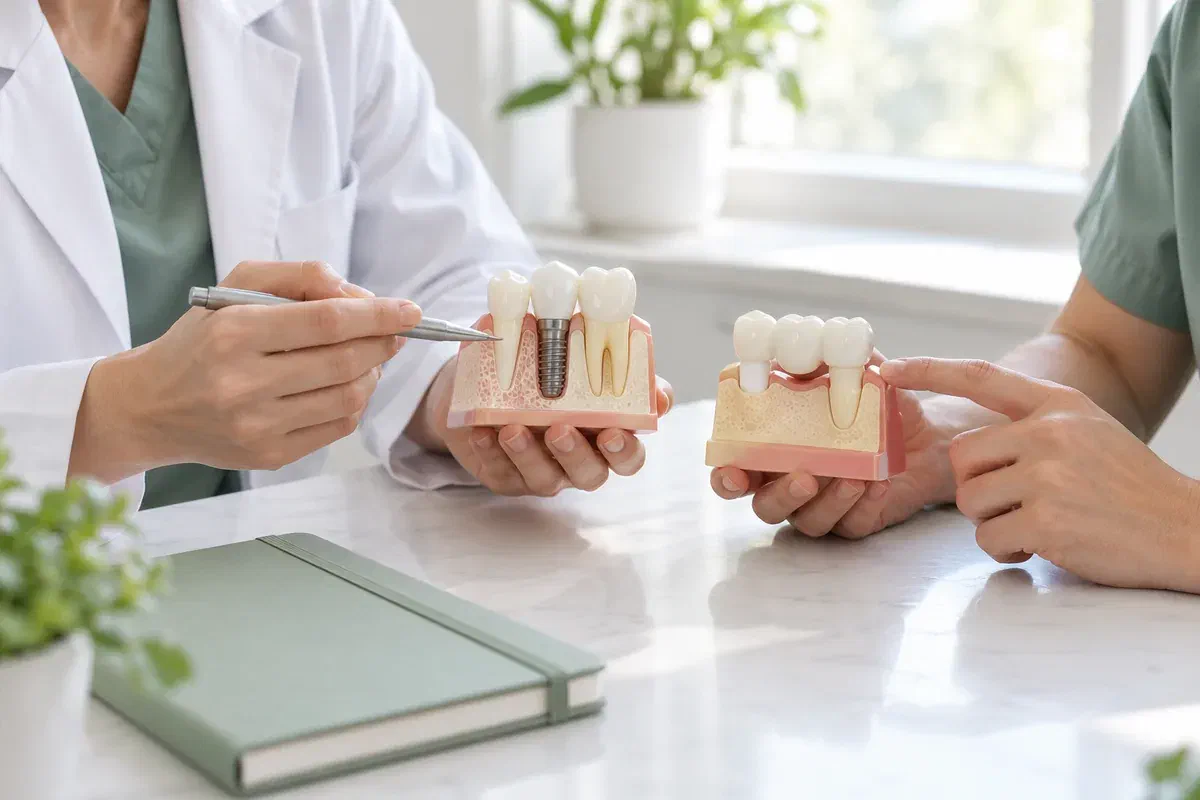
Dental professionals comparing implant and bridge teaching models
What you want to know

Is the crack the end of the tooth?

Most people who come after a fracture have one main question: can this tooth be kept? Others want to understand the steps in an implant plan, compare two proposals, or raise a concern about an implant they already have. Naming the question helps the visit stay on track.

A fractured tooth marked for extraction

Cracks vary in where they run and how deep they go, which affects the tooth’s outlook. Ask what the examination showed and whether keeping the tooth was considered. A second assessment should examine it closely before replacement is accepted as the only course.

Two proposals after the same injury

One office might suggest a crown or root canal first and another an extraction and implant. Bring the written plans so the discussion compares the scope of each and the thinking behind them, rather than only the totals.

Worry about an implant already in place

If you have an implant and something feels wrong, tell us what you notice: pain, a change in appearance, movement, or trouble cleaning. Records about its components can help, and some situations call for specialist input.

A broken tooth with severe pain, swelling, or discharge needs prompt attention rather than a planning visit. Call the clinic about worsening symptoms so the urgent problem can be discussed first.

Why a second look is worthwhile

Certainty where it exists, honesty where it doesn’t.

A further consultation lets you revisit the evidence and ask how the proposed treatment fits your priorities. It might confirm that the tooth should be replaced, point toward an attempt to keep it, or show that more information is needed before either can be fairly judged.

When two dentists see a cracked tooth differently, it does not necessarily mean either is wrong. Cracks can be difficult to assess fully, and reasonable clinicians may weigh the same signs differently. Ask where the opinions match, where they differ, and what each is assuming about how the crack will behave.

Separate what is visible from what is suspected

Some aspects of a crack can be confirmed, while others are inferred. The discussion can make clear which is which, a distinction that matters when the choice is between treating a tooth and removing it.

Weigh the options against your goals

You may care about keeping a natural tooth, avoiding surgery, appearance, or the time involved. Put the plan beside that list, and it becomes easier to see what it delivers for you and where it falls short.

Return with focused questions

You can take what you learn back to the dentist who first saw the tooth. Another opinion supports that conversation without requiring you to change where you receive care.

How we approach the assessment

Listen, examine, explain, summarize.

A damaged tooth usually needs more than a quick look at an estimate. When booking, ask what records to bring, what the assessment fee covers, what the visit will include, and whether extra tests might be recommended.

  1. Tell us what happened

    Describe how the tooth broke or cracked, what you have been told, and what remains unclear. Share your symptoms, your goals, earlier dental experiences, and relevant health details so the dentist understands the full context.

  2. Examine the tooth and review imaging

    The dentist examines the damaged tooth and the surrounding area and reviews the records you bring. You will be told whether the available information is sufficient to offer an opinion or whether more is needed.

  3. Talk through the findings and choices

    We explain what the examination supports, what is still uncertain, and how retaining or replacing the tooth compare. If a specialist or further imaging is suggested, ask what specific question it would help answer.

  4. Clarify what you’ll decide next

    The visit closes with a recap of what we concluded about the tooth and any next step worth taking. A plain-language summary is yours on request, and with it you can speak to your first dentist, gather more facts, or move ahead with planning.

Once you have a second view

Put both explanations on the table.

A second opinion is most useful read next to the original proposal. Keep the notes together, and compare complete explanations instead of short statements on their own.

Make sure the plans cover the same tooth and work

Compare which teeth or implants are included, what preparation is listed, and what final restoration is proposed. A plan that saves a tooth and one that replaces it will differ in cost and timing for good reason.

Arrange how information will be passed on

If you want records or findings shared between offices, discuss the arrangements with each team. Good communication can help clear up questions about earlier findings, components, or who will provide future care.

Protect the tooth while you decide

Until you decide, the damaged tooth may need temporary protection or other care while you weigh options. Ask which matters can wait and which need attention soon, so a current problem isn’t left unmanaged.

Where the assessment might lead

Three possible outcomes for a damaged tooth.

Another opinion doesn’t have to change the plan. Its value lies in showing your options clearly and the information you would need to choose.

When the findings agree

Follow the original recommendation

The review may confirm that replacement is the reasonable path and make its purpose clearer. Timing, a temporary tooth, upkeep, and fees can then be discussed with the clinician who will provide the care.

When keeping the tooth is reasonable

Try a different approach

That might mean attempting to retain the tooth with other treatment, adjusting the restorative design, or choosing a non-implant replacement. Ask what each alternative offers and what risks or commitments it carries.

When the crack is hard to assess

Investigate further first

Additional imaging, testing, or a specialist’s view may help. Clarify which decision that information could change and how the tooth will be protected in the meantime.

Cracked teeth and implants: Acton questions

What people ask after a tooth breaks.

Wanting another opinion on a damaged tooth is completely reasonable. These answers may help you prepare.

(905) 876-4488
Can every cracked tooth be repaired?
No. Some cracks can be managed with a crown or other treatment, while others extend too far to keep the tooth predictably. The location and depth of the crack matter, and the dentist can explain what the examination suggests.
Why is a crack sometimes hard to see on an X-ray?
Cracks can be very fine or run in a direction that doesn’t show clearly on imaging. Dentists often rely on a combination of examination, symptoms, and imaging to assess them.
Should I avoid chewing on the cracked side while I decide?
Generally that is sensible, as pressure can make some cracks worse. Ask your dentist whether temporary protection is advisable while you weigh the options.
What if the tooth has already had a root canal?
That can affect the outlook and the choices available. Bring any records of earlier treatment, and the dentist can explain how it changes the assessment.
Is an implant the only replacement if the tooth comes out?
No. A bridge or a removable partial denture may also be reasonable, depending on your situation. Ask how those compare with an implant for you.
Will a second opinion guarantee the tooth can be saved?
No. The review might support extraction or identify another option, but it can’t promise a particular result. What it offers is a clearer understanding of the findings and the choices available.
Implant second opinions for Acton

Let us take another look at that tooth.

Book an appointment at our Bronte Street practice to have a damaged tooth reassessed or to discuss an existing implant. Bring your records and questions so the time is spent on the decision you are facing.

If the tooth is very painful, swollen, or you notice discharge, tell us when you call so we can treat it as an urgent concern.

Visit Milton Dental Clinic
Unit 1, 342 Bronte St. S, Milton, ON L9T 5B7
Get directions Clinic hours
Monday–Thursday
11am–7pm
Friday–Sunday
By appointment only

Areas we serve

  • Milton
  • Oakville
  • Mississauga
  • Georgetown
  • Halton Hills
  • Acton
  • Campbellville
  • Brampton
  • Burlington
  • Puslinch
  • Rockwood
  • Erin
  • Caledon
  • Etobicoke
  • Old Milton
  • Bronte Meadows
  • Timberlea
  • Dorset Park
  • Dempsey
  • Clarke
  • Beaty
  • Coates
  • Harrison
  • Scott
  • Willmott
  • Ford
  • Bowes
  • Cobden
  • Walker
  • Mountain View
  • Milton Heights
  • Hawthorne Village
  • Valley View
  • Fallingbrook
  • Nassagaweya
  • Trafalgar
  • Esquesing
  • Nelson
  • Brookville
  • Moffat
  • Glen Williams
  • Norval
  • Limehouse
  • Stewarttown
  • Ashgrove
  • Hornby
  • Silver Creek
  • Speyside
  • Scotch Block
  • North Oakville
  • River Oaks
  • Glen Abbey
  • West Oak Trails
  • Palermo
  • Bronte Creek
  • College Park
  • Joshua Creek
  • Uptown Core
  • Preserve
  • Iroquois Ridge
  • Lisgar
  • Meadowvale
  • Meadowvale Village
  • Churchill Meadows
  • Erin Mills
  • Central Erin Mills
  • Streetsville
  • East Credit
  • Creditview
  • Heartland
  • Sheridan
  • Mount Pleasant
  • Credit Valley
  • Huttonville
  • Churchville
  • Springbrook
  • Northwest Brampton
  • Bram West
  • Fletcher's Meadow
  • Fletcher's Creek South
  • Alton Village
  • Orchard
  • Millcroft
  • Headon Forest
  • Tansley
  • Brant Hills
  • Tyandaga
  • Kilbride
  • Lowville
  • Aberfoyle
  • Morriston
  • Arkell
  • Hillsburgh
  • Freelton
  • Carlisle
  • Waterdown
  • Flamborough
  • Mountsberg

How can we help?

Milton Dental Clinic

Have a question about your smile? Choose the option that works best for you.

For urgent dental concerns, please call.
Messages are reviewed during clinic hours.