

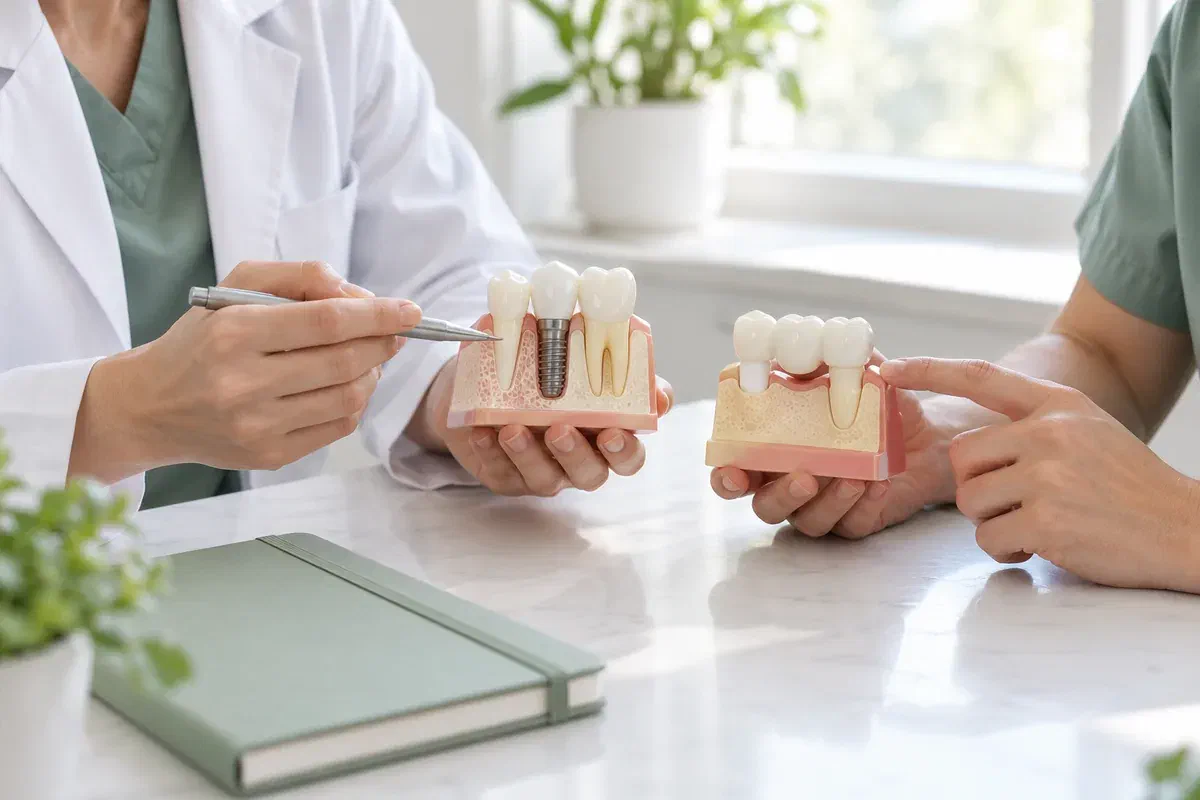
Illustrative patient discussion of a second opinion about implant treatment
Restorative Dentistry

Dental Implant Second Opinions in Caledon

An old bridge that is failing often leads to a recommendation to switch to implants, sometimes with extra teeth involved. For people coming from Caledon, a second opinion reviews the bridge, the supporting teeth and every realistic replacement path.

When an existing bridge reaches its limits

Your bridge served you well. Now what?

Bridges can last many years, but eventually the supporting teeth may develop decay, the bridge can loosen, or the gum can change. When that happens, a dentist may recommend removing it and placing implants, which can be a bigger undertaking than the original bridge. Wanting another opinion before agreeing is entirely sensible.

In an implant second opinion, a dentist independently reassesses the bridge, the teeth that hold it, and the proposed replacement. The aim is to understand how the recommendation follows from the findings and whether other approaches deserve consideration. It is not a verdict on your first dentist.

For Bolton and the other villages across Caledon, appointments are often grouped to cut down on trips, so it helps to bring records of the original bridge, recent X-rays, and the new plan. We will be honest about what can be judged at the visit and what may need further information.

Have your bridge and plan reviewed
Dental professionals comparing implant and bridge teaching models
What you are deciding

Repair, replace, or redesign?

Most questions about a failing bridge come down to the supporting teeth, the proposed replacement, or how two plans compare. Some people also want a view on an implant they already have. Bringing a specific question makes the visit more productive.

Supporting teeth recommended for removal

When the teeth that anchor a bridge are in trouble, ask what is affecting each one and whether any could reasonably be kept. A careful reassessment examines them individually before assuming implants are the only route.

Very different replacement proposals

One office may suggest a new bridge, another several implants, another a combination. Having every proposal on paper lets us set the amount of work and the thinking behind each next to one another, rather than ranking them by cost.

Problems with an implant already placed

If you have an existing implant and something has changed, describe it: discomfort, appearance, movement, or cleaning difficulty. Component records can be important, and some concerns warrant specialist input.

A loose bridge with significant pain, swelling, or discharge needs prompt care rather than a planning conversation. Call the clinic about changing symptoms so the urgent issue comes first.

Why ask for another view

A replacement plan, explained in full.

A further consultation gives you time to review the evidence and ask how each proposed replacement serves your priorities. It might support the move to implants, suggest a new bridge or another approach, or reveal a gap in the evidence that ought to be filled before anyone decides.

When one dentist favours implants and another a new bridge, both may be reasonable. Each option has different consequences for surgery, cost, cleaning, and the remaining teeth. Ask where the recommendations agree, where they differ, and what each assumes about the supporting teeth.

Learn what is known about the supporting teeth

Some findings about the anchor teeth will be clear, while others are judgments about how they may hold up. Understanding the difference matters when the choice is between repair and a larger replacement.

Weigh options against what matters to you

You may prioritise keeping natural teeth, avoiding surgery, appearance, or easier upkeep. Another opinion helps you check whether a replacement plan addresses those priorities and what trade-offs it involves.

Take focused questions back

You can bring what you learn to the dentist who made the original recommendation. An additional opinion can support that conversation without requiring you to move your care.

What happens at the visit

Bridge, teeth, plan, decision.

A bridge review rarely fits into a five-minute glance at a quote. When you call to book, it is worth checking which papers and images to gather, the fee for the assessment, how much ground the appointment is meant to cover, and whether extra tests are a possibility.

  1. Start with the history of the bridge

    Roughly when it went in, who made it, and what has changed lately are all useful to know. Add the new recommendation, what worries you about it, your hopes for the result, and any medical details that bear on dental care.

  2. A close look at the anchor teeth

    Each supporting tooth, the gum around it, and the bridge itself are checked, alongside any X-rays you have brought. The dentist will say frankly if the picture is complete enough to offer a view, or if something is missing.

  3. Set the replacement choices side by side

    Next comes an honest account of what the findings back up and where doubt remains, with a new bridge, implants, and other routes compared on the same terms. Should a referral or further imaging come up, ask what it is meant to settle.

  4. Agree on the decision you’ll make next

    Before leaving, run through the conclusions and anything recommended as a follow-up. A short written outline can go home with you, and from there you might return to the first office with questions, look into things further, or keep planning.

After the consultation

Compare the proposals in full.

Two bridge-replacement proposals only make sense when read in full, one beside the other. File them together at home, and be wary of judging either by a single sentence pulled out of its context.

Count the teeth each plan replaces

One proposal might swap the bridge for a new one, while another removes an anchor tooth and adds implants. Look at the preparation each lists and the final restoration it ends with, since a wider plan will understandably cost more and take longer.

Decide who should hear about the findings

Should you want our notes to reach the office that made the bridge, say so to both teams and they can sort out the right way to do it. That kind of contact often clears up questions about how the bridge was built and who will care for it later.

Keep the old bridge clean and watched

Until a choice is made, keep cleaning under and around the bridge as advised and act on any active problem with the anchor teeth. Ask plainly which issues are safe to leave for a while and which are not.

Possible paths forward

The findings guide what comes next.

Getting another view on a bridge doesn’t oblige anyone to rewrite the plan. What you gain is a plain sense of the routes open to you, and of the facts you would still want before picking one.

When the evidence supports it

Go ahead with the implant plan

Our review may agree that implants are a sound way to replace the failing bridge, and make the reasons easier to see. Practical matters such as timing, a temporary tooth, upkeep, and fees then belong with the clinician providing the work.

When another approach is sensible

Consider a different replacement

A fresh bridge, saving one of the anchor teeth, a changed design, or a removable appliance could each be on the table. For any of them, ask what it improves and what new limits or ongoing care it would bring.

When the supporting teeth are uncertain

Investigate further

Extra imaging, testing, or a specialist’s opinion on the anchor teeth may be worthwhile. Find out what that step could alter in your decision, and how the existing bridge should be cared for until then.

Replacing a bridge: Caledon questions

From bridge to implant: what to ask.

A failing bridge raises plenty of questions. These answers may help you prepare for the visit.

(905) 876-4488
Can an old bridge be repaired instead of replaced?
Occasionally a bridge can be recemented or adjusted, but often problems with the supporting teeth mean a new solution is needed. The dentist can explain what the examination suggests.
Why would a new plan need more implants than the bridge had teeth?
It might not, but plans vary based on bone, gum health, and the condition of nearby teeth. Ask how the number and position of implants were decided.
Is a new bridge still an option if the supporting teeth are weak?
That depends on how much healthy structure remains and the condition of the gums and bone. Sometimes another bridge is reasonable, and sometimes it isn’t.
Can I keep my bridge while the implants heal?
In some cases part of the existing work can stay temporarily; in others it can’t. Ask what you would wear during healing and how it would affect eating and appearance.
How do I find out when my bridge was placed and what it’s made of?
The office that placed it may have records. If not, the examination and imaging can still give useful information about its condition.
Will a second opinion guarantee I can avoid implants?
No. We might end up agreeing that implants make sense, or we might point to a different route, and neither result can be promised in advance. The purpose is a clearer picture of what was found and what the realistic choices are.
Implant second opinions for Caledon

Let’s look at the bridge before you replace it.

Our Bronte Street team can look over a failing bridge, an implant proposal meant to replace it, or an implant you already have. Gather what paperwork you can and jot down your questions, and the time together can stay fixed on the choice you’re making.

If the bridge is loose, painful, or there is swelling, mention it when you call so urgent needs can be addressed first.

Visit Milton Dental Clinic
Unit 1, 342 Bronte St. S, Milton, ON L9T 5B7
Get directions Clinic hours
Monday–Thursday
11am–7pm
Friday–Sunday
By appointment only

Areas we serve

  • Milton
  • Oakville
  • Mississauga
  • Georgetown
  • Halton Hills
  • Acton
  • Campbellville
  • Brampton
  • Burlington
  • Puslinch
  • Rockwood
  • Erin
  • Caledon
  • Etobicoke
  • Old Milton
  • Bronte Meadows
  • Timberlea
  • Dorset Park
  • Dempsey
  • Clarke
  • Beaty
  • Coates
  • Harrison
  • Scott
  • Willmott
  • Ford
  • Bowes
  • Cobden
  • Walker
  • Mountain View
  • Milton Heights
  • Hawthorne Village
  • Valley View
  • Fallingbrook
  • Nassagaweya
  • Trafalgar
  • Esquesing
  • Nelson
  • Brookville
  • Moffat
  • Glen Williams
  • Norval
  • Limehouse
  • Stewarttown
  • Ashgrove
  • Hornby
  • Silver Creek
  • Speyside
  • Scotch Block
  • North Oakville
  • River Oaks
  • Glen Abbey
  • West Oak Trails
  • Palermo
  • Bronte Creek
  • College Park
  • Joshua Creek
  • Uptown Core
  • Preserve
  • Iroquois Ridge
  • Lisgar
  • Meadowvale
  • Meadowvale Village
  • Churchill Meadows
  • Erin Mills
  • Central Erin Mills
  • Streetsville
  • East Credit
  • Creditview
  • Heartland
  • Sheridan
  • Mount Pleasant
  • Credit Valley
  • Huttonville
  • Churchville
  • Springbrook
  • Northwest Brampton
  • Bram West
  • Fletcher's Meadow
  • Fletcher's Creek South
  • Alton Village
  • Orchard
  • Millcroft
  • Headon Forest
  • Tansley
  • Brant Hills
  • Tyandaga
  • Kilbride
  • Lowville
  • Aberfoyle
  • Morriston
  • Arkell
  • Hillsburgh
  • Freelton
  • Carlisle
  • Waterdown
  • Flamborough
  • Mountsberg

How can we help?

Milton Dental Clinic

Have a question about your smile? Choose the option that works best for you.

For urgent dental concerns, please call.
Messages are reviewed during clinic hours.