Advice to extract a natural tooth
Ask what is affecting the tooth’s long-term prospects and whether keeping it was considered. A sound second assessment looks closely at that tooth before accepting an implant as the only sensible path.


Your implant was fine for years, and now something has changed: the gum looks different, food catches, or it simply feels off. A second opinion for Oakville households can assess the concern and what records may help explain it.
Not every second opinion is about treatment that hasn’t happened yet. Some people from Oakville come to us with an implant that was placed years ago, perhaps by a dentist who has since retired or moved, and a new concern they would like someone to explain.
Others are partway through deciding on new treatment and want another assessment before going further. In both cases, a second opinion is an independent look at the findings and the plan. It does not assume anyone erred; it tries to connect what you are noticing or being told with what can be seen in your mouth.
Records about the implant, such as its brand, the parts used, and earlier X-rays, can make a real difference to what we can determine. Even without them, an examination of your current condition is useful, and we will be clear about where the limits of the assessment lie.
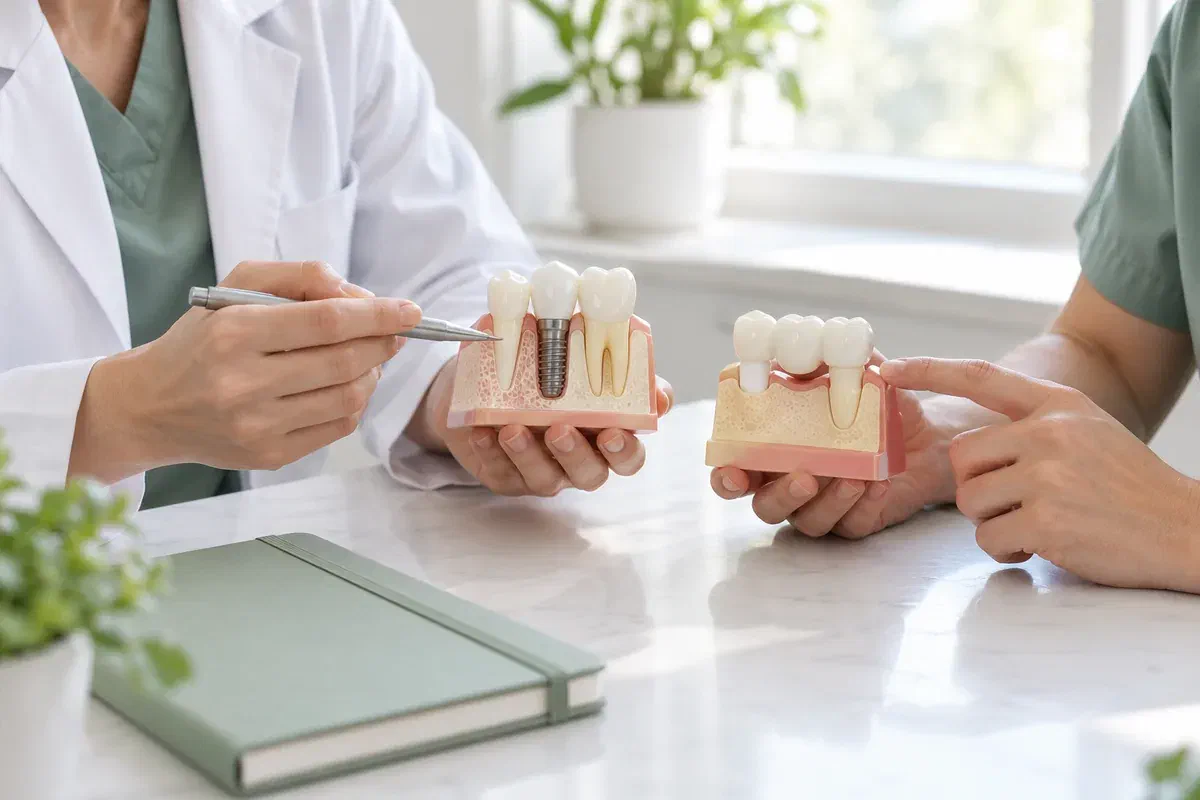
Arriving with a clear question helps the appointment go further. It could relate to an implant you already have, a plan you have been given, or a tooth someone has suggested removing.
Ask what is affecting the tooth’s long-term prospects and whether keeping it was considered. A sound second assessment looks closely at that tooth before accepting an implant as the only sensible path.
Treatment plans can vary in their preparatory work, grafting, provisional teeth, and final restorations. Bring each in writing so we can compare the extent of care and the reasoning, rather than simply the fee.
Tell us whether it is tenderness, bleeding when you clean, a shift in appearance, a feeling of movement, or something else. Details about the implant’s components help, and some problems are best evaluated by a specialist.
Pain that is getting worse, swelling, pus, or a crown or implant that moves needs prompt attention. Call us about changing symptoms instead of waiting for a planning appointment.
A second consultation lets you revisit the evidence with fresh eyes and ask how any recommended treatment fits your priorities. It may agree with what you have already been told, suggest something else, or show that more information is required before a judgment is fair.
When opinions differ, that is often a reflection of genuine choice rather than a mistake. Implant problems in particular can sometimes be handled in several reasonable ways. Ask where the two views agree, where they don’t, and what each one is assuming.
We can separate clear findings from expectations and open questions. This is especially valuable when you are deciding whether to repair, monitor, or replace an existing implant restoration.
Comfort, appearance, cleaning ease, and avoiding further surgery may all matter to you. A second opinion lets you ask whether a given route serves those priorities and what it leaves unresolved.
You may want to discuss the findings with the dentist who placed or restored the implant. An additional opinion can help you do that with clearer questions, without obliging you to switch practices.
A useful opinion often needs more than a look at a quote. Ask in advance which records to gather, what the assessment fee covers, how broad the review will be, and whether extra investigations may be suggested.
Tell us about the treatment proposed or already done and what you want clarified. Include your goals, any current symptoms, how past dental care has gone for you, and relevant health information.
Implant details, earlier imaging, and written plans can all inform the review. The dentist examines the area as it is now and explains whether the available information is sufficient for an opinion.
We go over what the examination shows, what remains uncertain, and how the reasonable choices compare. If specialist input or more records would help, ask which specific question they are meant to answer.
Confirm the main conclusions and any follow-up we recommend. You can ask for an outline of the discussion, then decide whether to talk with your original clinician, gather more information, or move ahead with planning.
The second opinion is most helpful read alongside any earlier proposal or treatment history. Keep notes together and avoid weighing short phrases without the findings and reasoning behind them.
Look at which teeth or implants each plan involves, what preparatory steps are included, and what final restoration is proposed. Different scopes naturally lead to different costs and timelines.
If you would like findings shared between practices, discuss the arrangements with each team. Good communication helps with questions about the original placement, component details, and responsibility for follow-up care.
While a decision is pending, keep up with advice about cleaning and any active problem. Ask which issues can safely wait and which need earlier care, so a search for answers doesn’t leave a concern untreated.
You don’t need to suspect something is wrong to want another explanation. These answers can help you decide what to bring and what to ask.
Book a visit at our Bronte Street practice to discuss an existing implant or a new recommendation. Gather what records you can and bring the questions on your mind so the assessment can centre on what you need to know.
If you have pain, swelling, or a sense that the implant or crown is moving, tell us when you call so urgent needs are identified early.
