

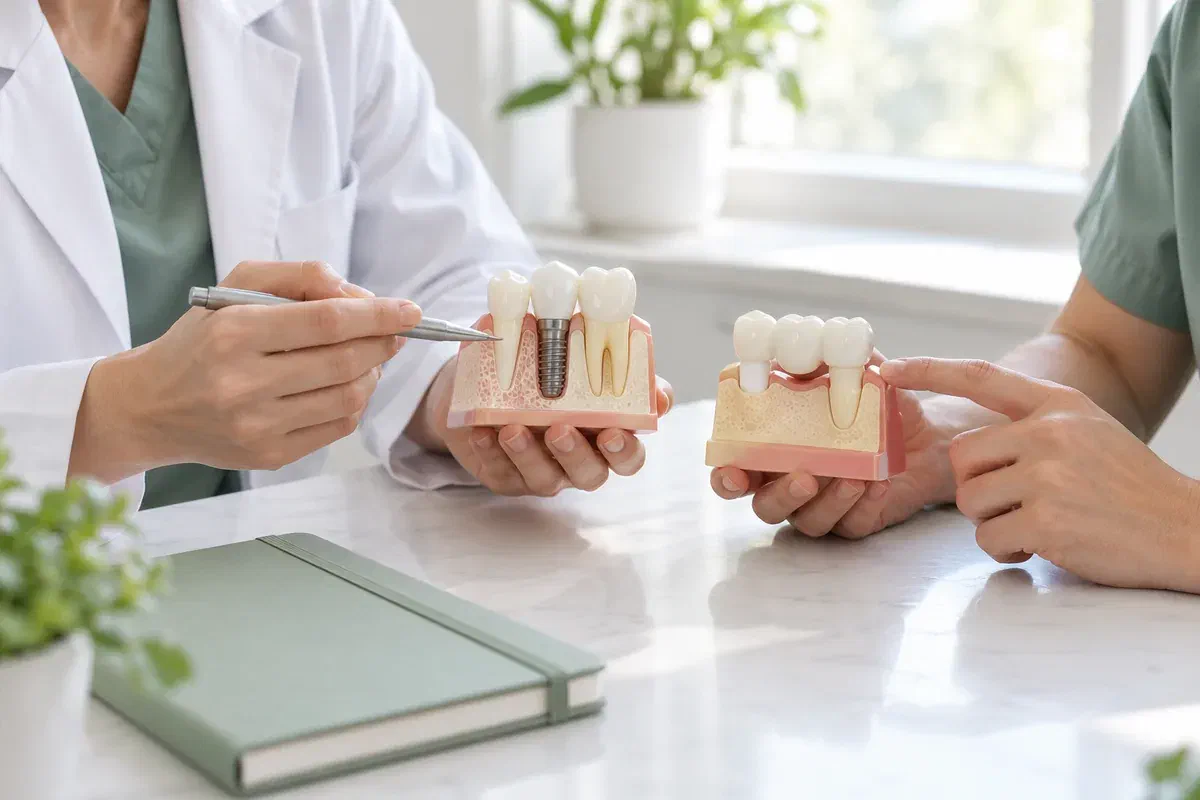
Illustrative patient discussion of a second opinion about implant treatment
Restorative Dentistry

Dental Implant Second Opinions in Puslinch

If surgery is something you would rather avoid, or a health condition makes you cautious, an implant plan deserves careful discussion. A second opinion for people in Puslinch reviews the findings and the options, with and without surgery.

Weighing surgery carefully

Not everyone is eager for oral surgery.

An implant involves a surgical procedure, and for some people that is the main sticking point. You may have a medical condition, take medications you are unsure about, feel anxious about surgery, or simply prefer a less invasive route if one is reasonable. Those are all good reasons to seek an implant second opinion.

The consultation is an independent reassessment. A dentist examines your mouth, reviews the proposed plan and available records, and explains how the recommendation relates to the findings and to your health. It doesn’t assume the first dentist got anything wrong; it makes room for your concerns.

Rural households in Puslinch often plan dental care around farm work, long commutes, or other appointments, so bringing a current medication list, the written plan, and any imaging helps make the visit worthwhile. We will be clear about what can be determined, and where your physician or a specialist may need to be involved.

Discuss your options and concerns
Dental professionals comparing implant and bridge teaching models
What is on your mind

Surgery, health, or something else entirely?

A specific question gives the visit purpose. It might be about whether a tooth really needs removing, how your health affects the plan, whether non-surgical options exist, or how two proposals compare.

Removing a tooth you would rather keep

Ask what is affecting the tooth and whether keeping it is a reasonable option, particularly if you’re hoping to avoid surgery. A careful reassessment examines the tooth before an implant is treated as the default.

Proposals with different surgical demands

Plans may vary in how many procedures they involve, whether grafting is needed, and what temporary teeth are used. Bring them in writing so we can compare the scope and reasoning, not just the price.

Concerns with an existing implant

If you already have an implant, tell us what has changed: discomfort, appearance, movement, or cleaning difficulty. Component records help, and some situations require specialist assessment.

Worsening pain, swelling, discharge, or a loose restoration should not wait for a second-opinion visit. Call us about changing symptoms so they can be addressed promptly.

Why a second opinion can reassure

Options explained with your health in mind.

A further consultation lets you review the evidence and ask how a plan accounts for your health and your comfort with surgery. It may support the original recommendation, suggest a less invasive alternative, or show that information from your physician or a specialist is needed first.

Two dentists may recommend different things without either being wrong. Some people are good candidates for an implant, while for others a bridge or denture may be more suitable, and the balance depends on many factors. Ask where the views agree and what each is weighing most heavily.

Understand what your health means for the plan

Certain conditions and medications are relevant to surgery and healing. The discussion can separate what is known about your situation from what still needs checking with your doctor.

Compare surgical and non-surgical routes

If avoiding surgery is a priority, a second opinion helps you ask whether that is realistic and what you might give up. Every option has trade-offs, and it is worth knowing them.

Return with clearer questions

You may want to raise what you learned with your original dentist or your physician. An additional opinion can support those conversations without requiring a change of practice.

How the consultation is structured

Health history first, then the mouth.

A useful review generally involves more than a quick look at an estimate. When booking, ask what records to bring, what the assessment fee includes, how much the visit will cover, and whether further investigations might be advised.

  1. Share your health and your question

    Bring an up-to-date list of medications and medical conditions, and explain what has been proposed and what concerns you. Your goals, symptoms, and earlier dental experiences help the dentist understand the context.

  2. Review records and examine

    The dentist reviews the treatment plan and imaging, examines your mouth as it is now, and explains whether the information available is enough to form an opinion.

  3. Discuss findings and options

    We go over what the examination supports, what remains uncertain, and how surgical and non-surgical options compare. If a specialist or your physician should be consulted, ask what question they would help answer.

  4. Summarize the next decision

    Confirm the main conclusions and any recommended follow-up. You can ask for a written summary, then decide whether to talk with your original dentist, gather information from your doctor, or continue planning.

After the appointment

Consider both opinions alongside your health.

A second opinion is most useful when its reasoning can be read next to the original proposal. Keep notes together, and compare full explanations, not short summaries without context.

Compare plans that cover the same teeth

Check which teeth or implants each plan includes, what preparation is involved, and what final restoration is proposed. A plan with more surgical steps will differ in timing and cost from one with fewer.

Coordinate with your care team

If you want information shared with another dentist or your physician, discuss the arrangements with each. Clear communication helps with questions about health factors, earlier findings, and future care.

Keep current problems managed

While you think things through, follow advice on any active dental issue. Ask which matters can wait and which need attention sooner, so caution about surgery doesn’t leave a current concern untreated.

Where things might go next

Surgery, an alternative, or a pause for information.

Nothing obliges the review to overturn the first plan. Where it helps is in laying out the routes open to you, surgical or not, and the facts you would still want before choosing one.

If the findings and health picture support it

Go ahead with the implant plan

The review may confirm the original recommendation and explain it more fully. You can then discuss timing, temporary teeth, maintenance, and fees with the clinician who would provide treatment.

If another approach is reasonable

Choose a less invasive option

This could mean keeping a tooth, a bridge, or a removable replacement. Ask what each alternative offers and what limitations or commitments it carries.

If health questions remain

Gather more information first

Input from your physician, further records, or a specialist assessment may be appropriate. Clarify which decision this could change and how current dental needs will be managed meanwhile.

Health and implant surgery: Puslinch questions

Common questions about caution and choice.

Being careful about surgery is entirely reasonable. These answers may help you think through your options.

(905) 876-4488
Can I have an implant if I have diabetes?
Many people with diabetes have implants, but how well the condition is managed can affect healing. The dentist may suggest discussing it with your physician before planning surgery.
Do blood thinners rule out implant surgery?
Not necessarily, but they need to be taken into account. Never stop a prescribed medication on your own. The dentist may coordinate with your doctor to plan safely.
Does smoking affect whether an implant is a good idea?
Smoking is known to affect healing and can influence the outlook for implants. Mention it honestly, as it is relevant to the recommendation.
What are the main alternatives if I don’t want surgery?
Depending on your situation, options may include keeping the tooth with other treatment, a bridge, or a removable partial denture. Each has advantages and limitations the dentist can explain.
Can my physician and dentist share information about my health?
With your consent, yes. Coordinating care can help make sure any treatment plan accounts for your medical needs. Let us know if you’d like this arranged.
Will a second opinion confirm I can safely avoid surgery?
It can’t promise that. The assessment may identify a reasonable non-surgical option or may support the original plan. What it offers is a clearer understanding of your choices and their uncertainties.
Implant second opinions for Puslinch

Let’s consider the plan alongside your health.

Book an appointment at our Bronte Street practice to review an implant proposal or an existing restoration. Bring your medication list, records, and questions so the visit can focus on the decision ahead of you.

When you call, mention any pain, swelling, or loose teeth or restorations so urgent problems can be separated from planning.

Visit Milton Dental Clinic
Unit 1, 342 Bronte St. S, Milton, ON L9T 5B7
Get directions Clinic hours
Monday–Thursday
11am–7pm
Friday–Sunday
By appointment only

Areas we serve

  • Milton
  • Oakville
  • Mississauga
  • Georgetown
  • Halton Hills
  • Acton
  • Campbellville
  • Brampton
  • Burlington
  • Puslinch
  • Rockwood
  • Erin
  • Caledon
  • Etobicoke
  • Old Milton
  • Bronte Meadows
  • Timberlea
  • Dorset Park
  • Dempsey
  • Clarke
  • Beaty
  • Coates
  • Harrison
  • Scott
  • Willmott
  • Ford
  • Bowes
  • Cobden
  • Walker
  • Mountain View
  • Milton Heights
  • Hawthorne Village
  • Valley View
  • Fallingbrook
  • Nassagaweya
  • Trafalgar
  • Esquesing
  • Nelson
  • Brookville
  • Moffat
  • Glen Williams
  • Norval
  • Limehouse
  • Stewarttown
  • Ashgrove
  • Hornby
  • Silver Creek
  • Speyside
  • Scotch Block
  • North Oakville
  • River Oaks
  • Glen Abbey
  • West Oak Trails
  • Palermo
  • Bronte Creek
  • College Park
  • Joshua Creek
  • Uptown Core
  • Preserve
  • Iroquois Ridge
  • Lisgar
  • Meadowvale
  • Meadowvale Village
  • Churchill Meadows
  • Erin Mills
  • Central Erin Mills
  • Streetsville
  • East Credit
  • Creditview
  • Heartland
  • Sheridan
  • Mount Pleasant
  • Credit Valley
  • Huttonville
  • Churchville
  • Springbrook
  • Northwest Brampton
  • Bram West
  • Fletcher's Meadow
  • Fletcher's Creek South
  • Alton Village
  • Orchard
  • Millcroft
  • Headon Forest
  • Tansley
  • Brant Hills
  • Tyandaga
  • Kilbride
  • Lowville
  • Aberfoyle
  • Morriston
  • Arkell
  • Hillsburgh
  • Freelton
  • Carlisle
  • Waterdown
  • Flamborough
  • Mountsberg

How can we help?

Milton Dental Clinic

Have a question about your smile? Choose the option that works best for you.

For urgent dental concerns, please call.
Messages are reviewed during clinic hours.