

Illustrative patient discussion of a second opinion about implant treatment
Restorative Dentistry

Dental Implant Second Opinions in Rockwood

The right paperwork can make an implant second opinion far more useful. For anyone travelling from Rockwood, knowing which records to request, and why each one matters, helps a single consultation reach clearer answers about your plan.

Getting your records together

A folder of paperwork, a clearer answer.

Many people decide they want a second opinion on an implant plan and then wonder what to bring. The written treatment plan is a start, but X-rays or scans, notes on earlier treatment, and details of any existing implant can all help another dentist understand the recommendation more quickly.

An implant second opinion is an independent reassessment of your mouth and the plan. The dentist examines the area, reviews the records, and explains how the recommendation follows from the findings. It isn’t a judgment of your first dentist. It is a chance to understand the proposal, or to learn what else could reasonably be done.

Coming from Rockwood, a bit of preparation makes the trip more productive. Request copies from your current office a week or two before the visit if you can. Even without every record, the examination itself is valuable, and we will tell you plainly what it can establish.

Arrange a second-opinion consultation
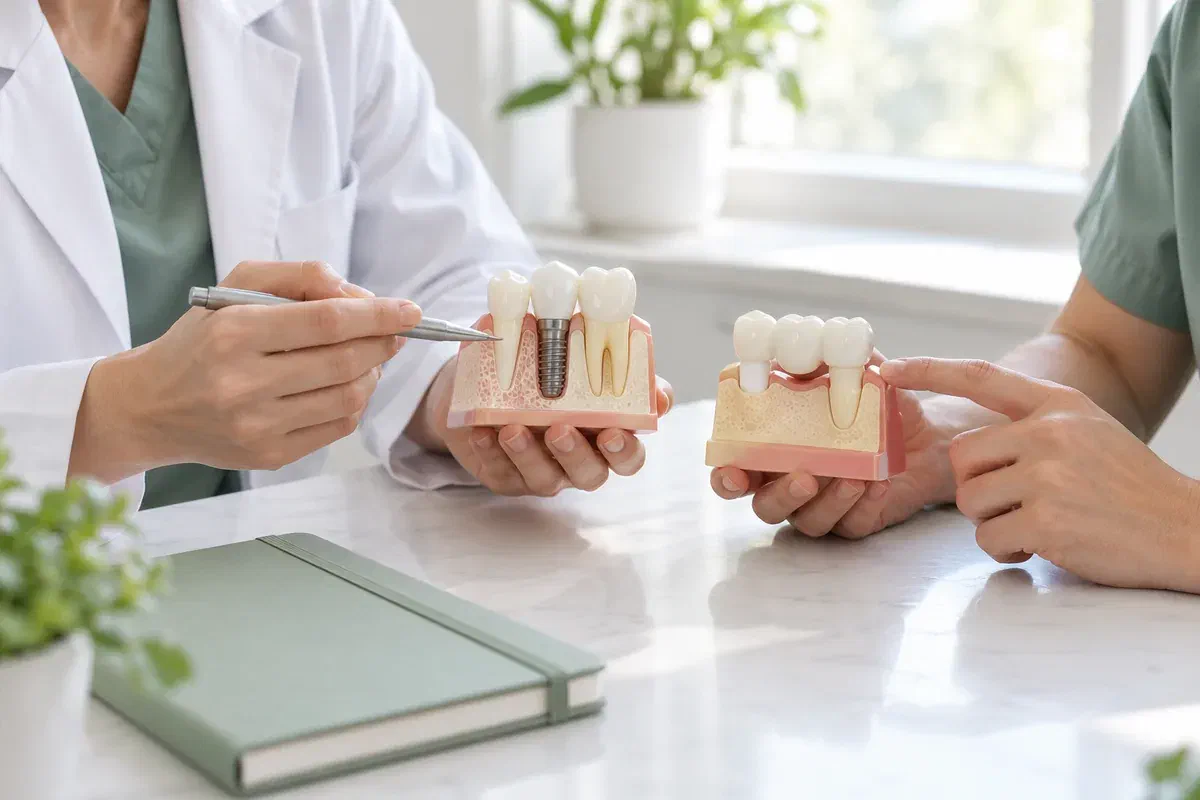
Dental professionals comparing implant and bridge teaching models
What you hope to learn

Bring the records that relate to your question.

The most useful paperwork depends on what you want to understand. Whether it’s the outlook for a particular tooth, the steps in a plan, the differences between two proposals, or a problem with an existing implant, different records will help.

Questions about a tooth marked for removal

Recent X-rays and notes on earlier treatment of that tooth help most. Ask what is limiting its future and whether keeping it was considered. The reassessment should study the tooth before an implant is taken as given.

Comparing two written plans

Bring each plan exactly as it was given, including separate surgical and restorative estimates. Plans may differ in grafting, temporary teeth, and the final restoration, and comparing scope matters more than comparing totals.

A concern with an existing implant

Records naming the implant system and parts used are especially helpful. Describe what you are noticing, whether pain, appearance changes, movement, or cleaning trouble. Some concerns need specialist input.

Don’t wait to gather records if you have worsening pain, swelling, discharge, or a loose restoration. Call the clinic so the urgent issue can be discussed right away.

Why the records matter

More information, better reasoning.

With good records, a second consultation can look more closely at the evidence and ask how the plan addresses your priorities. It may support the original proposal, suggest an alternative, or show what information is still missing before any approach can be properly judged.

Even with the same records, two dentists may reach different recommendations without either being mistaken. Dental problems often allow more than one reasonable solution. Ask where the opinions agree, where they diverge, and which assumptions explain the difference.

Separate findings from interpretation

Records show what was found at a particular time. The examination shows what is there now. Together they help distinguish established findings from predictions, which matters when deciding about extraction or multi-stage treatment.

Compare the plan with your goals

Your priorities might include comfort, appearance, avoiding surgery, or simple maintenance. Reading the plan against those aims shows what it does well for you, and where its limits lie.

Prepare questions for your own dentist

With a clearer picture, you can go back to your original clinician with specific questions. An additional opinion supports that without requiring you to transfer care.

From request to recommendation

What happens, start to finish.

Expect the appointment to go well beyond a glance at a price. While you are arranging it, find out which papers and images are worth requesting, what the assessment itself costs, how much the visit is meant to cover, and whether more testing could be proposed once we have examined you.

  1. Request and send your records

    Contact your current office for the written plan, the X-rays or scan behind it, and any implant details on file. When you book, let us know the question you most want settled, plus your goals, any symptoms, how earlier dental care has gone, and health matters worth knowing.

  2. Examination and record review

    Whatever you have sent is read first, then your teeth and gums are examined as they stand today. The dentist will tell you whether the paperwork and the examination together are enough to reach a view, or whether a piece of the puzzle is still missing.

  3. Explain findings and alternatives

    You will hear which conclusions the records and examination back up, which remain open, and how each reasonable choice stacks up against the others. If more imaging or a specialist is mentioned, ask what exactly that step would help decide.

  4. Outline your next decision

    We finish by recapping the main points and any follow-up that makes sense. A written outline can be added to your folder of records, and you can then take it back to your original dentist, look into things further, or carry on with planning.

Keeping everything together

File the second opinion with the first.

A second opinion is most useful kept alongside the original plan and records. Store them together, and compare complete explanations rather than individual phrases.

Make sure both plans cover the same treatment

Check which teeth or implants are included, what preparation is planned, and what final restoration is proposed. Different scopes of care lead to different estimates and timelines, so the plans may not be equivalent.

Decide who should receive copies

If you want findings shared with your current dentist, discuss the arrangements with each team. Clear communication helps answer questions about earlier findings, components, and future care.

Keep up with current dental needs

While deciding on a long-term plan, follow advice about any active problem. Ask which matters can wait and which need sooner attention, so gathering information doesn’t delay necessary care.

Possible results of the review

Confirm, reconsider, or gather more.

The review may leave your plan untouched. Its worth is in showing which choices are genuinely available and which records or tests, if any, still stand between you and a decision.

When the records and findings support it

Proceed with the original plan

Your records and our examination may point the same way as the first recommendation, and make its purpose clearer. You can then discuss timing, temporary teeth, maintenance, and fees with the clinician who will provide the treatment.

When another approach makes sense

Consider an alternative

This might involve keeping a tooth, adjusting the restoration design, or a non-implant replacement. Ask what the alternative offers and what limitations or commitments it brings.

When information is incomplete

Obtain further records or tests

More imaging, investigations, or a specialist assessment may be appropriate. Ask what the missing piece could change, and what should happen with any present problem while it is being tracked down.

Records for a Rockwood second opinion

What to gather, and why.

Not sure what to bring? These answers may help you prepare.

(905) 876-4488
How do I request my dental records from another office?
Contact the office and ask for copies of the relevant treatment plan, imaging, and notes. They may ask you to sign a request, and some offices charge a fee for copies.
Which X-rays are most helpful to bring?
Recent images of the area in question are usually most useful, along with any 3D scan if one was taken for implant planning. Older images can help show changes over time.
What if my previous office can’t find my records?
The assessment can still go ahead based on examination and any new imaging the dentist considers justified. We will explain what can and can’t be concluded without the earlier records.
Should I bring my implant card or a treatment summary?
Yes, if you have them. Information about the implant system and components can be very helpful when assessing an existing implant.
Can you send your findings to my regular dentist?
With your consent, findings can be shared. Let us know if you would like this arranged, and which records you want sent.
Will having complete records guarantee a definite answer?
Not always. Good records help, but some questions need further investigation or specialist input. The dentist will explain what can be concluded and what remains uncertain.
Implant second opinions for Rockwood

Bring your records, and we’ll read them with you.

Book a consultation at our Bronte Street location to review an implant plan or an existing restoration. Bring or send your records ahead, along with your questions, so the visit can focus on the decision in front of you.

If you have pain, swelling, or anything that feels loose, mention it when booking so urgent needs can be identified first.

Visit Milton Dental Clinic
Unit 1, 342 Bronte St. S, Milton, ON L9T 5B7
Get directions Clinic hours
Monday–Thursday
11am–7pm
Friday–Sunday
By appointment only

Areas we serve

  • Milton
  • Oakville
  • Mississauga
  • Georgetown
  • Halton Hills
  • Acton
  • Campbellville
  • Brampton
  • Burlington
  • Puslinch
  • Rockwood
  • Erin
  • Caledon
  • Etobicoke
  • Old Milton
  • Bronte Meadows
  • Timberlea
  • Dorset Park
  • Dempsey
  • Clarke
  • Beaty
  • Coates
  • Harrison
  • Scott
  • Willmott
  • Ford
  • Bowes
  • Cobden
  • Walker
  • Mountain View
  • Milton Heights
  • Hawthorne Village
  • Valley View
  • Fallingbrook
  • Nassagaweya
  • Trafalgar
  • Esquesing
  • Nelson
  • Brookville
  • Moffat
  • Glen Williams
  • Norval
  • Limehouse
  • Stewarttown
  • Ashgrove
  • Hornby
  • Silver Creek
  • Speyside
  • Scotch Block
  • North Oakville
  • River Oaks
  • Glen Abbey
  • West Oak Trails
  • Palermo
  • Bronte Creek
  • College Park
  • Joshua Creek
  • Uptown Core
  • Preserve
  • Iroquois Ridge
  • Lisgar
  • Meadowvale
  • Meadowvale Village
  • Churchill Meadows
  • Erin Mills
  • Central Erin Mills
  • Streetsville
  • East Credit
  • Creditview
  • Heartland
  • Sheridan
  • Mount Pleasant
  • Credit Valley
  • Huttonville
  • Churchville
  • Springbrook
  • Northwest Brampton
  • Bram West
  • Fletcher's Meadow
  • Fletcher's Creek South
  • Alton Village
  • Orchard
  • Millcroft
  • Headon Forest
  • Tansley
  • Brant Hills
  • Tyandaga
  • Kilbride
  • Lowville
  • Aberfoyle
  • Morriston
  • Arkell
  • Hillsburgh
  • Freelton
  • Carlisle
  • Waterdown
  • Flamborough
  • Mountsberg

How can we help?

Milton Dental Clinic

Have a question about your smile? Choose the option that works best for you.

For urgent dental concerns, please call.
Messages are reviewed during clinic hours.