

Illustrative dentist and patient discussion of an implant treatment sequence
Restorative Dentistry

Dental Implant Treatment Planning

Understand the stages before committing to implant care. Dental implant treatment planning in Milton brings assessment, preparation, the final restoration, costs, and continuing care into one clear conversation.

A closer look at implant treatment planning

See how the individual appointments fit together.

Dental implant treatment planning connects the proposed replacement with the steps needed to reach it. Assessment, preparation, placement, healing, restoration, and maintenance may involve different appointments or clinicians. A useful plan explains how those stages depend on one another.

The implant fixture is one part of the treatment. The tooth or appliance it supports needs appropriate space, appearance, function, and cleaning access. Planning should consider the final restoration early, so the discussion is about a complete replacement rather than a procedure viewed in isolation.

At Milton Dental Clinic, we can help you understand the proposed sequence and the decisions that still need to be made. Tell us about practical concerns such as travel, work, costs, or a temporary gap. Those details can be discussed while the clinical requirements and realistic timing remain central.

Discuss your implant treatment sequence
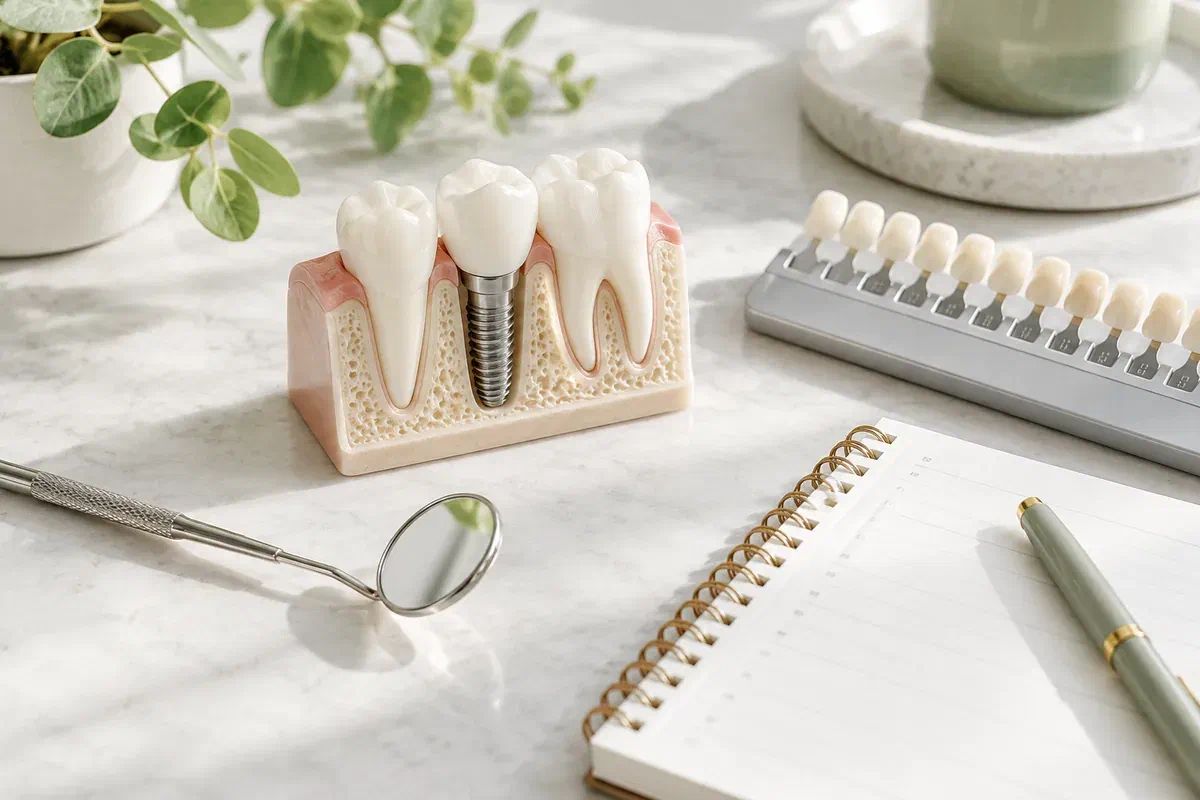
Implant teaching model, shade guide, and blank notebook on a consultation desk
Questions a complete plan should address

Look at what happens before and after placement.

A treatment outline should make the dependencies visible. Knowing which steps are definite and which depend on further findings helps you understand the plan without mistaking an early estimate for a guaranteed timetable.

Preparation before the implant stage

Existing dental disease, a tooth requiring removal, or the condition of the proposed site may influence the sequence. Ask which concerns need attention first and what will be assessed before the next stage is considered appropriate.

The tooth you will use during treatment

Discuss whether a temporary replacement is suitable and what limitations it would have. Appearance, eating, and the protection of a healing site may all affect the arrangement, so it should be part of the plan before treatment begins.

Responsibilities across different appointments

If several clinicians are involved, establish who coordinates the sequence and who provides each stage. Clear responsibilities help you understand estimates, referrals, postoperative contacts, and the arrangements for fitting the final restoration.

An advertised rapid implant option may not describe the treatment suitable for your mouth. Ask which clinical findings determine timing and what could change the proposed sequence.

What careful planning contributes

Make the commitment with the whole pathway in view.

A clear plan can reduce uncertainty about appointments, decisions, and practical arrangements. It gives you a way to discuss the expected benefit alongside the time, maintenance, and possible additional procedures involved.

Planning cannot remove every unexpected finding or guarantee healing. It should instead explain the important uncertainties and how changes would be handled. Ask when consent and estimates would be revisited if the treatment needs to take a different direction.

Patient information: Canadian Dental Association — dental implants

A replacement guided by its intended use

The final crown, bridge, or appliance influences the discussion of support and position. Planning the restoration alongside the implant helps keep function, appearance, and daily cleaning in the same conversation.

A practical understanding of the stages

Knowing when you may need transport, recovery time, or a temporary appliance helps you prepare. The team can explain which arrangements are flexible and which are governed by clinical requirements.

A clearer comparison with other options

The full pathway makes it easier to compare implant treatment with a suitable bridge or removable replacement. Include ongoing maintenance and possible repairs as well as the initial procedures when weighing the choices.

Building the treatment outline

Work from the desired result back through the necessary steps.

Planning is a conversation supported by examination and appropriate records. The sequence may become more detailed as information is gathered, and you should know when the team expects to confirm each decision.

  1. Establish the goals and clinical starting point

    Review the missing teeth, current restorations, health history, and your priorities. The dentist assesses the mouth and identifies the information needed to compare appropriate replacement options.

  2. Define the proposed restoration and preparation

    Discuss what the final tooth or appliance would involve, together with any treatment needed first. The plan should identify relevant imaging, referrals, site preparation, and the limitations of a temporary replacement.

  3. Map the stages, responsibilities, and costs

    Clarify the order of appointments and which clinician provides each part. Ask for an understandable estimate that distinguishes included care from conditional additional work, along with the circumstances that could alter timing.

  4. Confirm decisions and review the plan as care progresses

    Before each major stage, the treating team confirms that the current findings still support the agreed approach. Any meaningful change should be explained so you can understand its effect on the remaining treatment.

Keeping the plan useful

Treat the written outline as a shared reference.

Keep the current version of the treatment plan and contact details available. If information changes between appointments, make sure the team knows so the next stage is based on your current circumstances.

Confirm what the next appointment is for

Ask whether the visit involves assessment, a procedure, or review, and whether you need to make any arrangements. Follow the treating clinician’s specific instructions rather than assuming every implant appointment has the same requirements.

Update the team about changes

New medical treatment, medicines, symptoms, or problems with a temporary restoration may affect the sequence. Let the clinic know before the next planned procedure so the relevance of the change can be assessed.

Keep maintenance in the calendar

Once the final restoration is fitted, the plan should continue with cleaning guidance and appropriate review. Clarify who will monitor the implant, who manages restorative components, and how to arrange care if a concern develops.

Choosing a treatment pathway

Compare the sequence as well as the final tooth.

More than one approach may be clinically reasonable. Ask how the alternatives differ in preparation, surgery, healing, temporary care, restoration design, and long-term maintenance.

When separate preparation or healing is needed

A staged implant pathway

The plan may separate extraction, site preparation, placement, and restoration into distinct stages. Ask what each interval is intended to achieve and how progress will be reviewed before moving forward.

When particular stages can be coordinated

A combined approach in a suitable case

Some procedures may be combined when the site and clinical findings support it. Clarify which steps would occur together and what would happen if conditions during treatment make the combined approach inappropriate.

When another balance better fits your needs

A non-implant replacement plan

A suitable bridge or removable appliance may involve a different sequence and maintenance commitment. The comparison should address your clinical situation and priorities, including what each approach can and cannot reasonably achieve.

Questions about the implant sequence

Know the milestones before choosing the dates.

A useful plan explains why the appointments are arranged as they are. These questions can help you distinguish clinical requirements from practical choices that may have some flexibility.

(905) 876-4488
Does an implant treatment plan include the crown as well as the implant?
It should be clear how the final restoration fits into the overall pathway, but estimates may be issued separately by different clinicians. Ask which document covers the implant, connecting components, temporary tooth, and final crown or appliance so you understand the complete scope.
Can I plan implant treatment around an upcoming holiday?
Tell the team about travel before arranging procedures. Some stages may require nearby follow-up or time for healing, and an unexpected concern can affect plans. Ask what timing is realistic without assuming necessary care can be shortened to meet a departure date.
What is the difference between immediate placement and immediate use of a new tooth?
These describe different decisions. Placement concerns when the implant is inserted, while the timing and function of a temporary or final restoration require separate assessment. Ask exactly which steps a proposed rapid-treatment plan includes and what limitations apply during healing.
Can the final restoration be planned before the implant is placed?
Yes, considering the intended tooth or appliance early is an important part of the planning discussion. Its shape, position, and cleaning needs help inform the broader approach. The final details still depend on the assessment and findings as treatment progresses.
What should happen if additional treatment becomes necessary during the plan?
The team should explain the new finding, why it matters, and how it changes the proposed care. Ask how revised costs, timing, alternatives, and consent will be addressed. A plan should allow for discussion of meaningful changes rather than treating the original outline as unchangeable.
How can I tell whether two implant timelines describe the same treatment?
Compare the starting point, preparation, placement, healing reviews, and delivery of the final restoration. One timeline may end at surgery while another includes the finished tooth. Ask which stages are included and which depend on additional findings before comparing the duration.
Dental implant treatment planning in Milton

Let’s make the sequence understandable.

Arrange a consultation at our Bronte Street clinic to discuss the steps behind a proposed implant replacement. We can review the starting point, identify the decisions still to make, and help you understand how preparation, restoration, and maintenance fit together.

Bring any existing treatment outlines or estimates so the discussion can account for the care already proposed and the questions that remain.

Visit Milton Dental Clinic
Unit 1, 342 Bronte St. S, Milton, ON L9T 5B7
Get directions Clinic hours
Monday–Thursday
11am–7pm
Friday–Sunday
By appointment only

How can we help?

Milton Dental Clinic

Have a question about your smile? Choose the option that works best for you.

For urgent dental concerns, please call.
Messages are reviewed during clinic hours.