Care needed ahead of the implant
Decay, gum concerns, a tooth that must come out or the state of the site may need attention first. Write down what has to be treated beforehand and what will be checked before each next stage is approved.


Before you agree to an implant, you should be able to name every stage, who does it and what could change it. From Campbellville, we help you build that checklist and group visits sensibly.
Picture the plan written out on one page: each stage, the reason for it, who provides it and what might change it. If you can read that page and understand it, you are in a good position to decide. If parts are blank, those are the questions to bring back.
An implant pathway usually covers assessment, any preliminary treatment, placement, healing, the final restoration and maintenance. More than one clinician may be involved and every stage depends on another. The finished crown, bridge or appliance belongs near the top of that page, since its fit, look, function and cleaning needs influence what comes before it.
In a rural household around Campbellville, a single trip into town often has to cover several errands. Mention that, along with work, budget and any worry about a visible gap. We will consider them while clinical needs and honest timing stay first.
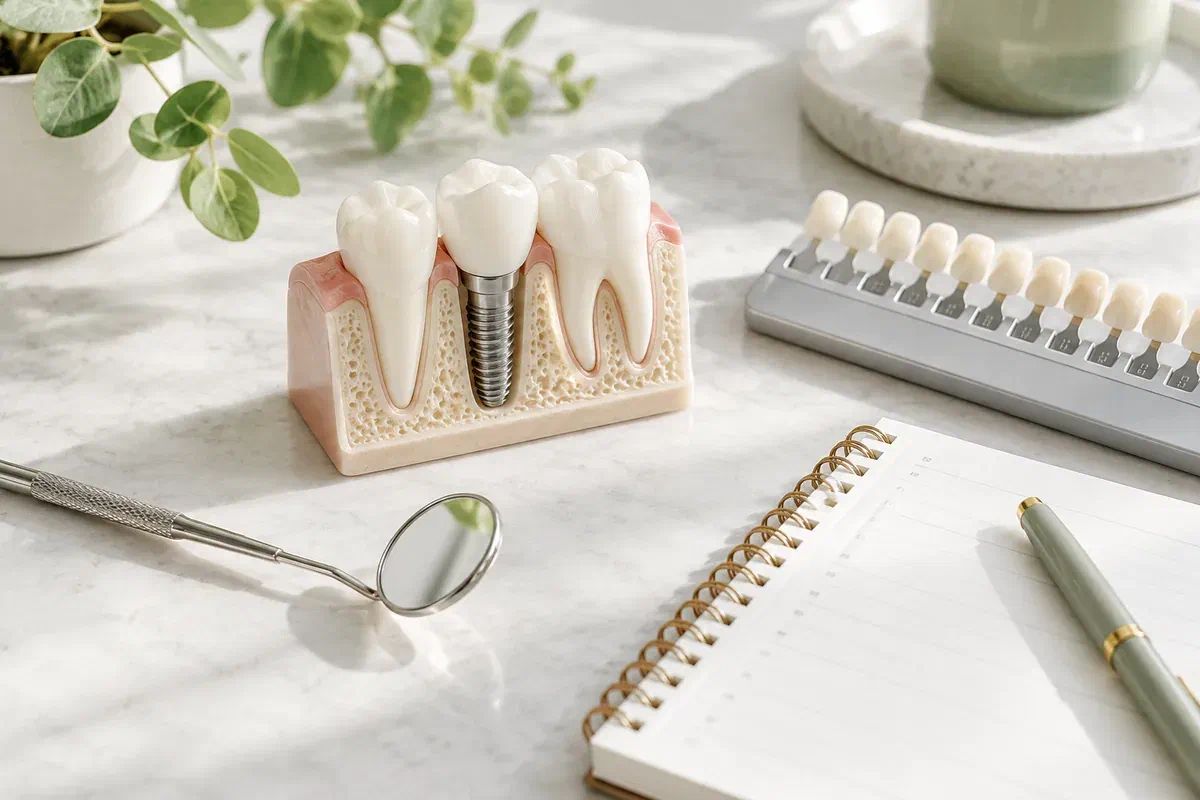
A useful outline marks which steps are set and which depend on later findings. Seeing that clearly stops a first estimate from being read as a firm schedule.
Decay, gum concerns, a tooth that must come out or the state of the site may need attention first. Write down what has to be treated beforehand and what will be checked before each next stage is approved.
Note whether a temporary tooth is planned, what it allows and what it does not. Its effect on eating, appearance and protecting the site should be on the page before anything begins.
For each stage, record who provides it and who oversees the whole plan. That makes estimates, referrals, after-surgery calls and booking the final fitting easier to manage from home.
A promise of a new tooth in a day may not match what your site needs. Ask which findings set the timing and what could change the order.
With every stage listed, you can judge the commitment as a whole: the expected benefit, the time, the maintenance and any procedures that might be added. That makes the decision yours rather than something you drift into.
Planning cannot foresee every finding or promise how healing will go. A good outline names the uncertainties and explains how changes would be handled, so you know a revised cost or fresh consent would be discussed before anything new happens.
Patient information: Canadian Dental Association — dental implants
What the final crown, bridge or appliance needs shapes where support is planned. Listing it first keeps comfort, appearance and cleaning tied to the earlier choices.
Knowing which appointments are short reviews and which involve recovery helps you plan trips and help at home. The team can say which dates move and which healing sets.
A full page makes it easier to set an implant against a bridge or removable appliance, counting upkeep and possible repairs as well as initial treatment.
The plan draws on conversation, an examination and suitable records. Some lines are filled in at the first visit and others later, and you should know roughly when.
We review the missing teeth, existing restorations, health history and what you want from treatment. The dentist examines the area, explains what was seen and lists any information still needed before options can be compared properly.
Together we describe the intended restoration and any earlier care. That might be imaging, a referral or preparing the site, with a frank note about what a temporary can do.
Each appointment is listed with the clinician responsible. The estimate distinguishes included care from conditional work and notes what might move the dates.
Before each major stage, the treating team reviews the latest findings to make sure the agreed approach still holds. Any important change is written in and explained, so the page in your hands always matches the care actually planned.
Store the latest version of the plan with the clinic’s phone number. If your health or circumstances change between visits, call so the next step reflects where things stand.
Check whether the next appointment is an exam, a procedure or a follow-up, and whether you need a driver or help at home. Follow the instructions given for that specific visit.
A new prescription, a medical appointment, symptoms near the site or trouble with a temporary may affect the plan. Calling first lets the team decide whether anything needs to change, and can save an unnecessary trip.
Once the final tooth is fitted, cleaning guidance and regular reviews continue. Record who looks after the implant over time and how to arrange help if something changes.
Knowing the reason behind each step makes the plan easier to agree to. These questions help you tell clinical requirements from practical choices that may flex.
Sit down with us at our Bronte Street clinic and bring your questions. We will go over your starting point, mark the decisions still open and show how groundwork, the permanent tooth and long-term care connect.
Bring any earlier outlines, estimates or notes so we can add to the page you already have.
