

Illustrative dentist and patient discussion of an implant treatment sequence
Restorative Dentistry

Dental Implant Treatment Planning in Old Milton

An old bridge or a tooth with decades of repairs can make the next step feel complicated. For Old Milton households, we map how an implant would fit around the work already in your mouth.

When a tooth has a long history

Planning around the dental work you already have

Plenty of people in Old Milton, the town’s historic downtown, have teeth that tell a story: a crown from years ago, a root canal, a bridge that has finally loosened. When one of those reaches the end of its life, an implant may be among the options, and the neighbouring work becomes part of the decision.

Treatment planning sets out how an implant would get from idea to finished tooth. That can include assessment, removing what is failing, preparing the site, placement, healing, the restoration and ongoing care, sometimes with more than one clinician. Each stage leans on the one before it.

Our Bronte Street practice is close to Old Milton, so reviews can be easy to attend. Mention practical matters early, such as a gap you would rather not show or costs, and we will weigh them alongside what your mouth actually requires.

Talk about replacing an older tooth
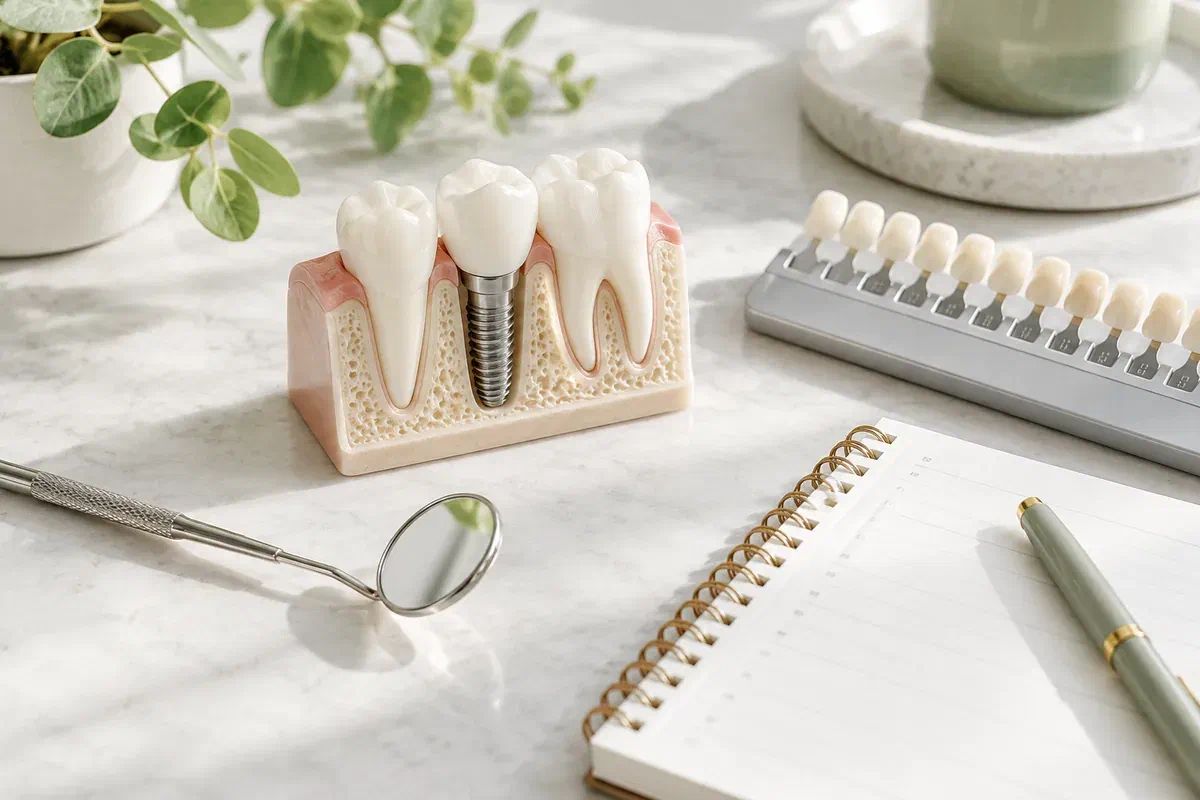
Implant teaching model, shade guide, and blank notebook on a consultation desk
Before anything is removed

Three questions worth settling early

Some steps in a plan are fixed from the start, while others depend on what is found along the way. Seeing which is which keeps an early timeline from being mistaken for a guarantee.

What needs attention around the site

Older restorations, decay under a crown, gum health or the bone where a tooth is coming out can all affect the order of care. Ask which issues are dealt with first and what will be checked before the next stage goes ahead.

How you will manage in the meantime

If a bridge or tooth is removed, ask what would fill the space during healing and what its limits are. Eating, appearance and protecting the healing area all play a part, so agree on it before treatment begins.

Who looks after each part

A referral for surgery and a separate visit for the crown are common. Knowing who coordinates the whole plan makes estimates, post-operative contacts and the final fitting much easier to follow.

Quick-replacement promises in advertising may not suit a site with a complicated history. Ask what your findings mean for timing and what could alter the order.

Clarity before commitment

See the full route, then decide

With an outline in hand, the appointments, decisions and arrangements stop being a mystery. You can set the expected benefit of an implant beside the time, upkeep and any additional procedures it may involve.

Even careful planning cannot foresee every finding or promise how healing will go. What it should offer is an honest list of uncertainties and a clear way of handling changes, including when estimates and consent would be revisited.

Patient information: Canadian Dental Association — dental implants

The end result guides the steps

Where the crown, bridge or appliance will sit shapes where support is needed. Keeping it in view means function, looks and cleaning access stay part of each choice.

Fewer surprises on the calendar

Knowing ahead when you may need a ride home, some recovery time or a temporary tooth helps you prepare. The team can tell you which dates are flexible and which are set by healing.

A fair comparison with what you have now

Seeing every stage lets you weigh an implant against a new bridge or a removable replacement. Include future maintenance and repairs in the comparison, not just the first procedures.

From examination to written plan

Four conversations that build the outline

Discussion, an examination and the right records are what the plan rests on. It often gains detail as information comes in, and you should know when each decision is expected to be confirmed.

  1. Take stock of the mouth as it is

    We review missing teeth, older crowns and fillings, your medical history and your goals. The dentist examines the area and identifies the information needed to compare reasonable replacements.

  2. Agree on the replacement and what precedes it

    We discuss the tooth or appliance you would end up with and any treatment needed first. Imaging, referrals, site preparation and the limits of a temporary option should all be named.

  3. Put the stages and costs in order

    You should be able to see the sequence of visits and who provides each one. A readable estimate separates included care from work that depends on later findings and notes what might shift the dates.

  4. Revisit the plan before each major step

    The treating team checks that current findings still support the agreed approach before moving on. A significant change is explained so you understand how it affects the rest of the treatment.

Staying on track

Your plan is a document to keep handy

Store the newest version of your plan with the clinic’s contact details. If your health or situation shifts between visits, let us know so the next stage is planned on current information.

Ask what each appointment involves

Check whether a visit is an assessment, a procedure or a review and whether you need to arrange anything. Rely on your clinician’s instructions for that specific visit, as implant appointments vary.

Report new medicines or symptoms

Changes in your medical care, medicines, symptoms in the area or a problem with a temporary tooth can change the sequence. Call before your next procedure so the team can assess whether it matters.

Plan for the years after

When the final tooth is fitted, care continues with cleaning advice and reviews. Find out who will monitor the implant, who maintains the crown or attachments and how to reach someone if a concern arises.

Comparing pathways

More than one way to close the gap

Several approaches may be reasonable for the same space. Ask how each differs in preparation, surgery, healing time, temporary care, restoration design and long-term upkeep.

Where a site needs time to prepare or heal

Spacing treatment over stages

Extraction, preparation, placement and restoration may each have their own appointment and interval. Ask what every pause is meant to achieve and how progress will be checked.

Where findings support doing more at once

Combining certain steps

If the site allows, some procedures can be coordinated in the same visit. Ask exactly which ones, and what happens instead if conditions during treatment rule it out.

Where another approach fits your priorities

A new bridge or removable option

Replacing an old bridge with a new one, or choosing a removable appliance, brings its own sequence and upkeep. Compare them honestly, including what each can and cannot do for you.

Common questions

Before you replace a long-serving tooth

Understanding why a plan is laid out as it is makes it easier to judge. These questions help you sort clinical needs from practical preferences that may allow some flexibility.

(905) 876-4488
Can an implant go next to teeth that already have crowns?
Often it can, but the neighbouring crowns and fillings are assessed as part of the plan. Their condition may affect spacing, the design of the new tooth or whether any of them need attention first.
My old bridge has failed. Do I have to choose an implant?
No. A new bridge, a removable appliance or an implant may each be worth discussing. The dentist can explain how your supporting teeth and the site affect which options are reasonable, and you choose with that information.
Will I need imaging before the plan is finished?
Appropriate imaging is commonly part of implant assessment because it helps show the site and nearby structures. The dentist will explain which records are needed for your case and why.
Does the treatment plan cover the crown that goes on the implant?
It should explain where the final restoration fits, though separate clinicians may provide separate estimates. Ask which document lists the implant, connecting parts, any temporary and the final tooth.
What if a stage turns out to need more work than expected?
You should hear what was found, why it matters and how the plan would change. Ask how timing, costs, alternatives and consent will be revisited before the next step.
Can my reviews be booked to suit errands in Old Milton?
Tell the front desk what timing works for you, and they can try to suit it. Review dates still follow the clinical schedule in your plan, so convenience is balanced with what healing requires.
Old Milton implant planning

Let’s look at the whole picture together.

Book a consultation at our Bronte Street clinic to discuss an implant around your existing dental work. We will review your starting point, outline the choices ahead and explain how preparation, the final tooth and maintenance connect.

Bring any previous treatment records, estimates or notes about older work so we can take them into account.

Visit Milton Dental Clinic
Unit 1, 342 Bronte St. S, Milton, ON L9T 5B7
Get directions Clinic hours
Monday–Thursday
11am–7pm
Friday–Sunday
By appointment only

Areas we serve

  • Milton
  • Oakville
  • Mississauga
  • Georgetown
  • Halton Hills
  • Acton
  • Campbellville
  • Brampton
  • Burlington
  • Puslinch
  • Rockwood
  • Erin
  • Caledon
  • Etobicoke
  • Old Milton
  • Bronte Meadows
  • Timberlea
  • Dorset Park
  • Dempsey
  • Clarke
  • Beaty
  • Coates
  • Harrison
  • Scott
  • Willmott
  • Ford
  • Bowes
  • Cobden
  • Walker
  • Mountain View
  • Milton Heights
  • Hawthorne Village
  • Valley View
  • Fallingbrook
  • Nassagaweya
  • Trafalgar
  • Esquesing
  • Nelson
  • Brookville
  • Moffat
  • Glen Williams
  • Norval
  • Limehouse
  • Stewarttown
  • Ashgrove
  • Hornby
  • Silver Creek
  • Speyside
  • Scotch Block
  • North Oakville
  • River Oaks
  • Glen Abbey
  • West Oak Trails
  • Palermo
  • Bronte Creek
  • College Park
  • Joshua Creek
  • Uptown Core
  • Preserve
  • Iroquois Ridge
  • Lisgar
  • Meadowvale
  • Meadowvale Village
  • Churchill Meadows
  • Erin Mills
  • Central Erin Mills
  • Streetsville
  • East Credit
  • Creditview
  • Heartland
  • Sheridan
  • Mount Pleasant
  • Credit Valley
  • Huttonville
  • Churchville
  • Springbrook
  • Northwest Brampton
  • Bram West
  • Fletcher's Meadow
  • Fletcher's Creek South
  • Alton Village
  • Orchard
  • Millcroft
  • Headon Forest
  • Tansley
  • Brant Hills
  • Tyandaga
  • Kilbride
  • Lowville
  • Aberfoyle
  • Morriston
  • Arkell
  • Hillsburgh
  • Freelton
  • Carlisle
  • Waterdown
  • Flamborough
  • Mountsberg

How can we help?

Milton Dental Clinic

Have a question about your smile? Choose the option that works best for you.

For urgent dental concerns, please call.
Messages are reviewed during clinic hours.