Groundwork that can’t be rushed
Active gum disease, decay, infection at the tooth being replaced or the condition of the bone may need care first. Ask which issues have to be resolved before any implant step and how readiness is judged.


Seen an ad for a new tooth in a single day? Before you book, it helps to know what speed means in implant care. From Rockwood, we explain staged and faster routes honestly.
Advertising often leads with speed. A phrase like “new tooth today” can describe a temporary on a freshly placed implant, a combined extraction and placement, or something else again. The words sound simple; the treatment behind them depends heavily on the site.
Planning makes speed one factor among several. A complete outline runs through assessment, any preparation, placement, healing, the restoration and long-term care, sometimes across more than one clinician. Each stage rests on the last, and the finished tooth still needs room, a natural look, a comfortable bite and easy cleaning, so it is planned first.
For anyone in Rockwood weighing fewer trips against a cautious approach, the trade-offs are worth seeing clearly. Raise practical points such as time off, cost and a visible gap. We will consider them while clinical findings and realistic healing set the pace.
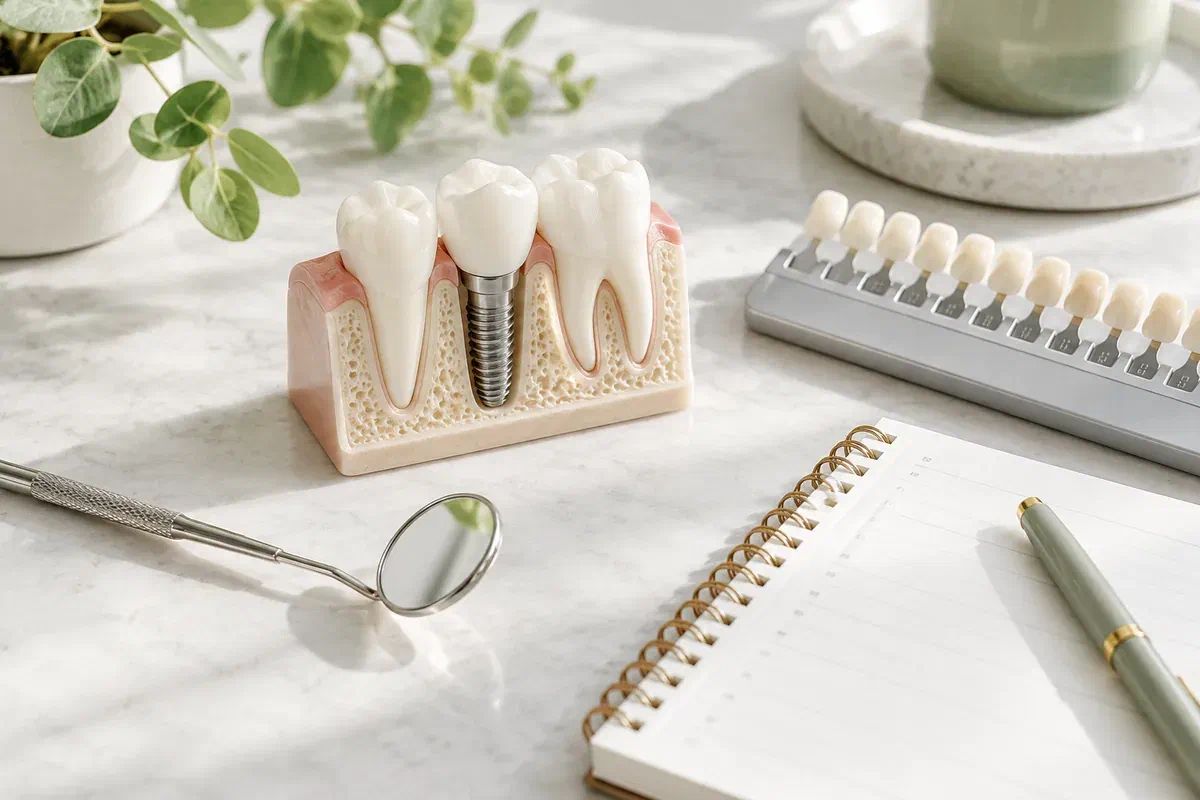
Some steps are decided early and others only once the site has been examined or begun to heal. Separating them keeps a quick estimate from turning into an assumed guarantee.
Active gum disease, decay, infection at the tooth being replaced or the condition of the bone may need care first. Ask which issues have to be resolved before any implant step and how readiness is judged.
A tooth fitted on the day is often a temporary with limits on chewing while the implant heals. Ask how it would look and function, how long it stays and how it protects the site.
Fast treatment still needs reviews and a final restoration. Ask who coordinates those stages, which matters for estimates, contacts after surgery and the eventual fitting.
A quick option can be appropriate in a suitable case, but the ad cannot tell you whether you are that case. Only an examination of your own site can.
A clear plan lets you compare a quicker route with a staged one on more than appointment count. You can weigh the expected benefit against healing, upkeep and the chance of extra procedures if conditions turn out differently.
Neither approach comes with a guarantee. Planning should explain the uncertainties of each and how the team would respond if a combined step proved unsuitable, including how costs and your agreement would be revisited.
Patient information: Canadian Dental Association — dental implants
Whatever the pace, the final crown, bridge or appliance has to fit and function. Planning it early keeps appearance, chewing and cleaning part of the timing decision.
Even a fast route usually includes reviews and a final fitting. Knowing when you may need recovery time or a driver helps you plan; the team can say which dates move.
With the full pathway visible, you can still compare an implant against a bridge or removable appliance, including long-term maintenance and repairs.
Your outline is built from discussion, examination and suitable records. Whether a faster route is reasonable often becomes clear only after assessment, and we will say when that call can be made.
We review the gap or failing tooth, nearby restorations, your health and what you hope for, including how much speed matters. The dentist examines the area and notes what else is needed.
We discuss the final restoration and any earlier care: imaging, referral, site work and whether a temporary on the day is realistic, with its limits.
You see the order of visits under each approach and who provides them. Estimates show what is included, what is conditional and what could change on the day.
Even with a combined plan, the treating clinician confirms at the time that conditions allow it. If not, the fallback is explained and agreed in advance so there are no surprises.
Keep your plan, after-care instructions and the clinic’s number close. If something changes between visits, phone ahead. A quick conversation lets the team adjust the plan before you make the trip in from Rockwood.
Ask whether it is a check of healing, a procedure or a planning review, and whether you need to arrange anything. Follow the instructions for that visit specifically.
If you leave with a temporary on the implant, follow the eating guidance closely. Contact the clinic if it loosens, chips or feels high, or if you notice new symptoms or start a new medicine.
After the final restoration, cleaning guidance and reviews continue. Ask who will monitor the implant over the years and how to get help if something changes.
Understanding why timing varies helps you judge any offer. These questions separate clinical requirements from conveniences that may or may not apply to you.
Book a planning visit at our Bronte Street clinic and bring any offers you have seen. We will assess your starting point, set out the decisions ahead and show how groundwork, the restoration and maintenance connect under different timelines.
Bring screenshots or printouts of any offers or estimates so we can talk through what they include.
