

Illustrative consultation about restoring a damaged back tooth
Restorative Dentistry

Dental Inlays

Explore a fitted restoration for a tooth that needs more than a straightforward repair. Dental inlays in Milton begin with an assessment of the damaged area, the remaining tooth, and the alternatives that could suit it.

A closer look at dental inlays

Restore the damaged area with the surrounding tooth in mind.

A dental inlay is a custom restoration made outside the mouth and fitted into a prepared area of a tooth. It typically restores a defect between the raised points of the chewing surface, called cusps. The dentist assesses whether those surrounding areas remain suitable to keep without additional coverage.

An inlay may be discussed when a direct filling is not the preferred approach but the tooth does not need the same coverage as a crown. That is a clinical decision about the condition and shape of the tooth, rather than a simple ranking of one restoration as better than another.

At Milton Dental Clinic, we can explain why a fitted restoration is being considered and what the alternatives would involve. Tell us about symptoms, previous repairs, and your priorities for appearance and maintenance. The goal is a proportionate repair that fits the tooth’s needs.

Discuss a fitted tooth restoration
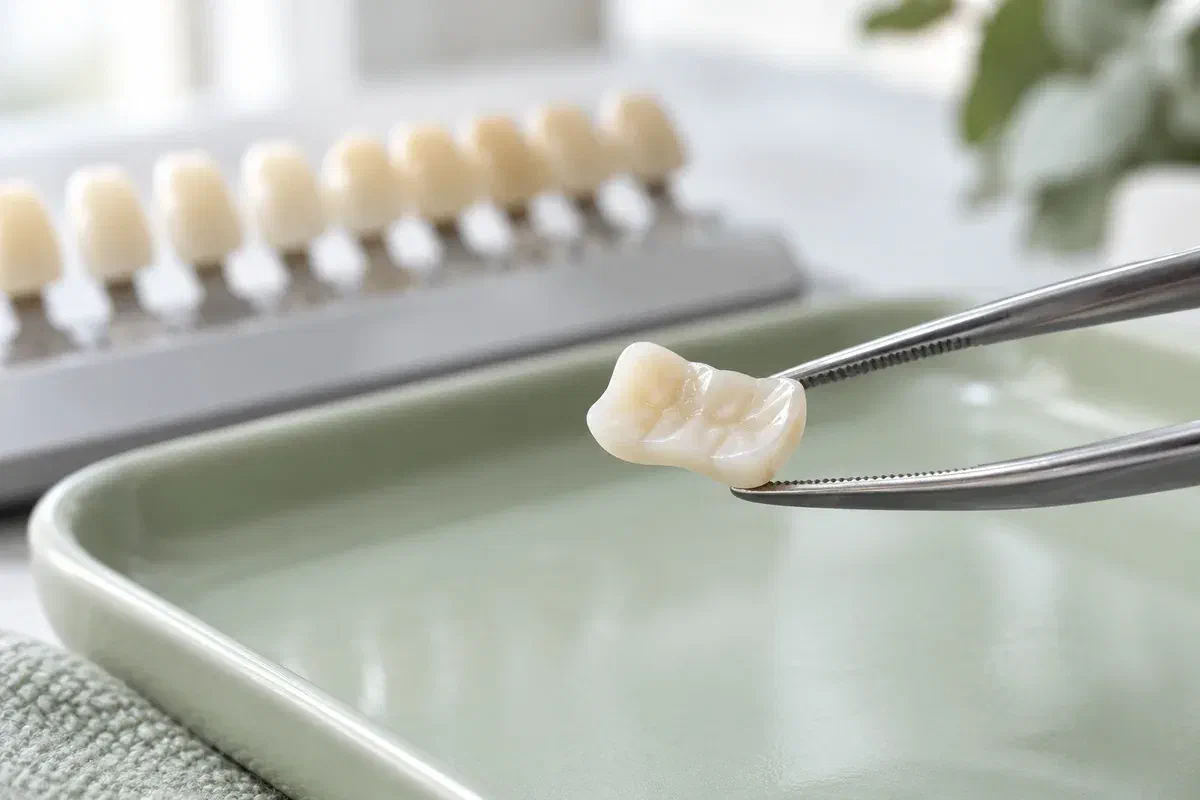
Illustrative ceramic inlay held in dental tweezers beside a shade guide
When an inlay may be considered

The remaining walls help guide the decision.

The size of a damaged area matters, but so does the strength and shape of the tooth around it. An examination helps determine whether an inlay is appropriate or whether a different design would provide more suitable support.

An existing filling needs reassessment

A failing or damaged filling may prompt a discussion of replacement options. The dentist considers what remains after the affected material is addressed, rather than choosing an inlay solely because the previous filling was large.

A defect changes the chewing surface

Damage within a back tooth can affect shape, contacts, and function. Ask which parts of the tooth are sound and whether the proposed restoration will remain within them or needs to extend over a weakened cusp.

You want to understand the treatment choices

The names filling, inlay, onlay, and crown can be confusing. A model or explanation of the actual area being restored can help you understand why one approach is being recommended for this tooth.

A tooth with pain, a suspected crack, or a pulp concern needs an appropriate diagnosis. Selecting the shape of a restoration does not replace that assessment.

What a suitable inlay can achieve

Rebuild the missing surface while retaining useful structure.

An inlay is shaped for the prepared tooth and checked before it is secured. In a suitable case, it can restore the damaged area while retaining surrounding structure that does not require coverage.

It still involves preparation and has limitations. The material, fit, remaining tooth, and forces on the restoration affect the recommendation. Ask what advantage an inlay offers over a direct filling in your case and why a broader restoration is not needed.

Patient information: Cleveland Clinic — restorative dentistry and inlays

A restoration shaped for the defect

The proposed form can address the area that needs rebuilding, including its relationship to neighbouring teeth and the bite. The dentist should explain which features are important to achieving a suitable fit.

A choice that respects the remaining tooth

Where the surrounding tooth is appropriate to retain, an inlay may avoid covering areas that do not need it. Conservation should still be balanced with the support required for the tooth to function.

Material options discussed in context

Appearance, location, available space, and the clinical situation influence material selection. Ask which materials are appropriate and how their benefits, limitations, and costs compare for the proposed restoration.

From assessment to fitting

Prepare carefully, check the restoration, and review the bite.

The number of appointments depends on the treatment method and the needs of the tooth. Ask how the inlay will be made, whether a temporary restoration is expected, and what the tooth will need between visits.

  1. Assess the tooth and compare the options

    The dentist reviews the damaged area, symptoms, existing restorations, and surrounding tissues. Appropriate tests or imaging may help establish whether an inlay is suitable and whether another issue needs treatment first.

  2. Prepare the area and record its shape

    After consent and appropriate comfort measures, the tooth is prepared for the selected restoration. Records are taken using a suitable method, and the team explains any temporary protection needed while the inlay is being made.

  3. Check the fitted restoration

    The inlay is assessed for its fit, contacts, and relationship to the bite. Appearance can also be discussed where relevant. If changes are needed, they should be addressed before the restoration is completed.

  4. Secure the inlay and explain care

    A suitable cementation or bonding approach is used for the material and tooth. The finished area is checked, and you receive instructions about immediate use, cleaning, and any symptoms that should prompt review.

Caring for the restored tooth

Keep the edges and neighbouring spaces part of your routine.

An inlay replaces missing structure, but the remaining natural tooth still needs preventive care. Follow the specific instructions from the fitting appointment and ask for help if cleaning around the restoration feels different.

Follow the immediate eating instructions

The advice may depend on the material used and whether the area is numb. Clarify when normal chewing is appropriate and how to avoid accidentally biting soft tissues before sensation has fully returned.

Clean the tooth and its contacts

Continue brushing with fluoride toothpaste and cleaning between the teeth as advised. Mention a contact that traps food or floss that persistently catches so the dentist can assess the area rather than leaving you to work around it.

Report a change in the bite or surface

A tooth that feels high, develops persistent sensitivity, or has a rough edge needs review. Do not try to adjust the inlay yourself or repeatedly bite hard food to see whether it will settle.

Choosing the right extent of repair

The tooth determines how much coverage is useful.

A treatment recommendation should explain why the proposed design suits the remaining structure. Ask how the alternatives would change preparation, support, appointments, and future maintenance.

When the defect suits a repair made in the mouth

A direct filling

A filling may be appropriate when the size, location, and condition of the tooth allow it. It should remain part of the discussion rather than being dismissed automatically because a fitted restoration is available.

When the surrounding cusps can be retained

A custom inlay

An inlay may restore a suitable defect without extending over the cusps. The dentist considers whether the remaining tooth provides an appropriate setting for this design and explains the material and fitting sequence.

When more of the tooth needs support

An onlay or crown

A weakened cusp or more extensive damage may call for coverage beyond an inlay. Ask which areas require protection and why an onlay, partial-coverage restoration, or crown is being recommended instead.

Questions about dental inlays

Understand the design before choosing the restoration.

A fitted repair is easier to evaluate when you can picture what it replaces and what it leaves in place. These questions can help you discuss the recommendation for your tooth.

(905) 876-4488
How is an inlay different from a filling placed directly in the tooth?
An inlay is made outside the mouth to fit a prepared area, then secured to the tooth. A direct filling is shaped in the tooth during treatment. The dentist considers the defect, remaining structure, and practical requirements before recommending one approach over the other.
Does an inlay cover the pointed parts of a back tooth?
A conventional inlay generally fits between the cusps rather than covering them. If a cusp needs protection, an onlay or another coverage design may be discussed. Ask the dentist to show which parts of your tooth the proposed restoration would replace or cover.
Is an inlay appropriate for every large cavity?
No. The condition of the remaining walls and cusps, the depth of the problem, and other findings matter. Some teeth may suit a direct filling, while others need broader support or treatment of another condition before a final restoration is chosen.
Can an inlay be tooth-coloured?
Certain materials can provide a tooth-coloured restoration, but material selection depends on the case. Ask which options suit the tooth and how appearance, space, function, and maintenance influence the recommendation. An exact match or a fixed lifespan should not be assumed.
Will I need a temporary filling while an inlay is being made?
That depends on the treatment workflow and number of appointments. If temporary protection is used, ask how to eat and clean around it and what to do if it loosens. Do not assume the final restoration has been completed until the team confirms that stage.
Can decay develop around a tooth with an inlay?
Yes. The remaining natural tooth can still develop decay, including near restoration margins. Daily cleaning, fluoride use as advised, and appropriate reviews remain important. Report changes such as food trapping or persistent sensitivity so the area can be assessed.
Dental inlays in Milton

Let’s compare the repair options for your tooth.

Visit our Bronte Street clinic to discuss a damaged tooth or an existing filling that needs attention. We can assess the remaining structure and explain whether an inlay, direct filling, or broader restoration is a suitable choice.

Mention pain, a recent break, or a change in biting comfort when arranging your appointment so the concern can be assessed appropriately.

Visit Milton Dental Clinic
Unit 1, 342 Bronte St. S, Milton, ON L9T 5B7
Get directions Clinic hours
Monday–Thursday
11am–7pm
Friday–Sunday
By appointment only

How can we help?

Milton Dental Clinic

Have a question about your smile? Choose the option that works best for you.

For urgent dental concerns, please call.
Messages are reviewed during clinic hours.