An old filling is dark or worn
Discolouration, wear or chipping around a filling may lead to talk of replacement. What is suitable depends on the tooth left once the old material is removed, not only on the colour of the existing repair.


A dark old filling that shows when you laugh can make you wonder about a more natural-looking repair. For people travelling from Brampton, we look first at the tooth’s strength, then talk through inlay materials and appearance.
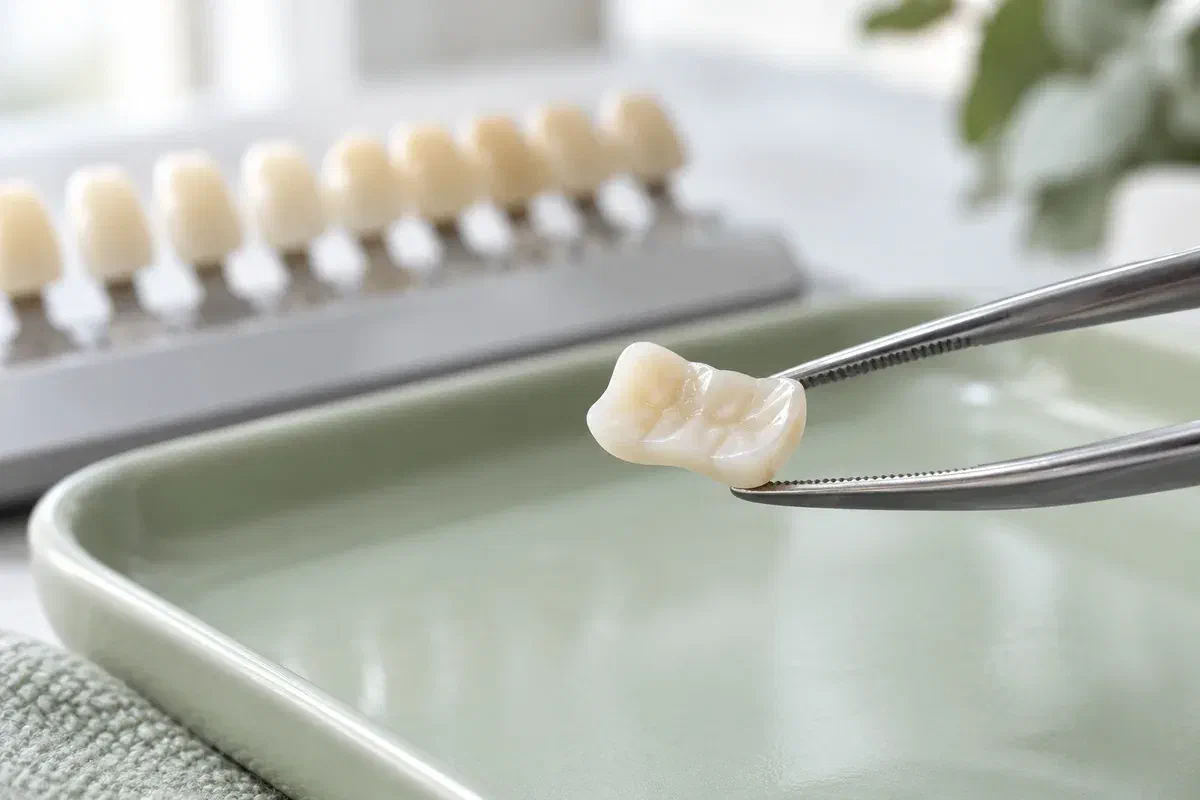
Sometimes the reason for a visit is cosmetic: a grey or dark repair in a premolar that catches the light in photos. Appearance is a fair concern, and it is one of several things weighed when an inlay is considered. An inlay is a custom piece made outside the mouth, shaped to a prepared space and then secured, usually within the cusps of a back tooth.
Health comes first, though. A dentist suggests an inlay when a direct filling is not the preferred approach but the tooth is not so weakened that it needs a crown. The design has to suit how much natural tooth remains. Being tooth-coloured is not, by itself, a reason to choose one restoration over another.
When you visit from Brampton, tell us what bothers you about the tooth, whether it is the look, a rough edge or discomfort. Share its history too. We can explain whether a fitted repair makes clinical sense, which materials might suit it, and what the alternatives would involve.
Wanting a different look is a good start to the discussion, but the decision rests on the damaged area and the condition of the walls and cusps around it. Those determine whether an inlay can be supported or more coverage is needed.
Discolouration, wear or chipping around a filling may lead to talk of replacement. What is suitable depends on the tooth left once the old material is removed, not only on the colour of the existing repair.
Damage in a back tooth can affect its outline, its contacts and how it works when you chew. Ask which parts are still sound and whether the new restoration would stay inside them or need to cover a weakened cusp.
Filling, inlay, onlay and crown can be hard to tell apart in conversation. An image or model of the area being restored can show why one is recommended for your tooth.
Pain, a possible crack or a concern about the nerve requires a proper diagnosis. Choosing a material or shape for the restoration does not replace that assessment.
Because it is made for the prepared space and checked before being bonded, an inlay can, in a suitable case, restore the damaged section while keeping natural tooth around it that does not need covering.
Preparation is still part of it, and so are limits. The material, the fit, the remaining tooth and the forces on it all shape the advice. Ask what an inlay would do here that a direct filling could not, and why a wider restoration is not part of the plan.
Patient information: Cleveland Clinic — restorative dentistry and inlays
The design can rebuild the lost surface along with its contacts and its place in your bite. The dentist should be able to say which features matter most for a good fit.
Healthy cusps that can stay do not have to be ground down and capped. Keeping them is worthwhile only while the tooth still has the support it needs to chew comfortably.
Location, visibility, space and the clinical picture all influence which material is appropriate. Ask about the options, how closely each may blend with your teeth and how they compare in limitations and cost.
Appointments vary with how the inlay is made and what the tooth needs. Ask how many visits to expect, whether a temporary will be used, and how to look after the tooth in between.
Your dentist examines the damaged area, any symptoms, earlier repairs and nearby tissues. Tests or images may confirm whether an inlay is appropriate or whether another problem should be addressed first.
After consent and comfort measures, the tooth is prepared for the chosen design. Its shape is recorded, a shade may be selected for tooth-coloured materials, and any temporary protection is explained.
The inlay is checked for how it seats, how it meets the neighbouring teeth and how the bite closes on it. Its look is reviewed as well. Adjustments are made before it is permanently placed.
A bonding or cementing method suited to the material is used. The tooth is checked once more, and you receive instructions on eating, cleaning and symptoms that should prompt you to call.
An inlay fills in lost structure, but the natural tooth around it still depends on good daily care. Follow the instructions from your fitting and mention any change in how the area feels when you clean.
What is recommended can depend on the material and on whether the area is still numb. Ask when normal chewing can resume and be careful not to bite your cheek before feeling returns.
A fluoride toothpaste twice a day and careful flossing at the contacts protect the enamel beside the inlay. If floss keeps snagging or food lodges there, tell us so it can be examined rather than tolerated.
A tooth that feels high, stays sensitive, develops a rough edge or looks different at the margin should be reviewed. Do not try to adjust it yourself or test it on hard foods.
Colour is often the first thing people ask about, but it is rarely the only thing that matters. Here are some of the questions that come up once the conversation gets going.
Come to our Bronte Street practice with a filling you would like replaced or a back tooth that has been damaged. We will assess how much sound tooth surrounds it and explain whether an inlay, a direct filling or wider coverage is a suitable choice.
Please mention pain, a recent break or any change in how the tooth feels when you bite, so we can give it the attention it needs.
