A large filling has failed
When a big restoration needs replacing, the dentist assesses the tooth once the old material is out. Sound cusps may allow an inlay; undermined ones may point toward an onlay or crown.


Told your molar may need a crown and wondering if something smaller would do? From Caledon, you can have the tooth assessed to see whether its cusps are strong enough for an inlay or genuinely need covering.
The word crown can sound like a big step. So it is common to ask whether a smaller repair might work instead. Sometimes it can. An inlay restores the central part of a back tooth with a piece made outside the mouth, fitted to the prepared area and bonded, while the cusps stay uncovered. Sometimes, though, those cusps are too weak to leave exposed.
That is the real question: what can the remaining tooth support? An inlay suits teeth where a filling placed directly is not the preferred approach, but the surrounding walls are strong enough that covering them is unnecessary. Where they are thin or cracked, a crown or onlay may be the more protective choice.
Caledon is spread across Bolton and many smaller villages, so you may want a clear answer from one thorough visit. Bring your questions, describe your symptoms and the tooth’s history, and tell us what you are hoping for. We will explain what we find and why one design fits better than another.
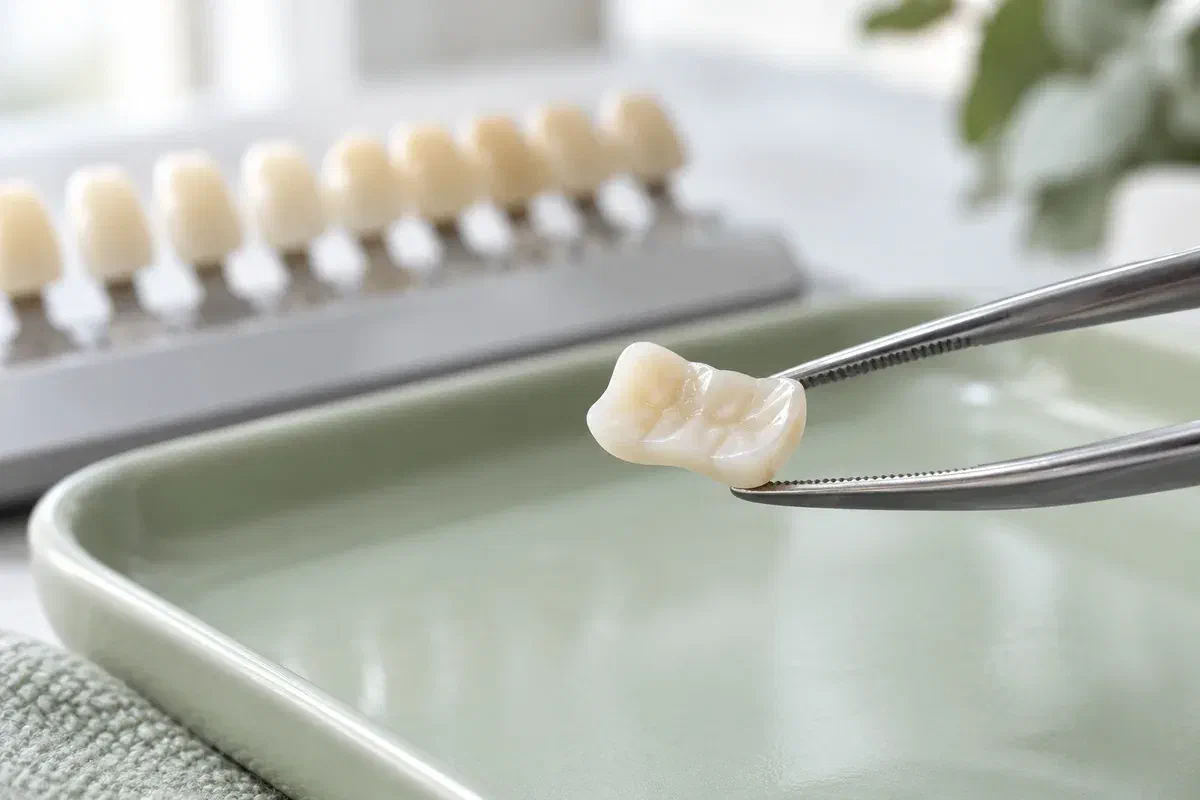
The size of the defect matters less than the strength of the tooth around it. A dentist looks at how thick and healthy the cusps are, and whether any are cracked, before recommending a design.
When a big restoration needs replacing, the dentist assesses the tooth once the old material is out. Sound cusps may allow an inlay; undermined ones may point toward an onlay or crown.
Damage in a molar can affect its shape, contacts and bite. Ask which parts are still strong, and whether the restoration could remain within them or would need to protect a weakened cusp.
Seeing your tooth on an image or model can show why a crown, an onlay or an inlay is being suggested. Ask the dentist to point to the areas that guide the choice.
If the tooth is painful, may be cracked or shows signs of a nerve problem, it needs a diagnosis before any restoration is chosen. Deciding on a design is never a substitute for that.
In a suitable tooth, an inlay rebuilds the damaged area with a piece shaped for the prepared space and checked before bonding. The healthy cusps around it can be kept rather than reduced for a crown.
This is not automatically better. Preparation is still involved, and the material, fit, remaining tooth and bite forces affect the advice. Ask what an inlay would offer here compared with a direct filling, and why a crown or onlay is or is not needed.
Patient information: Cleveland Clinic — restorative dentistry and inlays
The design can restore the missing surface, its contact with the neighbouring tooth and its place in your bite. Your dentist can explain which details matter for a good fit.
If the cusps are healthy, an inlay may avoid reducing them for full coverage. That benefit must still be balanced against the support the tooth needs to function.
Where the tooth is, how visible it is, the space available and clinical findings all influence the choice. Ask which materials suit this tooth and how they compare in benefits, limitations and cost.
How many visits you need depends on how the restoration is produced and on what the tooth requires. Ask whether a temporary will be used and how to protect the tooth until the final piece is placed.
The dentist examines the tooth, your symptoms, earlier repairs and the gums. Images or tests may help show whether the cusps are sound enough for an inlay or whether more protection is advisable.
Once you have agreed and comfort measures are in place, damaged material is removed and the space is refined. A record is taken by scan or impression, and any temporary covering is explained.
The inlay is tried in, and its fit, contacts and bite are assessed. Appearance is reviewed where relevant. Adjustments are made at this point, before bonding.
A bonding or cementing method suited to the material secures the inlay. After a last check, you receive guidance on eating, cleaning and any symptoms that should prompt you to call.
An inlay restores the centre of the tooth, but the natural cusps and enamel around it still need protecting. Follow your fitting instructions, and tell us if the tooth feels different when you clean or chew.
How soon you can eat normally varies with the restoration material and how long the freezing lasts. Ask before you leave, and avoid biting your tongue or cheek before sensation returns.
Use fluoride toothpaste and clean between your teeth daily. If floss catches or food collects at one contact, let us know so we can take a look.
Avoid habits such as chewing ice or opening packages with your teeth. A tooth that feels high, stays sensitive or develops a rough edge should be reviewed, not adjusted at home.
A fitted repair is easier to judge when you know what it would replace and what it would protect. These questions may help as you compare designs.
Book a consultation at our Bronte Street practice for a damaged molar or a large filling that is failing. We will assess the cusps and explain whether an inlay, a direct filling, an onlay or a crown is the most suitable choice.
Please mention pain, swelling, a piece that has broken off or a bite that feels different when you call, so we can set aside the right amount of time.
