

Illustrative consultation about restoring a damaged back tooth
Restorative Dentistry

Dental Inlays in Milton

An old filling that has started to chip, stain or trap food often raises a fair question: what should replace it? In Milton, an inlay assessment looks at what is left of the tooth before any design is chosen.

When an old filling reaches its limit

Sometimes the next repair is made outside the mouth.

Most people meet the word inlay when a long-standing filling in a molar starts to fail. An inlay is a restoration built to the exact shape of a prepared space, then fitted and secured. It usually sits inside the chewing surface, within the raised points known as cusps, and leaves those points in place when they are sound.

That middle position is the reason it comes up at all. A direct filling is shaped in the tooth during one sitting; a crown wraps the whole biting surface. An inlay can be a reasonable option when a filling is not the preferred route yet the tooth does not need full coverage. Neither choice is simply better. The condition of the tooth decides.

For people across Milton, the first step is a conversation and an examination. Tell us what you have noticed, how old the previous repair is, and what matters most to you, whether that is appearance, upkeep or keeping as much natural tooth as possible. We will explain what we see and why a fitted restoration is or is not on the table.

Ask about replacing a worn filling
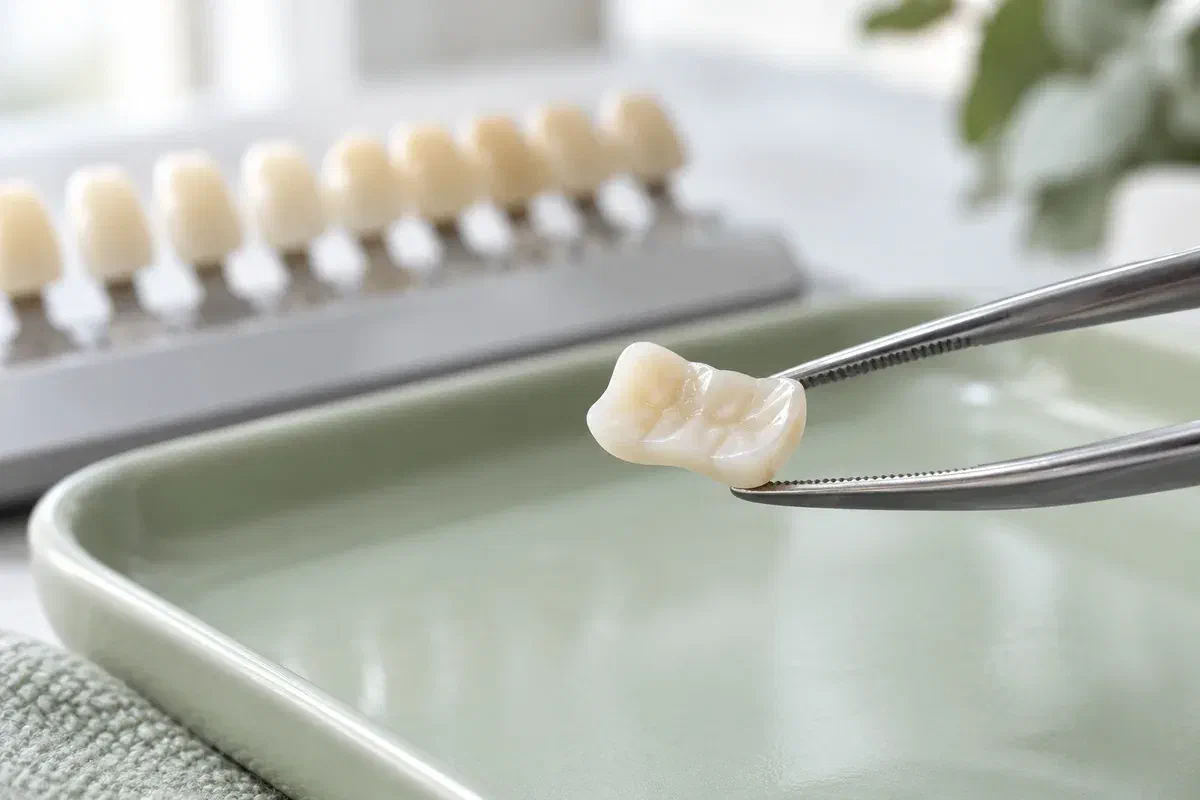
Illustrative ceramic inlay held in dental tweezers beside a shade guide
Signs worth bringing to an exam

What a tired filling can tell you.

A large old repair is not, by itself, a reason for an inlay. The deciding factors are how much healthy tooth surrounds the area and how strong the cusps still are once the old material and any decay are removed.

The edge of a filling feels rough or stained

Wear, chipping or a dark line at the margin can mean the old repair needs attention. Once it is removed, the dentist can see the true size of the space and judge which kind of replacement the remaining walls can support.

Chewing on that side feels different

A back tooth that has lost part of its surface may change how food breaks down or how the teeth meet. Ask which areas of the tooth are healthy and whether a new restoration can stay inside them or must reach over a cusp.

The treatment names blur together

Filling, inlay, onlay and crown describe how much of the tooth a repair replaces. Seeing a diagram or model of your own tooth often makes the recommendation easier to follow than the terms on their own.

Pain, a possible crack or signs of nerve irritation call for a proper diagnosis first. Choosing a restoration design is a separate step and does not replace that assessment.

What a well-chosen inlay offers

Replace the lost section, keep the sound cusps.

Because an inlay is made to match the prepared space and checked before it is fixed in place, it can restore a damaged area in a suitable tooth without covering parts that are still healthy.

It is not without trade-offs. The tooth still needs preparation, and the material, the fit, the strength of what remains and the forces of your bite all shape the advice. A useful question is what an inlay gives you here that a direct filling would not, and why something larger is not needed.

Patient information: Cleveland Clinic — restorative dentistry and inlays

Form matched to the space

A fitted restoration can rebuild the missing surface along with its contacts against the neighbouring teeth and its place in the bite. Ask the dentist which details matter most for a good fit in your tooth.

Healthy structure left alone

When the surrounding tooth is suitable to keep, an inlay may avoid covering areas that do not need it. That conservative aim still has to be weighed against the support the tooth needs to keep working.

Materials explained for your case

Where the tooth sits, how much room there is, how visible it is and the clinical findings all affect material choice. Ask which options suit this restoration and how they compare in benefits, limits and cost.

How treatment usually unfolds

Assess, prepare, try in, then bond.

Appointment numbers vary with how the inlay is made and what the tooth needs. Ask early whether a temporary is expected, how long the gap between visits might be and how to look after the tooth meanwhile.

  1. Look closely and weigh the choices

    The dentist reviews the old restoration, any symptoms, the gums and the surrounding tooth. Tests or images may be used to confirm that an inlay is suitable and that no other problem needs treating first.

  2. Shape the space and capture it

    With your consent and suitable freezing or comfort measures, the area is prepared for the planned design. An impression or scan records the shape, and you will hear about any temporary cover needed while the inlay is made.

  3. Try the inlay before it is fixed

    Fit, contact with neighbouring teeth and the way the bite meets are all checked, and appearance is reviewed where it matters. Any adjustment should happen at this point, before the restoration is made permanent.

  4. Secure it and go over home care

    The inlay is cemented or bonded using a method suited to the material. The area is checked again, and you leave with guidance on eating, cleaning and the symptoms that should bring you back.

Living with the new restoration

Give the margins the same attention as the rest of your smile.

An inlay replaces lost structure, yet the natural tooth around it still depends on prevention. Follow what you are told at the fitting visit and speak up if cleaning around the area feels unfamiliar.

Wait for the right time to chew

Guidance can depend on the material and on whether your mouth is still frozen. Check when ordinary eating can resume and take care not to bite your cheek or tongue while sensation returns.

Keep brushing and cleaning between teeth

Use fluoride toothpaste and clean between the teeth the way you have been shown. If floss shreds or food packs into a contact, let us know so the area can be checked rather than worked around.

Notice if the bite feels off

A tooth that feels tall, stays sensitive or has a sharp edge should be reviewed. Avoid filing at it yourself or testing it on hard food in the hope that it will settle down.

Matching the repair to the tooth

How much coverage does this tooth actually need?

A recommendation should come with a reason that fits the structure left behind. Ask how each alternative would change the preparation, the support, the number of visits and future upkeep.

When the space suits a repair built in place

A direct filling

If the size, position and condition of the tooth allow it, a filling may be the right answer. It deserves a fair hearing rather than being set aside just because a fitted option exists.

When the cusps are strong enough to keep

A custom inlay

An inlay can restore a suitable defect without extending over the cusps. The dentist checks whether the remaining tooth gives it a sound setting and walks you through the material and the fitting steps.

When more of the tooth needs protecting

An onlay or crown

A weak cusp or wider damage may need more coverage than an inlay provides. Ask which areas need protection and why an onlay, another partial-coverage design or a crown is being suggested.

Inlay questions we hear in Milton

Clear answers before you choose.

It is easier to weigh a fitted repair once you can picture what it replaces and what it leaves alone. These questions may help when you talk through the plan for your tooth.

(905) 876-4488
Can an old silver filling be replaced with an inlay?
Sometimes. Once the existing filling and any decay underneath are removed, the dentist can judge how much sound tooth remains. If the cusps are healthy, an inlay may be one option; if they are weak, a design with more coverage may be suggested instead.
Why would a dentist suggest an inlay rather than another filling?
An inlay may be considered when the shape or size of the space makes a direct filling less suitable, yet the tooth does not need a crown. The reasons are specific to the tooth, so ask what was seen that led to the recommendation.
How many visits does an inlay usually take?
It depends on how the restoration is made. Some workflows involve a preparation visit and a separate fitting, with a temporary in between. Ask how your treatment is planned so you can arrange your time and know what to expect at each stage.
Will the tooth be frozen during preparation?
Local anaesthetic is commonly used when a tooth is prepared, and comfort options can be discussed beforehand. Tell the team about any previous experience with freezing, medical conditions or worries so the plan can take them into account.
Is the inlay material chosen to match my other teeth?
Some materials can be tooth-coloured, though the right choice depends on location, space and function. Ask which materials suit this tooth and how appearance is being weighed. A perfect shade match or a set lifespan should not be assumed.
Does the rest of the tooth still need protection from decay?
Yes. Natural tooth around the inlay can still decay, particularly where the restoration meets the enamel. Brushing with fluoride toothpaste, cleaning between teeth and keeping regular checkups all help. Mention food trapping or lingering sensitivity so it can be looked at.
Inlay consultations in Milton

Bring us the tooth you have been wondering about.

Come to our Bronte Street practice with the filling or damaged tooth that has been on your mind. We will check how sturdy the surrounding walls are and talk you through whether an inlay, a direct filling or a larger restoration makes sense.

When you book, mention any pain, a recent break or a change in how the tooth feels when you bite, so the visit can be planned around it.

Visit Milton Dental Clinic
Unit 1, 342 Bronte St. S, Milton, ON L9T 5B7
Get directions Clinic hours
Monday–Thursday
11am–7pm
Friday–Sunday
By appointment only

Areas we serve

  • Milton
  • Oakville
  • Mississauga
  • Georgetown
  • Halton Hills
  • Acton
  • Campbellville
  • Brampton
  • Burlington
  • Puslinch
  • Rockwood
  • Erin
  • Caledon
  • Etobicoke
  • Old Milton
  • Bronte Meadows
  • Timberlea
  • Dorset Park
  • Dempsey
  • Clarke
  • Beaty
  • Coates
  • Harrison
  • Scott
  • Willmott
  • Ford
  • Bowes
  • Cobden
  • Walker
  • Mountain View
  • Milton Heights
  • Hawthorne Village
  • Valley View
  • Fallingbrook
  • Nassagaweya
  • Trafalgar
  • Esquesing
  • Nelson
  • Brookville
  • Moffat
  • Glen Williams
  • Norval
  • Limehouse
  • Stewarttown
  • Ashgrove
  • Hornby
  • Silver Creek
  • Speyside
  • Scotch Block
  • North Oakville
  • River Oaks
  • Glen Abbey
  • West Oak Trails
  • Palermo
  • Bronte Creek
  • College Park
  • Joshua Creek
  • Uptown Core
  • Preserve
  • Iroquois Ridge
  • Lisgar
  • Meadowvale
  • Meadowvale Village
  • Churchill Meadows
  • Erin Mills
  • Central Erin Mills
  • Streetsville
  • East Credit
  • Creditview
  • Heartland
  • Sheridan
  • Mount Pleasant
  • Credit Valley
  • Huttonville
  • Churchville
  • Springbrook
  • Northwest Brampton
  • Bram West
  • Fletcher's Meadow
  • Fletcher's Creek South
  • Alton Village
  • Orchard
  • Millcroft
  • Headon Forest
  • Tansley
  • Brant Hills
  • Tyandaga
  • Kilbride
  • Lowville
  • Aberfoyle
  • Morriston
  • Arkell
  • Hillsburgh
  • Freelton
  • Carlisle
  • Waterdown
  • Flamborough
  • Mountsberg

How can we help?

Milton Dental Clinic

Have a question about your smile? Choose the option that works best for you.

For urgent dental concerns, please call.
Messages are reviewed during clinic hours.