Decay beneath an older filling
A restoration can look intact while decay develops at its margin. Once the old material is taken out, the dentist sees the real extent of the problem and can advise on a suitable replacement.


Your tooth feels fine, yet a checkup or X-ray has shown damage that needs repairing. For people coming from Rockwood, we explain what was found, why an inlay might be suggested and what the other choices are.
It can be surprising to hear that a tooth needs work when nothing hurts. Damage under an old filling or between two molars is often spotted on an image or during an examination long before it causes discomfort. One way it might be restored is with an inlay: a piece crafted outside the mouth to fit the cleaned and shaped area, then bonded, usually without covering the cusps.
Whether that suits your tooth depends on what is found once treatment begins and on how strong the surrounding walls are. An inlay is generally considered when a direct filling is not ideal for the defect but the tooth does not call for a crown. The right choice is specific to the tooth.
Travelling from Rockwood, you may want to see what we saw. Ask us to show you the image or point out the area. Tell us about any past repairs and what matters to you in a restoration, and we can explain why a fitted design is being raised and what else could work.
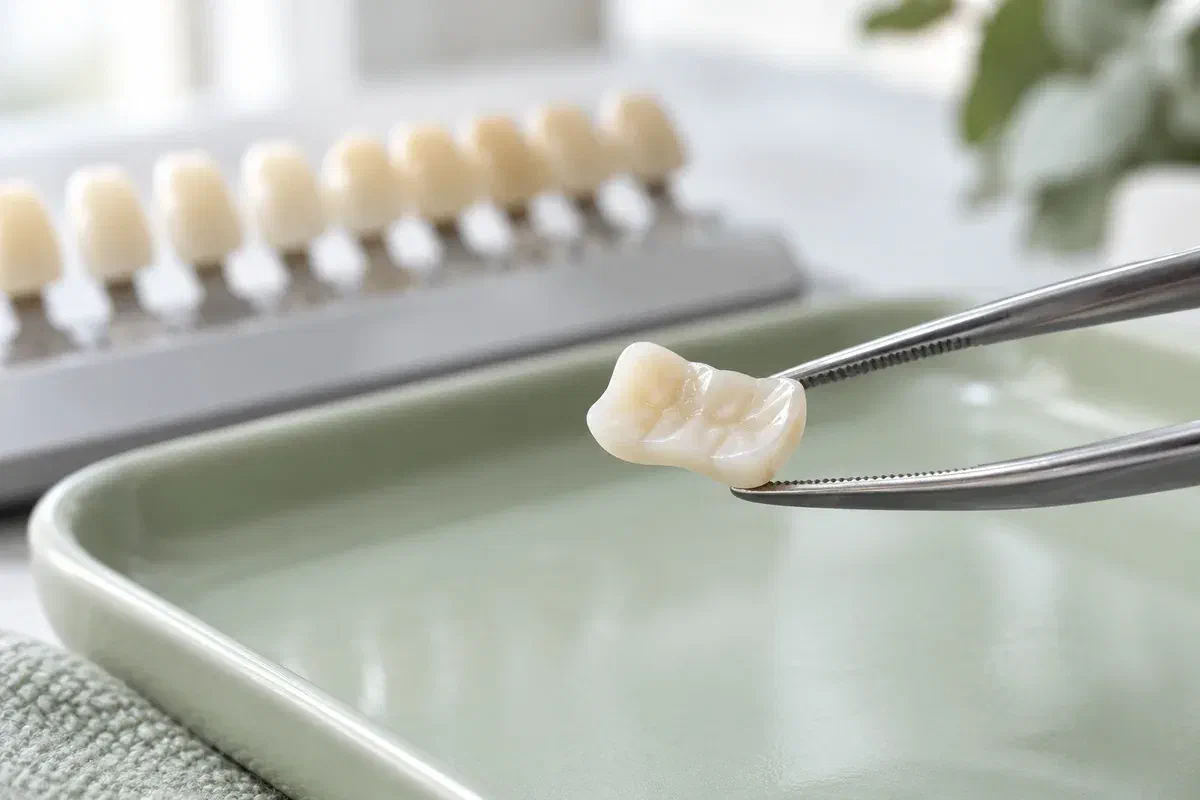
The area of damage is one part of the picture. The dentist also judges how much healthy tooth surrounds it, because that determines whether an inlay could be supported or a stronger design is needed.
A restoration can look intact while decay develops at its margin. Once the old material is taken out, the dentist sees the real extent of the problem and can advise on a suitable replacement.
A defect where teeth touch can affect contacts and how food is cleared. Ask which parts of the tooth are healthy and whether the restoration can stay within them or must cover a thinned cusp.
It is natural to want an explanation when you feel no symptoms. Ask the dentist to show you the area on an image or model and describe how each type of repair would restore it.
If a finding suggests a crack or a nerve problem, or the tooth becomes painful, it needs a proper diagnosis before a restoration is designed. The shape of a repair does not replace that assessment.
Fabricated for the prepared space and tried in before bonding, an inlay can restore a suitable defect while leaving the surrounding sound tooth uncovered.
It is still a treatment with requirements and limits. The tooth is prepared, and the material, fit, remaining structure and the load from your bite shape the advice. Ask what an inlay would achieve compared with a direct filling, and why a more extensive restoration is not needed.
Patient information: Cleveland Clinic — restorative dentistry and inlays
The restoration can be designed to rebuild the missing surface, recreate the contact with the next tooth and fit into your bite. Ask which details matter most for this tooth.
When the cusps are sound, they may not need to be reduced or covered. That is worthwhile only as long as the tooth still has the support it needs.
The tooth’s position, visibility, space and clinical findings influence which material is appropriate. Ask about the options and how their benefits, limitations and costs compare.
The number of appointments varies with the way the restoration is produced and with the tooth’s needs. Ask whether a temporary will be placed and how to care for it until the final fitting.
The dentist reviews the images, examines the tooth and discusses earlier work and any symptoms. Further tests may confirm whether an inlay is suitable or show that something else needs attention first.
With your consent and comfort measures in place, decay and old material are removed and the area is refined for the planned design. A scan or impression captures it, and any temporary is explained.
The inlay is checked for fit, for its contact with the neighbouring tooth and for how your teeth close. Appearance is considered where relevant. Refinements happen before anything is permanent.
A bonding or cementing method suited to the material fixes the restoration in place. A final check follows, along with advice on eating, cleaning and symptoms that should prompt a call.
An inlay fills in what decay or damage took, but the tooth around it can still develop new problems. Follow the advice from your fitting and keep to the checkup schedule your dentist recommends.
Advice may vary with the material and with numbness. Ask when normal eating can resume, and take care not to chew your lip or cheek while the area is frozen.
Brush twice daily with fluoride toothpaste and clean between the teeth as advised, paying attention to the restored contact. If floss catches or shreds there, ask for it to be checked.
A tooth that feels high, a lingering sensitivity or a rough margin should be reviewed. Avoid trying to adjust it yourself, and do not keep biting hard foods to test it.
A repair is easier to accept when you understand what was found and what the restoration will rebuild. These questions are a good place to start.
Book a visit at our Bronte Street practice to discuss a tooth that needs repair, even if it feels fine. We will show you what we see and explain whether an inlay, a filling or more coverage is the most suitable approach.
If the tooth starts to hurt, breaks or feels different when you bite before your appointment, call and let us know so we can advise.
