

Illustrative conversation about restoring a weakened back tooth
Restorative Dentistry

Dental Onlays

A weakened chewing surface may need support beyond a filling. Explore dental onlays in Milton and discuss whether partial coverage can restore the damaged area while retaining suitable tooth structure.

A closer look at dental onlays

Support the areas that need it. Retain the areas that can stay.

A dental onlay is a fitted restoration that rebuilds part of a tooth and extends over one or more cusps, the raised areas of its chewing surface. It may be considered when those areas need coverage but the tooth does not necessarily require a full crown.

The decision depends on which parts of the tooth remain sound and which are weakened. A large filling, a fractured cusp, and a worn chewing surface can present different needs. The name of the restoration matters less than understanding what its design is intended to protect.

At Milton Dental Clinic, we can discuss whether partial coverage is appropriate for your tooth and compare it with the other suitable approaches. Bring questions about preparation, appearance, comfort, and maintenance. You should be able to understand why the proposed coverage fits the clinical findings.

Discuss partial-coverage tooth repair
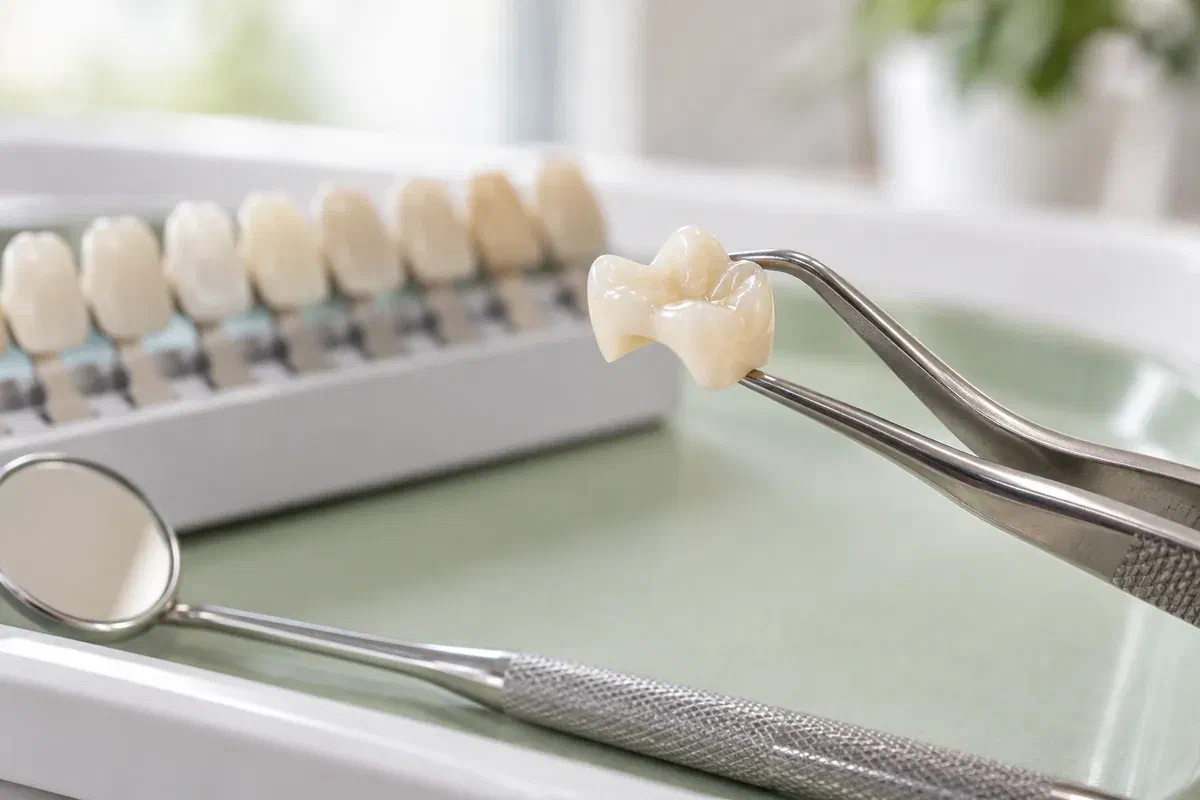
Illustrative ceramic partial-coverage restoration held above a dental tray
When extra coverage may be considered

Look at the strength of the tooth around the defect.

An onlay is considered in the context of the whole tooth. The examination helps identify whether a cusp or other area needs support and whether the remaining structure is suitable for a partial-coverage design.

A cusp has fractured or become vulnerable

Damage involving a raised part of the chewing surface may call for more than filling the space beside it. The dentist assesses the extent of the problem and explains whether coverage could provide useful support.

A broad existing restoration needs replacement

When an older repair is failing, the remaining tooth must be reassessed. An onlay may be one option, but the decision should follow the findings rather than the assumption that every large filling needs the same replacement.

You want to preserve suitable tooth structure

Ask which parts of the tooth can reasonably remain uncovered and which need protection. A conservative aim is useful only when the proposed design also provides the support and function the tooth requires.

Pain, a suspected crack, or a pulp problem may change the plan. An onlay is a restoration choice, not a substitute for diagnosing the cause of the tooth’s symptoms.

The purpose of partial coverage

Match the restoration to the pattern of damage.

For a suitable tooth, an onlay can restore a missing surface and cover weakened areas while retaining other parts of the tooth. The design can be planned around the amount of damage and the way the tooth functions in the bite.

Partial coverage still requires preparation and has limits. The available bonding or retention conditions, the material, and the remaining structure influence suitability. Ask what the dentist expects the onlay to achieve and why that approach is appropriate compared with a crown.

Patient information: Cleveland Clinic — inlays and onlays

Coverage where support is needed

The restoration can extend over selected chewing surfaces rather than simply fill an internal space. The dentist should explain which areas are included and how that relates to the weakness identified.

A considered balance of retention and protection

Keeping useful structure is part of the discussion, but so is avoiding a design that leaves a vulnerable area unsupported. Ask how the proposed outline balances those considerations for your tooth.

A chance to review shape and contacts

A fitted restoration is checked in relation to neighbouring and opposing teeth. Tell the team about food trapping or an uncomfortable bite so those concerns can be assessed during planning and fitting.

Planning and fitting an onlay

Agree on the coverage before preparing the tooth.

The sequence varies with the restoration method and the tooth’s needs. Ask whether care will involve more than one appointment, how any temporary stage will work, and what findings could change the proposed design.

  1. Examine the tooth and explain the design

    The dentist reviews the damaged structure, previous repairs, symptoms, and bite. Appropriate investigations help establish the diagnosis. The proposed coverage and alternatives are discussed before preparation begins.

  2. Prepare the tooth and obtain the necessary records

    With suitable comfort measures, the tooth is prepared for the chosen restoration. The team records its shape using an appropriate method and explains any temporary restoration needed while the onlay is being made.

  3. Check the onlay in the mouth

    Fit, neighbouring contacts, and the relationship to the bite are assessed. You can discuss appearance where relevant. The dentist determines whether adjustments or other changes are needed before completion.

  4. Secure the restoration and review its function

    The onlay is fitted using an approach appropriate to the material and tooth. The finished surface and bite are checked, and you receive instructions for immediate use, cleaning, and follow-up.

Using the restored tooth

Keep prevention and feedback part of the repair.

An onlay becomes part of the tooth’s chewing surface, but the remaining tooth and restoration margins still need care. Follow the instructions from your appointment and report concerns that persist or develop later.

Respect the instructions after fitting

Ask when you may eat normally and whether numbness or the fitting material changes the immediate advice. Avoid judging readiness by how firm the restoration feels before the team has explained the precautions.

Maintain daily cleaning around the edges

Brush with fluoride toothpaste and clean between the teeth as advised. If the new contour makes a familiar cleaning method difficult, ask for a demonstration instead of skipping the area.

Review forces and recurring symptoms

Mention grinding, clenching, or repeated damage to restorations. The dentist can assess whether protection or another measure is appropriate. Report a high-feeling bite, renewed chipping, or persistent discomfort for review.

Choosing the amount of coverage

The findings guide the boundary of the restoration.

The aim is an appropriate repair for the remaining structure. Ask how each option would address the weakened areas and what its preparation, maintenance, and possible future treatment would involve.

When the surrounding cusps remain suitable

A filling or inlay

An internal repair may be appropriate if the tooth does not require cusp coverage. The dentist can explain whether a direct filling or a fitted inlay provides a reasonable approach to the defect.

When selected surfaces need protection

An onlay or other partial-coverage restoration

An onlay may cover the areas that need support while retaining other parts of the tooth. Its suitability depends on the actual structure, material requirements, and conditions for securing the restoration.

When the tooth needs a broader response

A full crown or additional treatment

More extensive damage or another diagnosis may make a crown or additional treatment appropriate. Ask which findings rule out a partial approach and whether the tooth’s overall outlook affects the recommendation.

Questions about dental onlays

Understand why a particular surface needs coverage.

The difference between restorative options is easier to follow when the dentist explains the design for your actual tooth. These questions can help you take part in that discussion.

(905) 876-4488
What does an onlay cover that an inlay usually does not?
An onlay extends over one or more cusps of the tooth, while a conventional inlay generally fits within them. That coverage may be useful when a cusp needs support. Ask which surfaces of your tooth would be included and why.
Is an onlay always a more conservative choice than a crown?
It may retain areas that do not need full coverage in a suitable case, but the actual preparation depends on the tooth. A smaller-looking restoration is not automatically the better treatment. Ask whether partial coverage provides adequate support for the damage present.
Can an onlay be considered after a cusp breaks beside an old filling?
It may be one option after the tooth is assessed. The dentist reviews the fracture, remaining walls, existing restoration, and any symptoms before recommending a design. A filling, onlay, crown, or other treatment may be appropriate depending on those findings.
Does an onlay need to be the same material as my previous filling?
No. The material choice can be reconsidered for the new restoration. Appearance, available space, the bite, and clinical requirements influence the decision. Ask which options suit the proposed design and what their practical limitations are.
Can a tooth with an onlay still need treatment inside the tooth later?
Yes, a restoration does not guarantee that the pulp will never develop a problem. The original condition and later changes can affect the tooth. Report persistent or new symptoms so the dentist can assess them rather than assuming the onlay has addressed every possible cause.
What should I do if my onlay feels different when I close my teeth?
Contact the clinic and describe whether the restored tooth seems to meet first or causes discomfort during ordinary use. The bite may need assessment. Do not try to wear the area down by chewing hard food or adjust the restoration yourself.
Dental onlays in Milton

Let’s assess the support your tooth needs.

Visit our Bronte Street clinic to discuss a damaged chewing surface or a restoration that needs replacement. We can explain whether an onlay is suitable and compare its coverage, preparation, and maintenance with the other reasonable options.

Call about a recent fracture, significant pain, or swelling so the team can discuss the concern and appropriate appointment timing.

Visit Milton Dental Clinic
Unit 1, 342 Bronte St. S, Milton, ON L9T 5B7
Get directions Clinic hours
Monday–Thursday
11am–7pm
Friday–Sunday
By appointment only

How can we help?

Milton Dental Clinic

Have a question about your smile? Choose the option that works best for you.

For urgent dental concerns, please call.
Messages are reviewed during clinic hours.