Cracked or lost biting point
When a cusp is broken or undermined, everyday chewing may keep stressing it. Filling only the gap beside it might not be enough, so the dentist checks the extent of the damage and whether covering the cusp would help.


A restored molar should feel like part of your bite, not something you notice every time you close. Learn how an onlay is shaped to fit, what is normal in the first days and what deserves a call.
Ideally, you barely notice it. Teeth are remarkably sensitive to tiny differences in height, so a restoration that covers part of the chewing surface has to meet the opposite teeth in balance with everything else in your mouth.
An onlay does exactly that kind of job. It is a fitted restoration that rebuilds a damaged area of a back tooth and spans one or more cusps, the peaks that do much of the grinding work. It may suit a tooth whose cusps need support even though the rest is sound enough to avoid a crown.
From Acton, you can see our Milton team to find out whether partial coverage is right for you. We examine the tooth and your bite, compare the options and explain what to expect while you adjust, from the first evening to the follow-up visit.
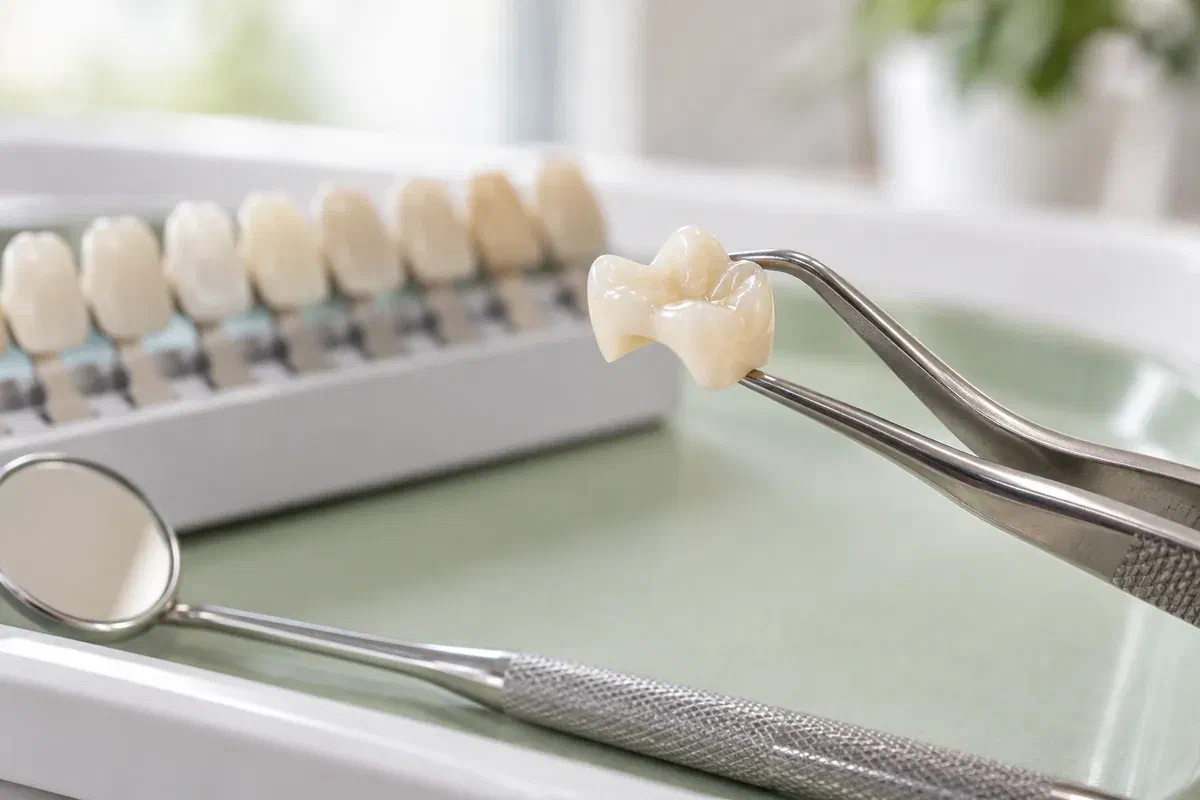
A dentist weighs the condition of the entire tooth. The examination shows whether a chewing point is at risk under load, and whether the structure around it can securely hold a partial-coverage restoration.
When a cusp is broken or undermined, everyday chewing may keep stressing it. Filling only the gap beside it might not be enough, so the dentist checks the extent of the damage and whether covering the cusp would help.
Wide older repairs can leave thin walls that flex when you bite. Once the filling is removed and the tooth reassessed, an onlay may be an option, though the findings set the course.
You can ask what may stay uncovered. Keeping healthy structure is worthwhile when the design still lets the tooth take biting forces safely.
Pain on biting, a suspected crack or nerve symptoms may call for different care. An onlay rebuilds the tooth; it does not explain why it hurts, so the cause is investigated first.
In a suitable tooth, an onlay can restore a missing surface and protect fragile cusps while the healthy parts remain. Because it is made to fit, its shape can be planned around the damage and the way the tooth meets the teeth above or below it.
Like any restoration, it has limits and still requires preparation. Bonding or retention, the material and the structure left behind all influence suitability. Ask what the onlay is expected to do and why your dentist favours it over a crown.
Patient information: Cleveland Clinic — inlays and onlays
An onlay can sit over selected chewing surfaces so they are supported, instead of only filling a hollow. Ask which surfaces are included and how they relate to the weakness.
Preserving healthy tooth is one aim; avoiding an unsupported weak area is another. Ask how the planned outline balances them.
Contacts with neighbouring and opposing teeth are checked carefully. Tell the team if your bite already feels uneven or food gets trapped, so these can be considered before fitting.
The sequence depends on the way the onlay is made and on the tooth. Ask how many appointments are involved, what a temporary stage would be like and what might change the design.
The dentist looks at the damage, previous restorations, symptoms and the way your teeth meet, using appropriate investigations. The planned coverage and its alternatives are explained before preparation.
When you are comfortable and numb, your dentist shapes the tooth for the agreed design and its form captured. A temporary may cover it while the onlay is made; its height can feel slightly different, so mention anything uncomfortable.
Fit and contacts are checked, and the bite is tested with marking paper while you close and move your jaw. Appearance can be discussed, and small adjustments are made where needed.
The onlay is fixed with a method suited to its material, and your bite is checked again once it is in place. You receive guidance for eating, cleaning and follow-up.
After fitting, the onlay works as part of your chewing surface, while the tooth and margins still need care. Follow the advice from your visit, and report anything that persists or develops later.
Your bite can feel different while your lip and cheek are numb, so judge it once feeling returns. Ask when ordinary meals can resume and whether the fixing material affects that timing.
Use fluoride toothpaste and your usual between-teeth cleaning, paying attention to the new edges. If the shape makes flossing awkward, ask for a quick lesson rather than leaving the spot alone.
A tooth that hits first, aches after chewing or feels tender for more than a few days should be checked. Mention grinding or clenching too, as protection may be worth discussing.
Knowing what is normal makes the first days easier. These answers cover the questions people often ask once the restoration is in.
Book at our Bronte Street clinic in Milton for an assessment of a damaged chewing surface or a worn repair. We will explain whether an onlay suits the tooth, how it would be fitted to your bite and how it compares with other choices.
Phone us about a new break, strong pain or swelling so we can talk through it and suggest timing.
