A broken or weakened cusp
A chip that involves a biting point may leave the tooth open to more cracking if only the gap is filled. The dentist works out how much is affected and whether covering that part makes sense.


Felt a sharp edge where part of a molar used to be? A broken corner of a back tooth sometimes needs more than a filling. Find out whether an onlay could rebuild it and protect what remains.
It often happens during an ordinary meal: something crunches, and afterwards one corner of a back tooth feels jagged. Often the piece that gave way is a cusp, one of the raised points of the chewing surface, and frequently it sat beside an older filling.
Rebuilding that corner well may call for more than a standard filling. A dental onlay is a fitted restoration that replaces the missing section and reaches over the cusps that need support. Where the rest of the tooth is sturdy, it may be an alternative to covering the whole tooth with a crown.
From Burlington, you can book a visit with our Milton team to have the break examined. We will explain what we find, whether partial coverage is suitable and how it compares with the other approaches. Questions about preparation, comfort, looks and upkeep are all welcome.
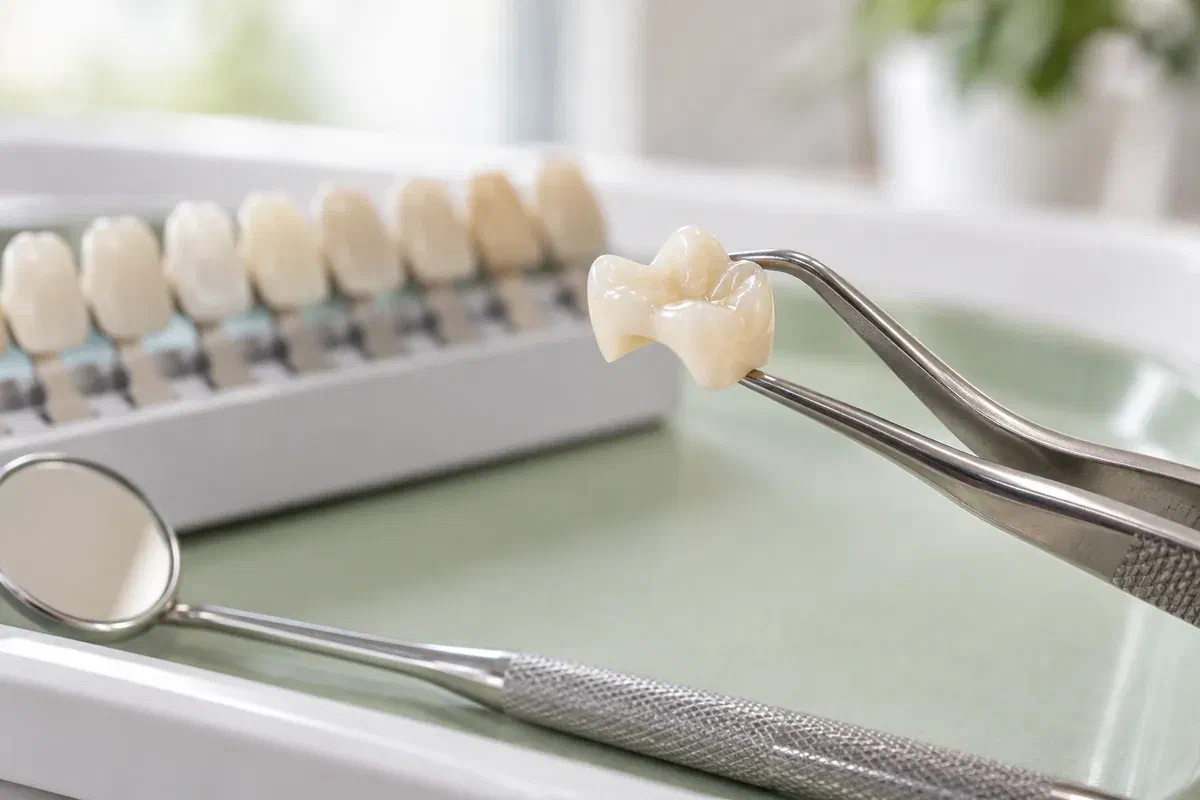
Your dentist looks at the entire tooth before suggesting a design. The goal is to see whether a cusp needs reinforcing and whether the remaining structure can hold a partial-coverage restoration securely.
A chip that involves a biting point may leave the tooth open to more cracking if only the gap is filled. The dentist works out how much is affected and whether covering that part makes sense.
Breaks often happen beside large older restorations. Once that filling is reassessed, an onlay might be the answer, or another option might suit better. The findings decide, not the size of the old filling alone.
It is reasonable to ask what can be left uncovered. Preserving structure helps only when the design also gives the tooth the protection and chewing function it needs.
A painful tooth, a possible crack running deeper or a nerve problem may lead to a different plan. Choosing an onlay never replaces working out why a tooth is sore.
When the tooth is a good candidate, an onlay replaces the lost section and covers the cusps at risk while keeping other areas of the tooth. Its shape can follow the outline of the damage and the way that tooth works against the rest of your bite.
This approach still means preparing the tooth, and it does not suit everyone. Whether the onlay can be bonded or retained well, the material and the amount of sound structure all matter. Ask what the restoration is intended to do and why it is suggested over a crown.
Patient information: Cleveland Clinic — inlays and onlays
An onlay can extend over chosen cusps instead of only sitting in a cavity. Your dentist should show which areas it covers and how they relate to the break.
Keeping healthy tooth is valuable, yet so is not leaving a weak cusp unprotected. Ask how your design weighs one against the other.
The restoration is checked against the teeth beside it and those it bites on. If food has been packing into the broken area or your bite feels uneven, mention it during planning.
The pattern of appointments depends on how your onlay is made and what the tooth needs. Ask how many visits are planned, whether a temporary restoration will cover the tooth and what might change along the way.
The dentist examines the fracture, any nearby fillings, your symptoms and your bite, using suitable images or tests. You hear the proposed coverage and alternatives before the tooth is prepared.
With comfort measures suited to you, the tooth is shaped for the restoration. A record of its form is taken by an appropriate method, and any temporary piece needed in the meantime is explained.
Its fit, contact with neighbouring teeth and the way it meets your opposing teeth are checked. You can comment on appearance where it matters, and the dentist decides on any adjustments.
The onlay is fixed with a method suited to its material. Your bite and the finished surface are reviewed, and you are given guidance on eating, cleaning and follow-up.
The onlay now forms part of your biting surface, but the natural tooth and the margins between them still need attention. Use the instructions from your appointment and report problems that continue or appear later.
Ask how soon you can chew on that side and whether numbness or the cement used affects the advice. How hard the tooth feels is not a good test of readiness before the team has explained the precautions.
Brush with fluoride toothpaste and clean between the teeth as advised. If the new shape makes flossing harder, ask us to show you a method that works rather than leaving that area out.
If you grind, clench or have broken teeth before, tell the dentist so protection can be considered. Report a high bite, new chips or discomfort that lingers.
Restorations make more sense when your dentist explains the design for your own tooth. Use these answers to prepare your questions.
Book at our Bronte Street practice to discuss a chipped chewing surface or a repair that has started to fail. We can tell you whether an onlay suits the tooth and compare its coverage, preparation and upkeep with other reasonable choices.
Phone the team about a fresh fracture, strong pain or swelling so we can discuss timing before you set out.
