

Illustrative conversation about restoring a weakened back tooth
Restorative Dentistry

Dental Onlays in Caledon

Every restoration is one chapter in a tooth’s life. Learn how an onlay can repair a weakened molar now, how that choice may affect future options and what helps the tooth stay healthy for longer.

Caledon: planning for the long term

Today’s repair, tomorrow’s options

Teeth often go through a sequence of repairs over a lifetime: a small filling, then a larger one, then perhaps something more. Each step removes or covers a little more of the original tooth, which is why it pays to think about the next ten or twenty years when choosing what to do now.

An onlay can be a useful middle step. It is a custom-fitted restoration that rebuilds a damaged area of a back tooth and covers one or more cusps, the raised parts of the chewing surface. Where those cusps need support but the rest of the tooth is sound, it may postpone or avoid the need for a crown, though nobody can promise that.

From Bolton and the villages across Caledon, you can book with our Milton team to talk through the tooth’s future as well as its present. We examine it, compare partial coverage with the alternatives and explain how each choice may shape later care.

Discuss the tooth’s long-term plan
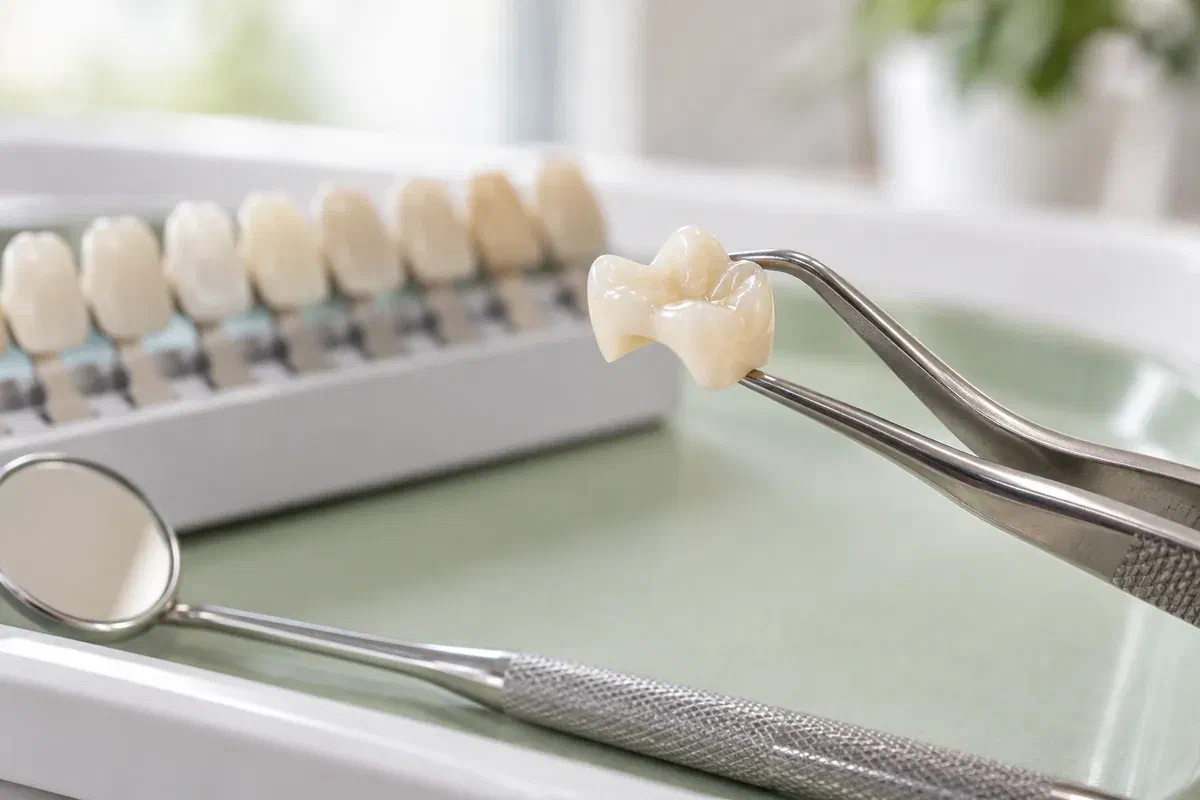
Illustrative ceramic partial-coverage restoration held above a dental tray
Signs the tooth has reached a turning point

When a bigger filling is no longer the obvious next step

Your dentist weighs the condition of the entire tooth. That assessment shows whether a chewing point has become fragile and whether enough healthy structure remains to anchor a partial-coverage restoration.

A cusp has broken or thinned

When a raised point of the biting surface is damaged, replacing the filling beside it with another may leave the cusp exposed to future breaks. The dentist checks how much is affected and whether covering it now could help.

Repeated repairs have weakened the tooth

Each replacement filling tends to be larger than the last. When the latest one fails, the tooth is reassessed, and the findings decide whether an onlay or another approach is the sensible next step.

You want to keep options open

Ask which surfaces could stay as they are. Retaining healthy structure can leave more choices for the future, provided the design gives the tooth enough support today.

Pain, a suspected crack or nerve trouble can change the plan. An onlay restores structure; the cause of any symptoms is diagnosed before a restoration is chosen.

Why partial coverage can make sense

Protect the weak points while keeping structure in reserve.

On a suitable tooth, an onlay replaces a lost surface and shields fragile cusps while healthy parts remain. Keeping that structure can matter later, because a tooth with more of its own walls generally has more restorative options down the line.

Partial coverage still involves preparation, and it is not right for every tooth. Bonding or retention, the material and the remaining structure all affect suitability. Ask what the onlay should achieve now, why it is preferred to a crown and what might eventually come next.

Patient information: Cleveland Clinic — inlays and onlays

Coverage that targets current weakness

The onlay can extend over selected cusps rather than only filling a space inside. Your dentist should explain which areas are covered and why.

Less removed today

In a suitable case, partial coverage may keep more tooth than a crown. That is only an advantage if the weak areas are properly protected, so ask how your design balances both.

A fresh look at the bite and contacts

The restoration is checked against neighbouring and opposing teeth. Mention food trapping or an uncomfortable bite so the team can address it while planning and fitting.

The treatment journey

Think it through, then begin.

Appointment numbers vary with the fabrication technique and the tooth. Ask how many visits you will need, how any temporary stage works and what discoveries during preparation could alter the design.

  1. Look at the whole history

    Your dentist reviews the damage, past repairs, symptoms and bite, using appropriate investigations. You discuss the proposed coverage, its alternatives and how each might affect the tooth’s future before anything is prepared.

  2. Prepare only what the design needs

    Once you are comfortable, the tooth is shaped for the agreed restoration and its form is recorded. If a temporary covers it while the onlay is made, you learn how to look after it.

  3. Check fit, contacts and appearance

    The onlay is tried in so the dentist can judge its fit, its contacts and how it meets the opposite teeth. You can share thoughts on appearance, and adjustments are made where needed.

  4. Bond it and set a review

    Your dentist fixes the onlay in a way appropriate to its material. Bite and surface are checked, and you receive advice on eating, cleaning and when to have it reviewed.

Helping the tooth go the distance

Long-term care starts on day one.

An onlay becomes part of the chewing surface, while the natural tooth and the margins between them keep relying on your care. Use the advice from your visit and tell us about anything that persists or develops over time.

Begin gently

Ask when ordinary eating is fine and what to avoid in the first hours. Judging by how firm the tooth feels is not reliable before you have heard the precautions.

Protect the margins every day

Fluoride toothpaste twice daily and careful cleaning between teeth help prevent decay where the onlay meets the tooth. Ask for a demonstration if the new contour makes your routine awkward.

Keep regular reviews

Routine check-ups allow early signs of wear, decay or a change in the bite to be found. Mention grinding, new chips or ongoing discomfort sooner rather than later.

Options over a tooth’s lifetime

Each level of coverage leads somewhere different.

The right choice suits the structure that remains today and keeps reasonable options for later. Ask how each approach treats the weakened areas, and what preparation, upkeep and future work it may lead to.

When the cusps still hold up

A filling or inlay

If no cusp needs cover, a repair inside the tooth may be enough for now. Ask whether a direct filling or a custom inlay is more suitable and how either affects later steps.

When certain cusps need protecting

An onlay

Partial coverage can protect the areas at risk while keeping other structure. It suits teeth where the remaining walls, material and bonding conditions allow it.

When more of the tooth needs support

A crown or further treatment

Extensive damage or another problem may make a crown or other care more appropriate now. Ask why partial coverage would not be enough and what the tooth’s prospects are.

Long-term questions from Caledon

Looking ahead with an onlay

Thinking about the future of a tooth makes today’s choice clearer. These questions can help you plan with your dentist.

(905) 876-4488
Can an onlay be redone if it wears out?
Often an onlay can be replaced, or the tooth restored in another way, if it becomes worn or damaged. What is possible depends on the tooth at that time.
Does choosing an onlay now affect whether I can get a crown later?
In many cases a crown remains possible later, provided enough tooth structure remains. Ask your dentist how today’s choice might shape future options for that tooth.
What tends to shorten the life of an onlay?
Decay at the margins, grinding, very hard foods and changes in the tooth can all affect a restoration. Good daily cleaning and regular check-ups help catch problems early.
Is it worth repairing a tooth that has already had several fillings?
Often, yes, but it depends on the remaining structure and the tooth’s overall health. Your dentist can explain the options and the tooth’s likely outlook.
Could the tooth still need a root canal in the future?
It could. A restoration does not guarantee the nerve will stay healthy. Report new or lasting pain so the dentist can assess it.
How do I plan follow-up visits from Caledon?
Routine reviews can often be lined up with your regular check-ups. Ask when booking whether visits can be grouped to reduce trips.
Caledon onlay consultations

Plan a repair with the future in mind.

Book at our Bronte Street clinic to discuss a weakened chewing surface or a repair that has reached its limit. We will explain whether an onlay suits the tooth now and how it compares with other options over the longer term.

If you have a new break, strong pain or swelling, call before setting out and we will advise on timing.

Visit Milton Dental Clinic
Unit 1, 342 Bronte St. S, Milton, ON L9T 5B7
Get directions Clinic hours
Monday–Thursday
11am–7pm
Friday–Sunday
By appointment only

Areas we serve

  • Milton
  • Oakville
  • Mississauga
  • Georgetown
  • Halton Hills
  • Acton
  • Campbellville
  • Brampton
  • Burlington
  • Puslinch
  • Rockwood
  • Erin
  • Caledon
  • Etobicoke
  • Old Milton
  • Bronte Meadows
  • Timberlea
  • Dorset Park
  • Dempsey
  • Clarke
  • Beaty
  • Coates
  • Harrison
  • Scott
  • Willmott
  • Ford
  • Bowes
  • Cobden
  • Walker
  • Mountain View
  • Milton Heights
  • Hawthorne Village
  • Valley View
  • Fallingbrook
  • Nassagaweya
  • Trafalgar
  • Esquesing
  • Nelson
  • Brookville
  • Moffat
  • Glen Williams
  • Norval
  • Limehouse
  • Stewarttown
  • Ashgrove
  • Hornby
  • Silver Creek
  • Speyside
  • Scotch Block
  • North Oakville
  • River Oaks
  • Glen Abbey
  • West Oak Trails
  • Palermo
  • Bronte Creek
  • College Park
  • Joshua Creek
  • Uptown Core
  • Preserve
  • Iroquois Ridge
  • Lisgar
  • Meadowvale
  • Meadowvale Village
  • Churchill Meadows
  • Erin Mills
  • Central Erin Mills
  • Streetsville
  • East Credit
  • Creditview
  • Heartland
  • Sheridan
  • Mount Pleasant
  • Credit Valley
  • Huttonville
  • Churchville
  • Springbrook
  • Northwest Brampton
  • Bram West
  • Fletcher's Meadow
  • Fletcher's Creek South
  • Alton Village
  • Orchard
  • Millcroft
  • Headon Forest
  • Tansley
  • Brant Hills
  • Tyandaga
  • Kilbride
  • Lowville
  • Aberfoyle
  • Morriston
  • Arkell
  • Hillsburgh
  • Freelton
  • Carlisle
  • Waterdown
  • Flamborough
  • Mountsberg

How can we help?

Milton Dental Clinic

Have a question about your smile? Choose the option that works best for you.

For urgent dental concerns, please call.
Messages are reviewed during clinic hours.