A cusp broke or weakened
When one of the raised points of the tooth is damaged, filling the neighbouring area alone may not protect it. Your dentist checks how much is affected and explains whether covering it would be useful.


Never had an onlay before? Here is a plain walk-through of what happens from the first examination to the final fitting, so you know what to expect in the chair and what to plan for at home.
Hearing that you need a new type of treatment can be unsettling, especially when it may take more than one appointment. Knowing the steps in advance usually helps, and it makes planning time away from home much simpler.
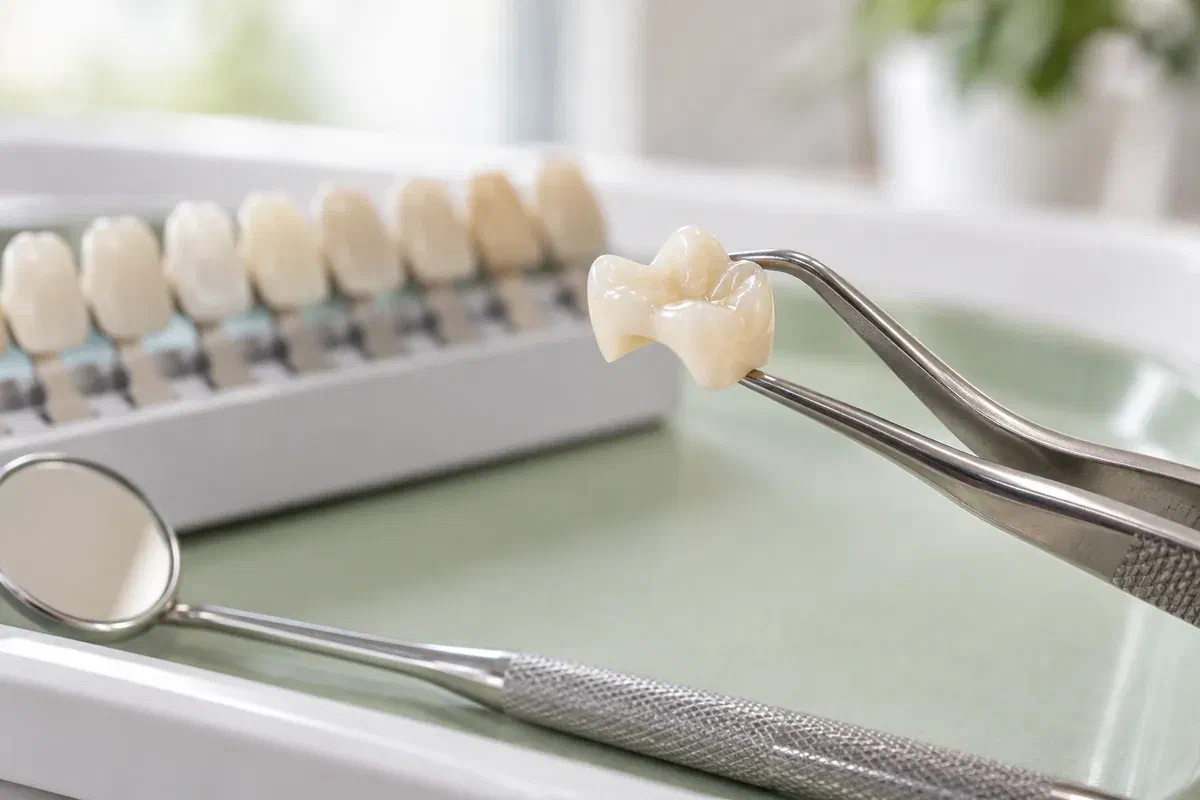
Here is what an onlay is. It is a restoration crafted to fit one particular back tooth, replacing damaged structure and extending over one or more cusps, the bumps on the chewing surface. Dentists consider it when those cusps need support but covering the entire tooth with a crown may not be required.
Coming from Erin village, Hillsburgh or the farms between, you can see our Milton team to find out whether partial coverage suits your tooth. We explain what we find, compare the alternatives and talk you through every stage, including how to look after the tooth between visits.
Before any onlay is recommended, the whole tooth is examined. That shows whether a chewing point needs strengthening and whether there is enough sound tooth left to hold a partial design in place.
When one of the raised points of the tooth is damaged, filling the neighbouring area alone may not protect it. Your dentist checks how much is affected and explains whether covering it would be useful.
A large worn repair often needs replacing, and the tooth beneath has to be reassessed once it is out. An onlay is one possibility, chosen only if the findings support it.
Ask which surfaces could stay uncovered. Conserving structure is useful only if the design still gives the tooth the strength it needs to chew.
Pain, a possible crack or a nerve problem may change the plan. The cause of symptoms is diagnosed before any restoration is chosen.
On a tooth that suits it, an onlay rebuilds a missing surface and covers weak cusps, while healthy sections remain in place. The design follows the outline of the damage and the way your teeth come together.
Preparation is still involved, and partial coverage is not for every tooth. Whether it can be bonded or retained well, the material and the amount of sound structure all play a part. Ask what the onlay is meant to accomplish and why your dentist recommends it rather than a crown.
Patient information: Cleveland Clinic — inlays and onlays
An onlay can extend across chosen chewing surfaces rather than filling only a space inside the tooth. You should be told which surfaces are included.
Keeping healthy tooth is one goal; making sure a fragile area is covered is another. Ask how your design meets both.
The onlay is checked against the teeth next to it and the ones it bites on. Mention food trapping or an uneven bite so these can be addressed while planning and fitting.
Some methods allow fewer appointments than others, and the tooth’s condition matters too. When you book, ask how many visits to plan for and whether they can be timed close together, how a temporary works and what might change.
Your dentist looks at the damage, any earlier fillings, your symptoms and your bite, taking X-rays or other tests where needed. You hear the proposed design and the alternatives, and can ask questions before agreeing.
The area is numbed so you are comfortable, and the tooth is shaped for the onlay. Its form is recorded with a scan or impression, and a temporary may be placed while the restoration is made.
At the next stage, the onlay is checked for fit, contact with the teeth beside it and the way it meets your opposite teeth. You can say what you think of the appearance, and small adjustments are made.
Depending on its material, the onlay is bonded or cemented into place and any excess is cleaned away. Your bite is checked once more, and the team explains how to eat over the next day, how to clean the new edges and when to return for a review.
The onlay soon becomes part of your chewing surface, though the natural tooth and the edges still need looking after. Keep to the advice you were given and call about anything that does not settle or appears later.
Wait for numbness to wear off before eating, and ask whether the bonding material means avoiding certain foods for a while. The tooth feeling solid is not enough on its own to go by.
Use a fluoride toothpaste morning and night, and floss or use an interdental brush along the onlay’s edges as shown. If a new contour catches, ask us for a better technique.
Tell the dentist about grinding, clenching or previous broken restorations, since extra protection may be worth discussing. A bite that feels high, chipping, or soreness that does not ease after a few days should be checked rather than waited out.
It helps to have a sense of the process before your first appointment, particularly when the visits involve some planning around work and travel. These answers cover questions people often ask, and the team is happy to go into more detail in person.
Come to our Bronte Street practice to have a damaged chewing surface or failing repair checked. We will explain whether an onlay is right for the tooth, how many visits it may take and how it compares with other choices.
Before setting out, call about a new break, sharp pain or swelling and we will advise on how soon to come in.
