A cusp has given way
If a biting point has cracked off or become thin, packing material into the neighbouring space may not be enough to keep the tooth from breaking again. The dentist looks at how deep the damage goes before suggesting coverage.


An onlay can rebuild part of a weakened molar, but how well it serves you depends on the tooth around it and your daily routine. Learn what the restoration covers and how to keep its edges healthy.
Most of the attention in dental treatment goes to the appointment itself. With an onlay, the months and years afterward deserve just as much thought, because the restoration only does well when the natural tooth beside it stays healthy.
First, the basics. An onlay is a precisely fitted restoration for a back tooth. It rebuilds missing structure and covers one or more cusps, the ridged high points you chew with. Dentists consider it when those cusps need protecting but a crown’s full coverage may not be required.
For people in Georgetown, our team in Milton can examine the tooth, explain whether partial coverage makes sense and compare it with the other routes. We also take time to show you how the finished contour will affect brushing and flossing, so the plan includes what happens at home.
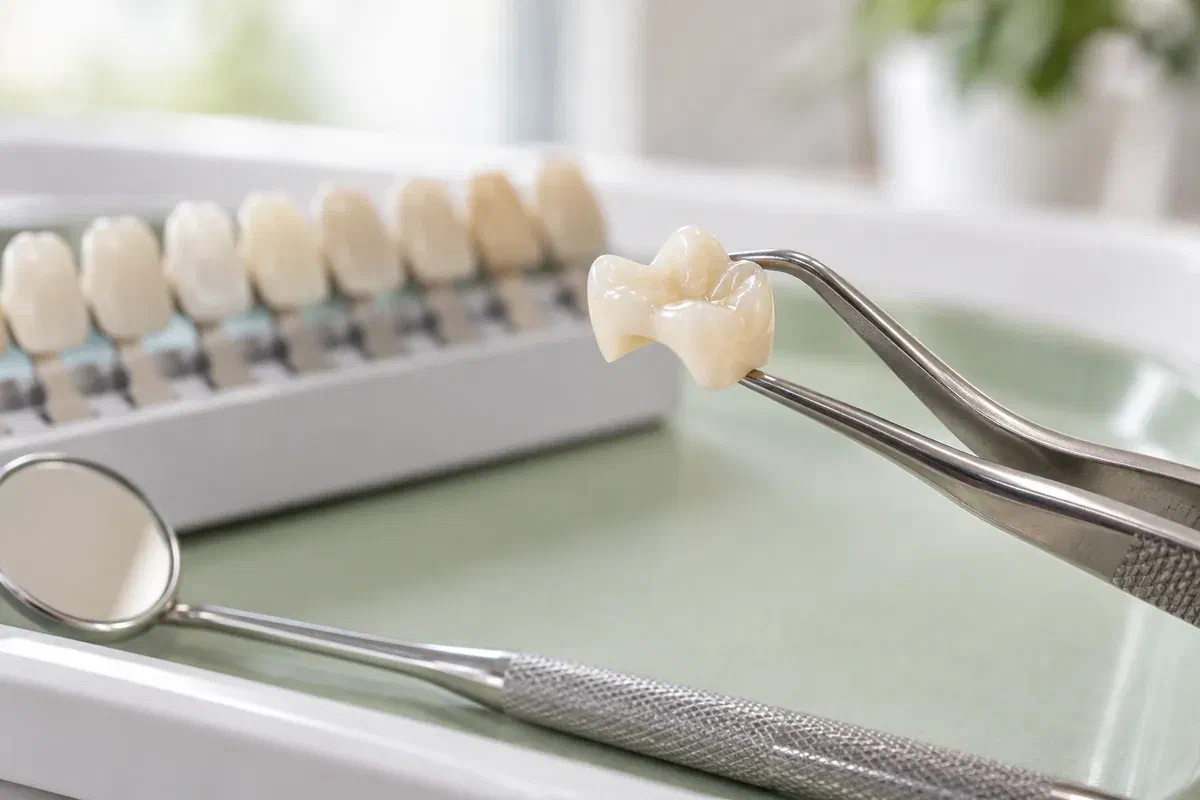
The decision is about the tooth as a whole. A careful examination shows whether one of the chewing points has lost strength and whether what remains is solid enough to hold a restoration that covers only part of the surface.
If a biting point has cracked off or become thin, packing material into the neighbouring space may not be enough to keep the tooth from breaking again. The dentist looks at how deep the damage goes before suggesting coverage.
Old fillings can leak, chip or loosen at the edges. Once one is removed, the tooth is examined again, and an onlay is only one of several possibilities that might follow.
It is reasonable to ask what can be left alone. Holding on to healthy enamel is valuable only when the planned design still gives the tooth enough strength to chew comfortably.
Symptoms such as aching, a possible crack or signs of nerve trouble may point to a different plan. An onlay is a way to restore structure, and it comes after the cause of discomfort has been found.
With a tooth that suits it, an onlay replaces a lost surface and protects the fragile areas, while the healthy parts carry on as before. The design follows the shape of the damage and the way that molar or premolar meets its partner when you close.
It still involves shaping the tooth, and it has limits. How well the restoration can be bonded or held, the material, and the amount of sound structure left all matter. A good question for your dentist is what the onlay is expected to achieve and why it was chosen over a crown.
Patient information: Cleveland Clinic — inlays and onlays
Rather than sitting only inside the tooth, the onlay can reach over selected surfaces. You should be told which ones it covers and why those were chosen.
Saving structure is part of the design, but so is making sure a fragile area is supported. Ask how your outline finds the middle ground.
The fit against neighbouring teeth is checked. If floss has been catching or food has been packing in, mention it so the team can consider the contact during planning and fitting.
The details depend on how your onlay is produced and what the tooth needs. Ask how many appointments to plan for, what a temporary stage would involve and which discoveries could change the design.
Your dentist reviews the damage, earlier repairs, symptoms and bite, using suitable images or tests. You hear the proposed coverage and alternatives before anything is prepared.
Once you are comfortable, the tooth is prepared for the agreed design and its form is captured. If a temporary is placed, you learn how to brush and floss around it until the next step.
The onlay is tried in so its fit, the contacts with neighbouring teeth and its meeting with the opposite teeth can be judged. Appearance can be discussed, and any adjustment is made.
It is secured with a method suited to the material. Bite and surface are checked, and the team can show you how to clean the new margins before you leave.
An onlay becomes part of the chewing surface, but the seam where restoration meets tooth still needs daily care. Follow the instructions from your visit and let us know about any concern that persists or appears later on.
Ask when you can eat normally and whether lingering numbness or the bonding material means waiting. How firm the tooth feels is not the guide; the advice from your appointment is.
Twice a day, use a fluoride toothpaste and spend a few extra seconds where the onlay meets the tooth. Floss or use an interdental brush as shown, and ask for help if the contour makes that awkward.
Routine visits let the team look at the margins, the bite and the surrounding gum. Mention grinding, clenching, new chips or discomfort that does not ease.
Questions about upkeep are easier to answer once you know the planned outline of your restoration. These are a good place to begin.
Visit our Bronte Street practice to discuss a weakened chewing surface or an older repair that needs replacing. We will explain whether an onlay is a good fit, how it compares with the alternatives and how to keep it clean once it is in place.
Call about a recent break, intense pain or swelling, and the team will discuss how soon you should be seen.
