The cusp itself is damaged
If a raised point of the chewing surface has fractured or is thin, filling only the space beside it may leave it at risk. Ask how far the damage reaches and why covering that area is advised.


Has a treatment plan mentioned an onlay and left you unsure why? We can walk through the examination findings and explain what partial coverage is meant to protect on your tooth, and what the alternatives are.
Treatment plans can be hard to read. A line that says “onlay” tells you the type of restoration but not the reasoning behind it, and that reasoning is what helps you decide with confidence.
Here is the short version. An onlay is a restoration crafted to fit a specific tooth. It rebuilds lost structure and extends across one or more cusps, the raised parts you chew on. It is chosen when those cusps need support but the tooth may not need the complete coverage of a crown. A cracked cusp, a large failing filling or a heavily worn surface can each lead there for different reasons.
For people travelling from Mississauga, including the western neighbourhoods nearest Milton, our team can examine the tooth, explain what the findings show and compare partial coverage with the other suitable routes.
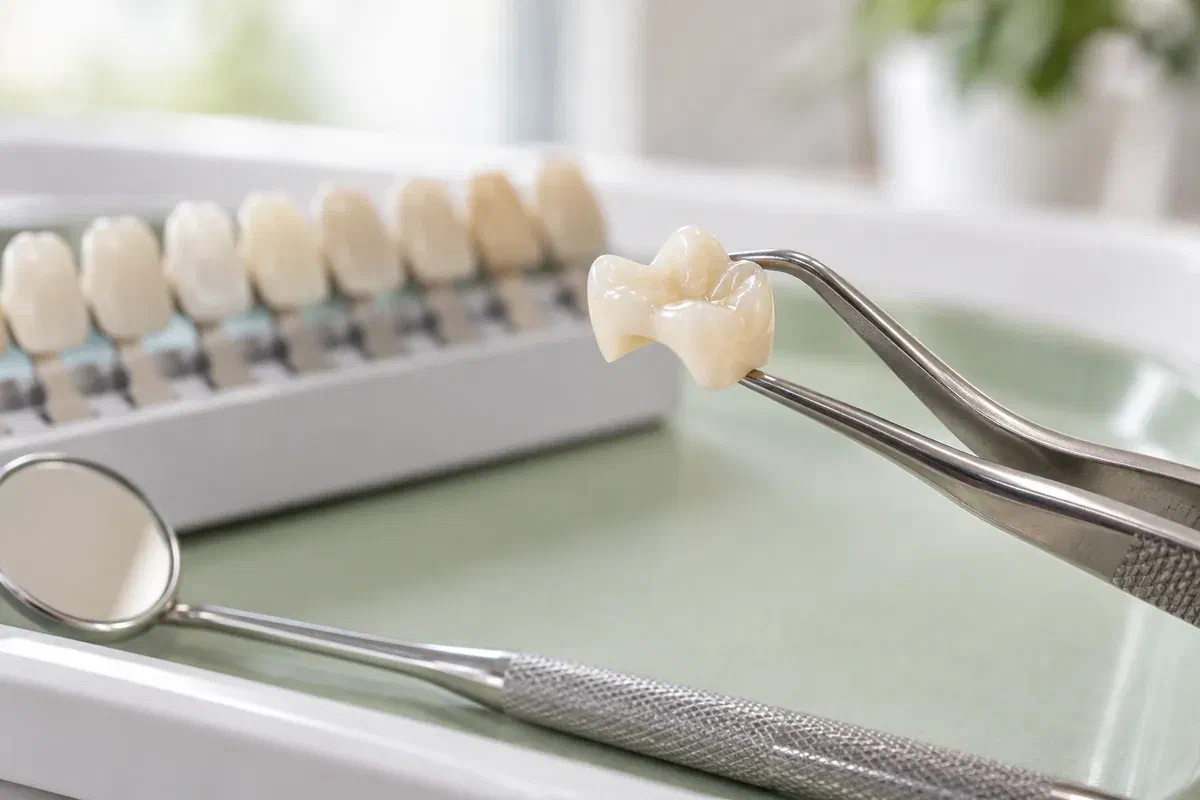
The recommendation should come from the condition of the whole tooth. A dentist checks whether a cusp needs reinforcing and whether enough sound structure is left for a partial design to be held securely.
If a raised point of the chewing surface has fractured or is thin, filling only the space beside it may leave it at risk. Ask how far the damage reaches and why covering that area is advised.
When an older restoration fails, the tooth beneath has to be judged afresh. An onlay is one possibility. It should follow those findings rather than a habit of replacing all large fillings the same way.
Find out which surfaces could stay uncovered and which need protection. A conservative plan is only helpful if it also provides the strength and function the tooth requires.
Symptoms such as pain, a suspected crack or a nerve problem can change the recommendation. An onlay addresses structure; it does not diagnose why a tooth hurts.
On a well-suited tooth, an onlay can restore a missing surface and protect weak areas while leaving other parts untouched. The outline is designed around the extent of the damage and the forces that tooth meets in your bite.
It still involves preparation, and there are limits. Bonding or retention, material and remaining structure all affect suitability. A fair question to ask is what the onlay is expected to achieve and why it was chosen over a crown in your case.
Patient information: Cleveland Clinic — inlays and onlays
The restoration can extend over specific cusps instead of filling only an internal space. Ask which areas are included and how they match the weakness identified.
Saving tooth structure is one side of the decision; making sure a fragile area is not left unsupported is the other. Ask how your design handles both.
A fitted restoration is checked against the teeth beside it and the ones it meets. Mention food trapping or an uncomfortable bite so the team can consider it while planning.
The order of steps depends on how the restoration is produced and what the tooth needs. Ask whether more than one appointment is planned, how a temporary stage works and what findings could alter the design.
The dentist checks the damaged structure, older repairs, symptoms and bite, with suitable investigations as needed. You hear the planned coverage and its alternatives before any preparation.
Using appropriate comfort measures, the tooth is prepared for the chosen restoration. Its shape is recorded with a suitable method, and the team explains any temporary cover used while the onlay is made.
The onlay is tried in to check its fit, contacts with neighbouring teeth and relationship to the bite. Appearance can be discussed, and the dentist decides on any adjustment before completion.
The restoration is secured using a method suited to the material and tooth. Bite and surface are checked again, and you receive advice on eating, cleaning and follow-up.
An onlay joins the chewing surface, but the surrounding tooth and the margins still need care. Follow the instructions from your appointment, and tell us about any concern that persists or comes up later.
Find out when normal eating can resume and whether numbness or the fixing material affects the advice. A firm-feeling tooth is not the deciding factor until precautions have been explained.
Use fluoride toothpaste and clean between teeth as recommended. If the restoration’s new shape makes your usual routine awkward, ask for a demonstration instead of avoiding that spot.
Mention clenching, grinding or earlier broken restorations so the dentist can consider protection or other steps. A high-feeling bite, chipping or lasting discomfort should be reviewed.
Treatment options are easier to compare when the dentist explains the design for your real tooth. These questions can help you prepare.
Visit our Bronte Street practice in Milton to discuss a damaged chewing surface or a repair that needs replacing. We can explain whether an onlay is suitable and compare its coverage, preparation and care with the other options.
Call ahead about a new fracture, severe pain or swelling so we can discuss timing before you make the trip.
