A cusp has split away or is undermined
A break across one of the biting points may leave too little support for a simple filling. After measuring how deep the damage goes, the dentist explains whether covering that point is a sensible step.


Told a damaged molar might need a crown? Sometimes only part of the chewing surface needs covering. We can examine the tooth and explain whether an onlay offers enough protection for the damage present.
The word “crown” often comes up as soon as a back tooth breaks. A crown wraps the whole visible tooth, which is right in some cases. In others, the damage is confined to one side or a single cusp, and covering everything may remove more structure than the situation calls for.
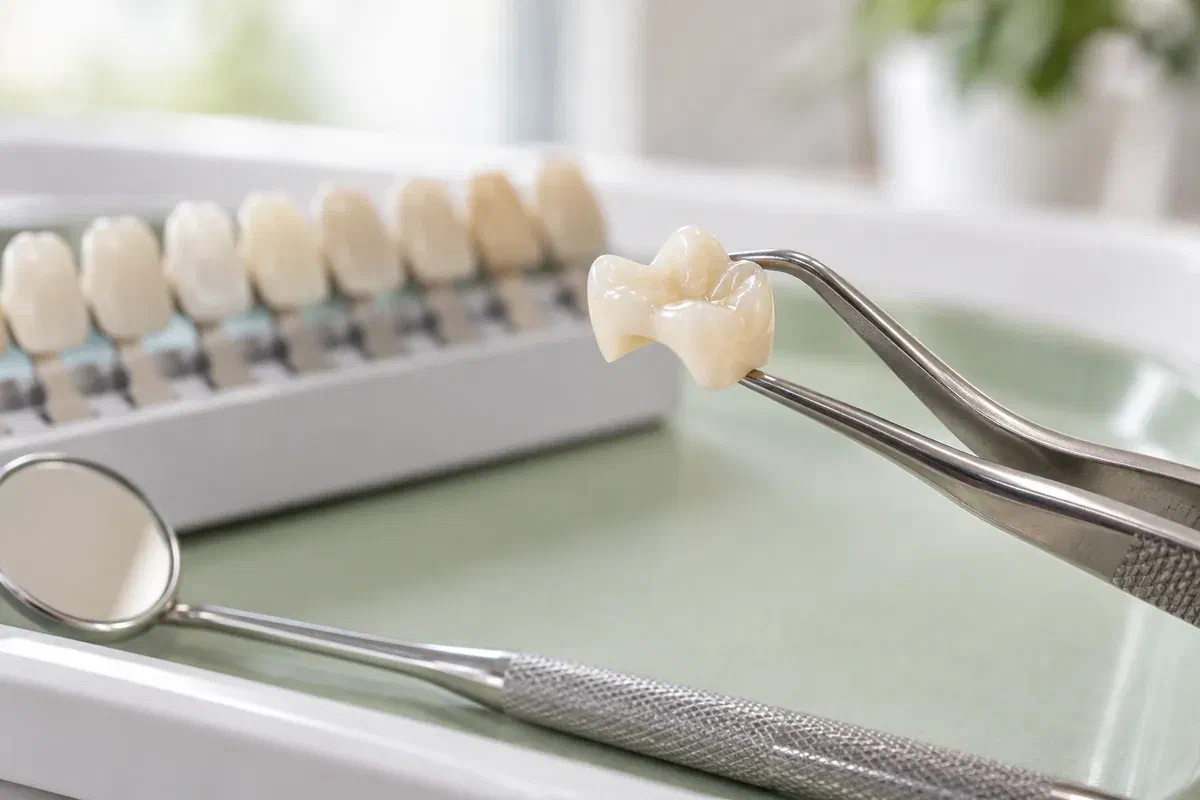
That is where an onlay enters the discussion. It is a restoration made to fit the tooth, rebuilding the missing part and extending over the cusps that need support. Healthy walls elsewhere can often stay as they are, provided the design still protects the weak areas.
When you come from Oakville to our Milton clinic, we will look closely at the tooth and explain which approach the findings support. Ask anything about preparation, how the result will look, comfort and cleaning. A good plan is one you can follow and question.
The surrounding tooth matters as much as the hole or break itself. Your dentist examines the full tooth to judge whether a raised area needs reinforcement and whether the rest is sturdy enough for a partial design.
A break across one of the biting points may leave too little support for a simple filling. After measuring how deep the damage goes, the dentist explains whether covering that point is a sensible step.
Old repairs can hide weakened tooth beneath them, and that tooth must be re-evaluated once they come out. An onlay may suit, though no rule says every large filling should be swapped for the same thing.
You can ask which surfaces could stay untouched and which require cover. Being conservative is helpful only if the result still gives the tooth adequate strength for everyday chewing.
Aching, a possible crack or signs of nerve trouble can all change the plan. Selecting a restoration does not take the place of diagnosing what is causing the symptoms.
For a tooth that suits it, an onlay restores a missing surface and guards fragile areas, yet leaves sound parts of the tooth in place. The outline can follow the actual extent of the damage and the forces that tooth takes during chewing.
Partial coverage is not free of preparation, and it has boundaries. Bonding or retention conditions, the chosen material and the structure that remains all influence whether it will work. Ask what the onlay should achieve and why it is recommended for you rather than a crown.
Patient information: Cleveland Clinic — inlays and onlays
An onlay can reach over selected cusps instead of only filling a space inside the tooth. You should hear which surfaces are covered and why they match the weakness found.
Saving structure is part of the thinking, but a design that leaves a vulnerable cusp exposed would defeat the purpose. Ask how your outline handles both concerns.
A fitted restoration is checked against adjacent and opposing teeth. If food has been trapping or your bite has felt odd, raise it so the team can address it during planning and fitting.
How the work is divided depends on the fabrication method and the tooth. It is worth asking how many visits are likely, what a temporary stage involves and which findings might alter the design.
Your dentist reviews the broken area, old restorations, symptoms and bite, with suitable investigations to clarify the diagnosis. The intended design and its alternatives are explained before anything is prepared.
After the tooth is made comfortable, it is shaped for the planned restoration. Its form is captured with an appropriate method, and you are told about any temporary cover while the onlay is produced.
The onlay is checked for fit, neighbouring contacts and how it meets the opposite teeth. Appearance can be reviewed where relevant, and the dentist decides whether any refinement is required before the final step.
It is secured with a technique that suits the material and the tooth. The finished surface and bite are checked, and you get advice on eating right away, cleaning and follow-up visits.
The onlay takes over part of the chewing surface, but the tooth beneath and the margins between them still need care. Follow the advice from your appointment and tell us about concerns that persist or appear later.
Ask when normal meals are fine and whether numbness or the fixing material changes the advice for the first few hours. The restoration feeling firm is not the signal; the team’s instructions are.
Use fluoride toothpaste and the interdental cleaning method you were shown. If the new contour catches floss or makes a brush awkward, ask for a demonstration instead of avoiding the spot.
Tell your dentist about grinding, clenching or a history of broken restorations, as protection may be worth discussing. A high bite, fresh chips or ongoing discomfort should be checked.
The trade-offs between restorations become clearer when the dentist describes the design for your actual tooth. These answers are a starting point for that talk.
Visit our Bronte Street practice in Milton to have a damaged chewing surface or failing repair examined. We can tell you whether an onlay is suitable and compare its coverage, preparation and maintenance with a crown and other options.
A new fracture, significant pain or swelling deserves a phone call first. We can discuss it with you and suggest how soon you should be seen.
