

Illustrative patient describing denture comfort concerns to a dentist
Restorative Dentistry

Denture Adjustments in Acton

Not every denture problem comes with a clear sore spot. Sometimes it just feels wrong: bulky, uneven or unsettled. Visit from Acton for an adjustment assessment where the appliance, your gums and your bite are examined together and nothing is changed without a reason.

When it just doesn’t feel right

Vague discomfort still deserves a precise answer.

“It’s hard to explain” is one of the most common things a denture wearer says. There may be no single sore, just a sense that the plate sits awkwardly or the bite has drifted. An adjustment is a specific modification made after the dentist has examined how the appliance fits and works, and it might involve a pressure area, a border or a tooth contact.

That vagueness is exactly why nothing should be trimmed on a hunch. The gums, the general fit, how the teeth meet and the condition of the denture can all contribute. A change made in the wrong spot may introduce a fresh problem or reduce the stability you still have.

When you come from Acton, describe the feeling as best you can, even if the words seem imprecise, and say when you notice it most. Bring the denture, whether or not you are wearing it. We can then judge whether a limited adjustment fits or whether a reline, repair, new appliance or other care should be on the table.

Have an awkward denture assessed
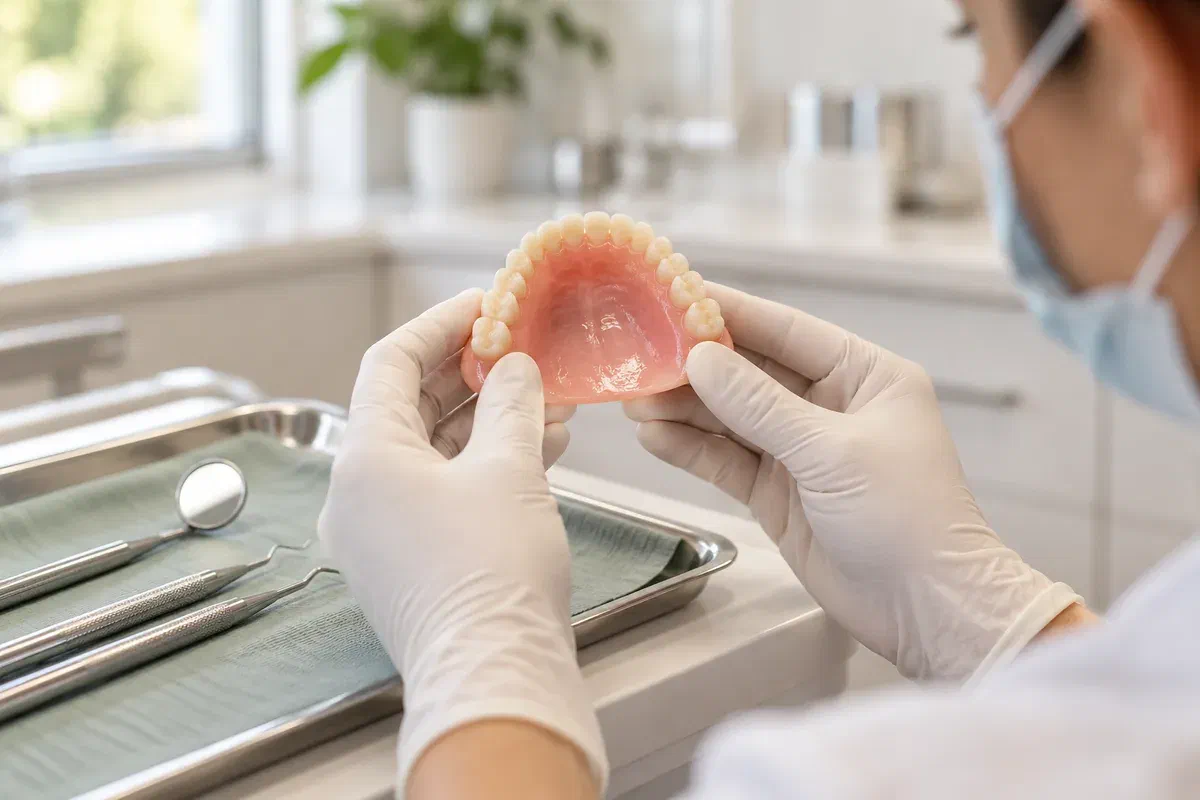
Gloved dental professional examining the fitting surface of an upper denture
Putting it into words

Useful ways to describe an odd feeling

You don’t have to be exact. Comparisons help: tight or loose, high on one side, catching on the tongue. Mention whether it happens while you speak, chew or rest, so the dentist knows where to begin.

Something presses, somewhere

Even a rough location, such as upper left or along the front, is helpful. Say whether it began with a newer denture or appeared over time. The gum and the corresponding area of the appliance are checked before any refinement is considered.

The bite feels “off”

Maybe the teeth don’t seem to close where they used to, or you shift your jaw to find a comfortable position. Describe that. The dentist reviews contacts and stability together instead of reducing a tooth near where it feels wrong.

The denture feels unsettled

A plate that never quite seems seated may have a fit, design or tissue cause, or a combination. Ask whether a minor change is likely to help, or whether the way it meets your mouth needs a broader rethink.

A sore that won’t settle, a lump, a patch or any change you can’t explain needs examination. A vague feeling under a denture can occasionally have a cause unrelated to the appliance.

Turning a hunch into a finding

Clarity before any trimming

If the assessment identifies a localized cause that suits adjustment, a refinement may help the appliance settle and feel less intrusive. The dentist should explain what is being changed, so the vague feeling is replaced by something you understand.

Not every problem can be adjusted away. A denture that is worn, loose throughout or poorly suited to your mouth needs more than a surface change. If earlier attempts haven’t helped, it is reasonable to ask whether the cause has been looked at again and whether a different treatment would be more effective.

Patient information: Cambridge University Hospitals — denture care

A reason behind every change

Adjusting an area the exam has pinpointed is very different from removing material until the feeling hopefully fades. The first has a purpose; the second can weaken a reasonable fit.

Leave the good areas intact

Tell the dentist which parts of the denture feel normal. Keeping useful support and function is as much a goal as easing the uncomfortable part.

A clearer picture of what’s next

Even if no single fix is possible, the visit can explain what is happening and whether broader care is advisable, which is often a relief in itself.

Your appointment, explained

How a vague complaint becomes a clear plan

The dentist looks at the denture in your mouth and in hand. If wearing it has become uncomfortable enough to avoid, ask the clinic whether any preparation is useful.

  1. Explore what you’ve been feeling

    You’ll be asked about the denture’s age, previous changes and anything new in your mouth or health. Describe the sensation, when it is strongest, how eating or speaking is affected and any area you can’t bear.

  2. Look for the physical cause

    The dentist examines the appliance and your mouth together, with suitable methods for checking pressure, stability and tooth contacts. Often this reveals a pattern you could feel but not name.

  3. Adjust only what the findings support

    If a specific area is responsible, it may be refined, or another focused change discussed. The effect on the whole denture is considered, and if a lab procedure would serve you better, you will hear why.

  4. Ask how it feels now

    With the denture back in, you can compare it with before. Ask what may change as the tissues settle, when to come back, and which symptoms mean the plan should be reconsidered.

After you get home

Give the change a few days to show itself.

Gums often need time to recover even after the denture itself is refined. Follow the guidance on wear and care, and if the odd feeling returns or persists, arrange another look.

Stick to advice meant for you

Instructions for a recent denture, a mouth after extractions or an older appliance may differ. Ask what fits your situation rather than relying on general tips.

Compare with how it felt before

Jot down whether the awkward feeling has eased, moved or changed character. That comparison helps at review, but avoid repeatedly pressing on tender areas.

Keep the routine simple and gentle

Clean the appliance as recommended and handle it with care. If insertion or cleaning hurts, ask for help instead of scraping the fitting surface or altering an edge.

Where the findings lead

Three possible directions

A single pressure area calls for a different response than a denture that has stopped suiting your mouth. Ask what was found and why one route is preferred.

If one area explains the feeling

A small refinement

When the rest of the denture is still appropriate, a focused change may be enough. You should hear what the finding was and how the result will be reviewed.

If fit or a component has changed

Relining, rebasing, or repairing

A surface that no longer meets the gums well, or a worn or damaged part, may call for a separate procedure. Find out what it would change and whether the current teeth and design are still worth keeping.

If the appliance has run its course

A replacement or broader look

Significant wear, ongoing trouble or an unsuitable design can make a new denture the more sensible route. A tissue issue may also need treatment on its own first.

Hard-to-describe problems

When you’re not sure what’s wrong

Your mouth and your appliance determine the advice. These answers may help you prepare and understand what could follow an adjustment.

(905) 876-4488
Is it worth booking if I can’t point to a specific sore spot?
Yes. A general sense that the denture sits wrongly, feels bulky or makes your bite uncomfortable is a valid reason for an assessment. The examination is designed to find what you can’t easily describe.
Why does my denture feel too big all of a sudden?
A change in how the appliance seats, swelling of the gums or a change in the tissues can alter the sensation. Mention when it began. The dentist can check the fit and tissues and explain what may be happening.
Could my denture be making me bite my cheek or tongue?
Tooth position and the shape of the appliance can sometimes contribute to this. Describe when it happens and show any marks. The dentist can assess whether an adjustment is appropriate or another cause should be considered.
Should I stop wearing my denture if it feels wrong but doesn’t hurt?
Ask the clinic for advice suited to you. Wearing it before the visit can help reveal what is going on, but don’t persist through significant pain. Let the team know how it feels and how long you wear it.
Do loose dentures always need a bite adjustment?
Not necessarily. The bite is checked, but looseness can also relate to the supporting tissues, overall fit or design. Ask whether a small change can help or whether a different procedure is more suitable.
What helps an appointment from Acton go smoothly?
Bring the denture, any older one you have and a few notes on when it feels wrong. Ask whether a follow-up is likely so you can plan the next visit before leaving.
Acton denture assessments

Let’s put a name to the problem.

Visit our Bronte Street practice with the denture and your best description of how it feels. The dentist will examine your gums, the fit and the bite, then explain what they found and whether a focused adjustment or another step is advisable.

Mention sharp pain, a sore that lingers or being unable to wear the appliance when you contact us, so the right next step can be discussed.

Visit Milton Dental Clinic
Unit 1, 342 Bronte St. S, Milton, ON L9T 5B7
Get directions Clinic hours
Monday–Thursday
11am–7pm
Friday–Sunday
By appointment only

Areas we serve

  • Milton
  • Oakville
  • Mississauga
  • Georgetown
  • Halton Hills
  • Acton
  • Campbellville
  • Brampton
  • Burlington
  • Puslinch
  • Rockwood
  • Erin
  • Caledon
  • Etobicoke
  • Old Milton
  • Bronte Meadows
  • Timberlea
  • Dorset Park
  • Dempsey
  • Clarke
  • Beaty
  • Coates
  • Harrison
  • Scott
  • Willmott
  • Ford
  • Bowes
  • Cobden
  • Walker
  • Mountain View
  • Milton Heights
  • Hawthorne Village
  • Valley View
  • Fallingbrook
  • Nassagaweya
  • Trafalgar
  • Esquesing
  • Nelson
  • Brookville
  • Moffat
  • Glen Williams
  • Norval
  • Limehouse
  • Stewarttown
  • Ashgrove
  • Hornby
  • Silver Creek
  • Speyside
  • Scotch Block
  • North Oakville
  • River Oaks
  • Glen Abbey
  • West Oak Trails
  • Palermo
  • Bronte Creek
  • College Park
  • Joshua Creek
  • Uptown Core
  • Preserve
  • Iroquois Ridge
  • Lisgar
  • Meadowvale
  • Meadowvale Village
  • Churchill Meadows
  • Erin Mills
  • Central Erin Mills
  • Streetsville
  • East Credit
  • Creditview
  • Heartland
  • Sheridan
  • Mount Pleasant
  • Credit Valley
  • Huttonville
  • Churchville
  • Springbrook
  • Northwest Brampton
  • Bram West
  • Fletcher's Meadow
  • Fletcher's Creek South
  • Alton Village
  • Orchard
  • Millcroft
  • Headon Forest
  • Tansley
  • Brant Hills
  • Tyandaga
  • Kilbride
  • Lowville
  • Aberfoyle
  • Morriston
  • Arkell
  • Hillsburgh
  • Freelton
  • Carlisle
  • Waterdown
  • Flamborough
  • Mountsberg

How can we help?

Milton Dental Clinic

Have a question about your smile? Choose the option that works best for you.

For urgent dental concerns, please call.
Messages are reviewed during clinic hours.