Redness or rubbing at one edge
Point out the area and say whether it began with a new denture or appeared later. The dentist looks at the gum there and the part of the appliance resting on it before suggesting any refinement.


Sometimes it is a family member who first notices: a parent leaving the denture out, eating less, or wincing at meals. From Brampton, arrange a denture adjustment assessment so the appliance, the gums and the bite are reviewed together before any change.
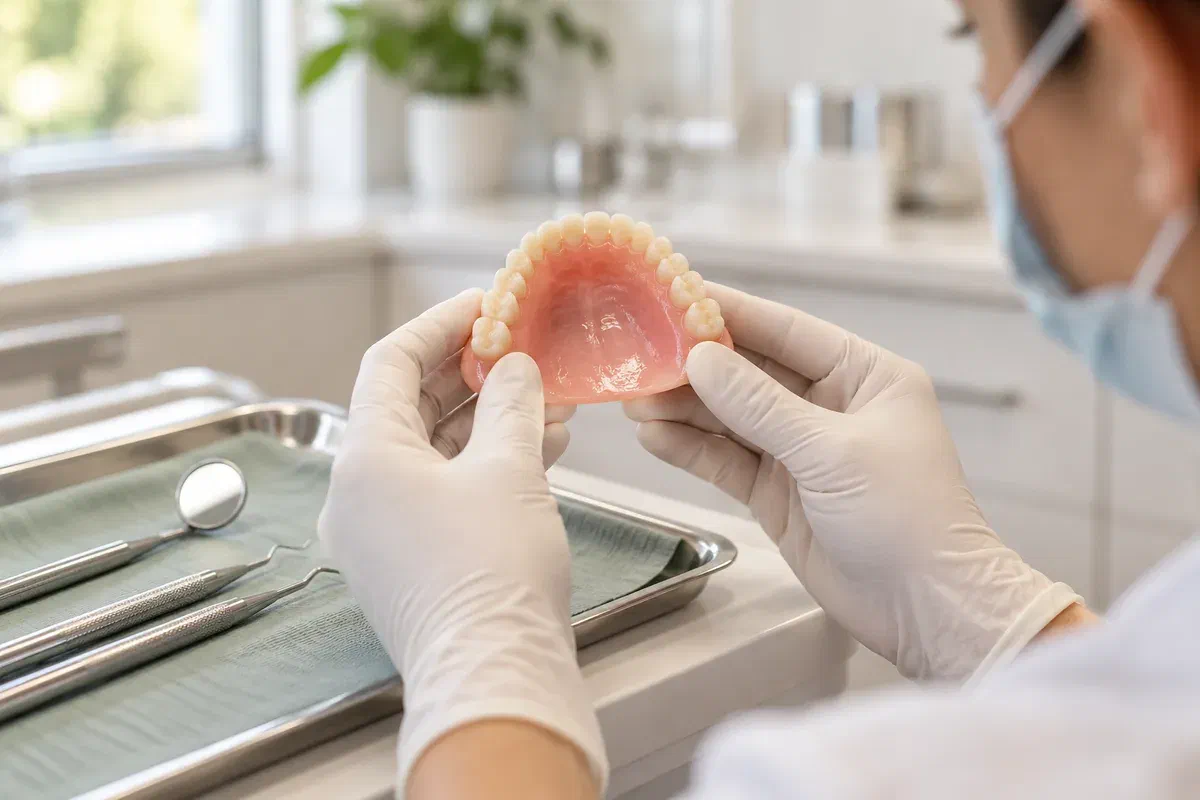
A denture that hurts tends to get quietly set aside. Meals become softer, smiles a little more guarded. Whether you wear the appliance yourself or help someone who does, it is worth knowing what an adjustment involves: a targeted change made after the dentist has assessed how the denture fits and functions, perhaps at a pressure spot, an edge or a bite contact.
Pain in one place can still have a wider cause. The gums, the overall fit, the way the teeth meet and the state of the appliance each need consideration. If material is removed from the wrong spot, a new sore can appear, or the denture can lose the grip it had.
Coming from Brampton, it helps if whoever knows the history best attends or sends notes along. Bring the denture, even one that now lives in its case. We can then explain whether a modest adjustment is suitable or whether a reline, a repair, a replacement or other care should be considered.
There is no need to name the cause. Describe what you or your relative notice, such as avoiding certain foods, removing the denture after a short time, or trouble speaking clearly. Those observations guide the exam.
Point out the area and say whether it began with a new denture or appeared later. The dentist looks at the gum there and the part of the appliance resting on it before suggesting any refinement.
Favouring one side, or a denture that moves when the jaws close, can hint at an uneven bite. Describe what you see. The contacts and the stability of the appliance are judged together instead of adjusting the nearest tooth.
When the appliance keeps coming out, it may be loose, poorly suited or pressing on changed gums. Ask whether a small adjustment is likely to help or whether the fit as a whole needs another approach.
Any sore that stays, an unusual patch or lump, or an unexplained change in the mouth needs examining. Don’t assume that everything under a denture is a simple pressure point, especially if the wearer finds it hard to describe symptoms.
If the assessment points to a localized cause that an adjustment can treat, the appliance may sit and work more comfortably afterward. The clinician should explain what was altered and what to watch for, so everyone at home knows what to expect.
Adjustments can’t solve everything. A denture that is badly worn, loose throughout or no longer right for the mouth needs more than a small change. If several attempts haven’t helped, ask whether the cause has been reassessed and whether a different treatment is more suitable.
Patient information: Cambridge University Hospitals — denture care
Changes made because of a specific finding have a clear purpose. Repeatedly removing material without linking it to the symptoms rarely helps and may weaken a good fit.
The goal is to improve the trouble spot while keeping support and function intact elsewhere. Mention the parts that feel fine as well, so the work stays narrow.
The visit may show that an adjustment is enough or that broader work is due. That knowledge helps a family plan, rather than returning again and again for short-term changes.
The dentist assesses the denture inside and outside the mouth. If wearing it is painful, ask the clinic whether anything should be done to prepare.
Share when the denture was made, previous adjustments, health changes and recent dental work. Explain where and when it hurts, how eating or speaking is affected, and any area it can no longer be worn against.
Your mouth and the appliance are examined together, using suitable methods to look at pressure, stability and contacts. This separates a local issue from a wider fit or tissue concern.
A specific area may be refined, or another focused modification discussed with you and anyone helping. The effect on the full denture is weighed, and if laboratory work is needed, that is explained.
The denture is tried again and the wearer can say how it feels. Ask how a sore area should settle, when to return, and which signs at home mean the plan needs revisiting.
Changing the appliance and healing an irritated gum are related but separate steps. Follow the advice on wearing the denture and caring for the mouth, and arrange a review if discomfort carries on.
A new denture, recent extractions and a long-worn appliance may each come with different wearing advice. Ask what applies rather than following what another relative was told.
Jot down whether the original problem improved and whether new discomfort appears with meals or speech. Helpers can note changes the wearer might not mention. Avoid pressing on the area to test it.
Keep up the recommended cleaning routine and handle the denture carefully. If cleaning or putting it in hurts, ask for guidance rather than scraping the fitting surface or reshaping an edge.
Every mouth and appliance is different. These answers may help you prepare for the visit and understand what could follow.
Visit our Bronte Street practice with the appliance and a short description of what you’ve noticed at home. We will check the gums, the fit and the bite, then discuss whether a targeted adjustment or another option is appropriate.
Mention severe pain, a sore that isn’t healing or an inability to wear the denture when you contact us, so the next step can be talked through.
