A rub along the border
Say where the edge bothers you and whether it began with a new denture or developed over time. The dentist checks the gum and the matching area of the appliance before deciding whether refining it is appropriate.


Adjust it, reline it, or start again? That question has a clearer answer once someone has examined the denture and your mouth together. Visit from Burlington for an assessment that looks at fit, gum tissue and bite before any change is suggested.
People rarely arrive asking for an adjustment by name. They arrive with a decision in mind: is this denture still worth keeping? An adjustment is one possible answer. It is a targeted change, made after the dentist has studied how the appliance fits and works, and it might address a sore point, a flange or a tooth contact.
The trouble is that a single sore patch can come from more than one place. Gum tissue, overall fit, how the teeth come together and the condition of the denture each need attention. Trimming the wrong area may create a fresh irritation or make the appliance less secure than it was.
So for a visit from Burlington, plan to show us where it hurts and explain when. Bring the denture even if you’ve stopped wearing it. That lets us tell you honestly whether a limited change is reasonable or whether a reline, repair, replacement or other care belongs in the discussion.
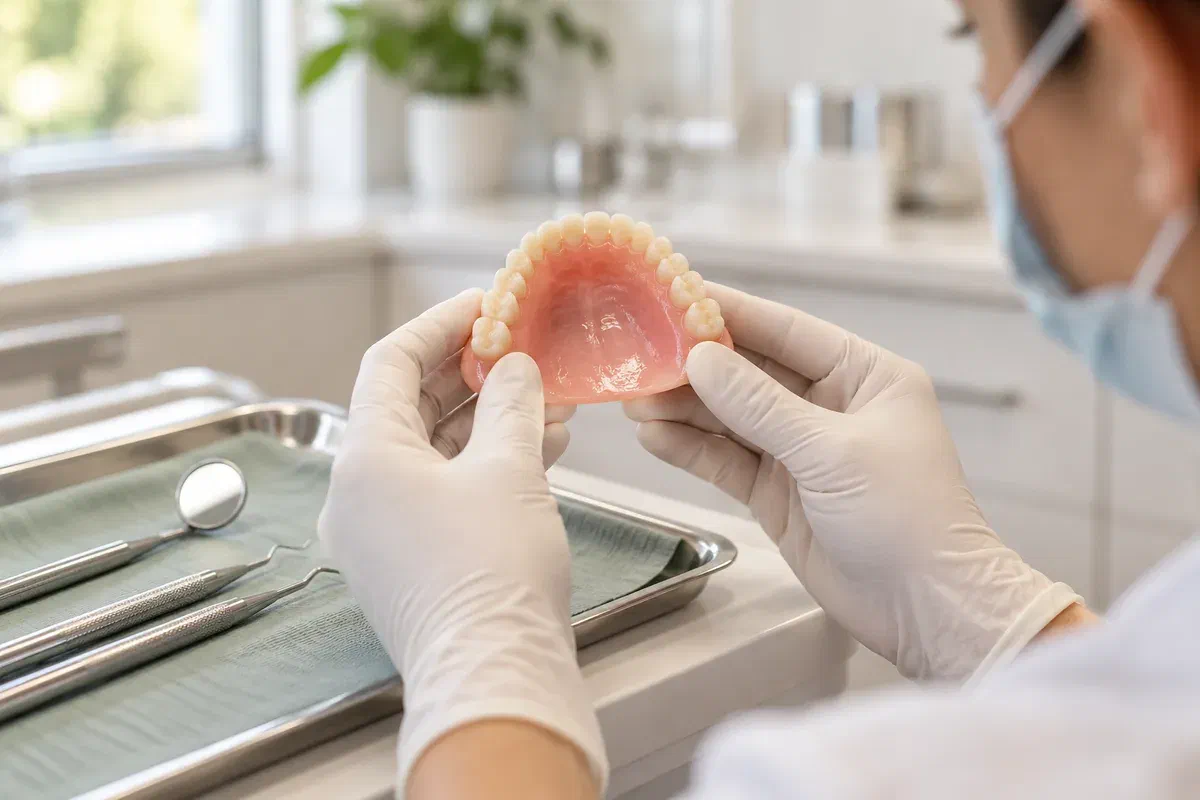
Leave the diagnosis to the dentist and focus on what you feel. A denture may behave one way while you talk, another while you chew and another when it is simply resting, and each of those details steers the assessment.
Say where the edge bothers you and whether it began with a new denture or developed over time. The dentist checks the gum and the matching area of the appliance before deciding whether refining it is appropriate.
Perhaps the left molars strike before the right, or the plate skates forward as your jaw closes. Describe that sequence. Bite and stability are judged together, not by reshaping a surface just because the soreness feels close to it.
Movement can reflect fit, design, the tissues that support the denture, or other causes. Ask whether a minor adjustment can sensibly help or whether the relationship between appliance and mouth needs a different solution.
Have any lasting sore, unfamiliar patch, lump or unexplained change in the mouth examined. Not every problem beneath a denture is a simple pressure spot.
Suppose the exam traces your discomfort to one definite area. In that case, a careful refinement there can make the appliance easier to live with. Before anything is touched, you should hear exactly what will be altered and what sort of improvement is likely.
Keep expectations realistic. An adjustment can’t repair every issue with a denture that is worn, generally loose or poorly suited to you. If repeated changes haven’t helped, ask whether the underlying cause has been reconsidered and whether another option might do more.
Patient information: Cambridge University Hospitals — denture care
Adjusting an area because the exam pinpointed it is purposeful. Removing material over and over without understanding how the appliance relates to the symptoms is not.
A denture that grips well in most places is worth protecting. Point out the comfortable zones as well as the sore one, so the dentist can leave the good parts alone.
The review may confirm that an adjustment is enough, or show that the appliance needs broader care. Knowing the difference helps you avoid repeated short-term changes to a denture that needs another plan.
Expect the dentist to study the appliance both while you wear it and once it is out. Painful to wear at the moment? Phone first and find out whether you should prepare in any particular way.
Share when the denture was made, any previous adjustments and recent changes. Describe the location and timing of the discomfort, how it affects eating or speaking, and any area you can no longer tolerate.
Your mouth and the appliance are examined together, using suitable methods to check pressure, stability and how the teeth meet. That distinguishes a local adjustment need from a broader fit or gum issue.
A specific area may be refined, or another focused modification discussed. The effect on the whole denture is considered, and any need for laboratory work or a separate procedure is explained.
With the modification done, you bite, talk and give your verdict. This is the moment to ask how quickly a tender patch usually calms down, whether a return visit is wise, and what would signal that a different plan is needed.
Even a well-judged change won’t heal irritated gum overnight; the tissue recovers at its own pace. Keep to the wear and care instructions you leave with, and come back for a review if the soreness hangs on.
A new denture, a mouth healing after extractions and an older appliance may each come with different instructions. Ask which apply to you rather than copying someone else’s routine.
Note whether the original problem has eased and whether discomfort has appeared in a new situation. That record helps at review. There is no need to keep provoking pain to test the change.
Brush and soak the appliance the way you were shown, ideally over a folded towel in case it slips. Should putting it in or cleaning it hurt, phone for advice; scraping the inside or trimming a rim at home isn’t the answer.
Advice depends on the appliance and your mouth. These questions can help you prepare and understand what follow-up could involve.
Pack the denture, jot down what’s been bothering you and head to our Bronte Street practice. After a look at your gums, the fit and the bite, you’ll get a plain explanation of whether adjusting, relining or another route suits you.
Let us know about significant pain, a sore that isn’t healing or difficulty wearing the denture when you get in touch, so the next step can be discussed.
