

Illustrative patient describing denture comfort concerns to a dentist
Restorative Dentistry

Denture Adjustments in Caledon

Thinking about a new denture but need the current one to stay comfortable in the meantime? From Bolton or elsewhere in Caledon, an adjustment assessment looks at the appliance, your gums and your bite together, and helps you plan what comes next.

Comfort now, decisions later

Getting through today while planning for tomorrow

Many denture wearers sit somewhere in between: the current appliance is getting tired, a replacement is on their mind, and in the meantime something rubs. An adjustment can sometimes bridge that gap. It is a specific change made once the dentist has assessed how the denture fits and functions, and it may address a pressure point, a border or a tooth contact.

Even as a short-term measure, an adjustment needs a reason. Gums, overall fit, bite and the condition of an older appliance all play into discomfort, and removing material from the wrong area can make the denture less stable just when you need it to last.

From Caledon, bring the denture and any spare you keep, and describe where the trouble is and when it starts. Bring both even if one has been retired. We can then talk through whether a limited adjustment is sensible for now, and whether relining, a repair, replacement or other care should be planned.

Discuss keeping your denture comfortable
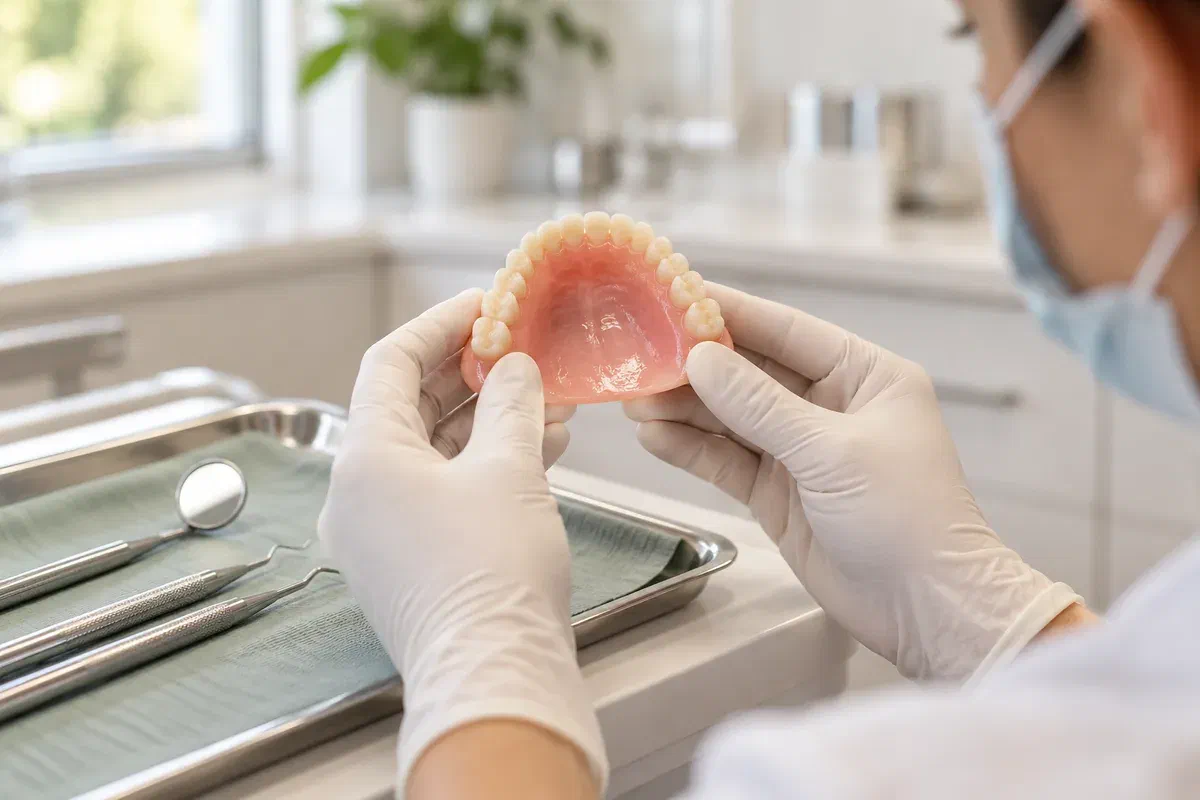
Gloved dental professional examining the fitting surface of an upper denture
Mapping the trouble

What’s bothering you, and how long has it been?

A clear account helps the dentist judge whether a short-term refinement is reasonable. Mention whether the problem shows up during meals, conversation or quiet time, and how it has changed over recent months.

A border that has started to chafe

Note where it rubs and whether the irritation is new or has been building for a while. The dentist looks at the tissue and the corresponding area of the appliance before deciding whether easing that edge is appropriate.

A bite that has drifted

Worn denture teeth can change how upper and lower meet. If one side seems to land first or the plate slides as you close, say so. Contacts and stability are reviewed together rather than adjusting the closest tooth.

A fit that has loosened

Looseness may relate to fit, design, changes in the gums or wear on an older appliance. Ask whether a modest change can keep it serviceable for now or whether it’s time for a broader solution.

Any lingering sore, an unfamiliar lump or patch, or an unexplained change in your mouth should be examined. An ageing denture is not always the reason behind symptoms beneath it.

What a stopgap can and can’t do

Buying comfort, honestly

If the exam identifies a localized cause that suits adjustment, a refinement may keep the current denture more comfortable while you plan. The dentist should explain what is being changed and how long the improvement is likely to be useful.

No adjustment turns a worn or poorly fitting denture into a new one. If repeated changes are no longer helping, ask whether the underlying cause has been reconsidered and whether it is time to move toward a reline or replacement instead.

Patient information: Cambridge University Hospitals — denture care

A change aimed at a clear finding

Refinements are worthwhile when the exam pinpoints the cause. Trimming more each time it hurts, without knowing why, can shorten the useful life of an appliance you are relying on.

Keep the denture usable

Preserving fit and support elsewhere matters when you need the appliance to last. Mention which parts still feel good, so changes stay small.

A realistic timeline

The visit can show whether an adjustment will carry you comfortably for now or whether the denture needs attention sooner. That helps you plan a replacement on your own schedule.

Walking through the appointment

Four steps, and a conversation about what’s next

The appliance is checked in your mouth and on the bench. If wearing it is painful, call ahead and ask whether you should do anything before coming in.

  1. Discuss the denture’s age and story

    Share when it was made, earlier adjustments, any spare appliance and recent dental or health changes. Describe where and when it hurts, how meals or speech are affected and any area you can’t tolerate.

  2. Assess what’s happening now

    Using suitable methods, the dentist checks pressure, stability and contacts, along with wear on the teeth and the condition of your gums. That shows whether the issue is local or part of a broader change.

  3. Make a short-term change if suitable

    A specific area may be eased, or another targeted modification discussed. Its effect on the rest of the appliance is considered, and if a reline or lab repair would be more sensible, you’ll hear why.

  4. Review comfort and longer-term plans

    You try the denture and report how it feels. Ask how long a sore spot may take to settle, when to come back, and when it might be sensible to start planning a replacement.

In the weeks ahead

Make the most of the fix, without forcing it.

The adjustment and the healing of irritated tissue happen on different schedules. Follow the guidance you receive on wear and care, and book a review if discomfort returns.

Keep to the wearing plan you were given

Advice may differ for an older appliance, a spare, or a mouth that has recently had extractions. Ask what suits your situation instead of using a one-size routine.

Watch how long the comfort lasts

Note whether the original issue has eased and whether new discomfort appears over the following weeks. That helps with planning, but avoid testing a sore area repeatedly.

Care for both dentures

Clean and store your main and spare appliances as recommended. If cleaning or insertion hurts, ask for guidance rather than scraping or reshaping either one at home.

Planning your options

Short term, medium term, long term

A single irritated spot is a different matter from an appliance that has stopped matching your mouth. Ask what the exam found and how each option fits your plans.

To ease one area for now

An interim adjustment

If the denture is otherwise serviceable, a focused change may keep it comfortable while you decide. The dentist should explain the finding and what to watch for afterwards.

To extend a denture’s useful life

Relining, rebasing, or repair

A fitting surface that has moved away from the gums, or a cracked or worn part, may be addressed with another procedure. Ask what it involves and whether the current teeth are worth keeping.

When the time has come

A new denture or full reassessment

Significant wear, repeated trouble or a design that has stopped working for you may make replacement the better plan. Tissue concerns may need care first.

Adjust now or replace soon?

Planning questions from denture wearers

Your mouth and appliance shape the advice. These answers may help you prepare and think through the timing of next steps.

(905) 876-4488
Is it worth adjusting a denture I plan to replace?
It can be, if the adjustment addresses a specific problem and keeps you comfortable in the meantime. The dentist can explain whether a small change is sensible or whether moving ahead with a reline or replacement makes more sense.
How do I know when a denture is too worn to keep adjusting?
Signs can include repeated sore spots, a bite that keeps changing or teeth that look flattened. Only an exam can confirm it, so bring the appliance and describe how often problems have come back.
Should I keep a spare denture, and can it be adjusted too?
Some people keep an older appliance as a backup. It can be assessed in the same way, though its fit may differ from your current one. Ask the dentist whether it is suitable to wear.
Can I keep wearing a sore denture until I’m seen?
Ask the clinic what fits your case. Wearing it may help show pressure areas, but don’t persist through significant pain without advice. Tell the team how long you can tolerate it and whether a sore is visible.
Is rocking always a sign of a bite problem?
No. The bite is checked, but rocking can also come from changes in the supporting tissues, the overall fit or the design. Ask whether an adjustment is appropriate or whether a different procedure would help.
How can I plan denture care from Caledon around a busy season?
Ask at your visit how soon a review or any further work might be needed, and book ahead where possible. Bringing both dentures and notes helps each appointment cover more ground.
Caledon denture wearers

Let’s keep you comfortable while you decide.

Bring your current denture, any spare and a short summary of the problem to our Bronte Street practice. The dentist examines your gums, the fit and your bite, then explains whether an adjustment now, a reline or a replacement plan makes sense.

Mention severe pain, a sore that won’t heal or difficulty wearing either appliance when you call, so the next step can be talked through.

Visit Milton Dental Clinic
Unit 1, 342 Bronte St. S, Milton, ON L9T 5B7
Get directions Clinic hours
Monday–Thursday
11am–7pm
Friday–Sunday
By appointment only

Areas we serve

  • Milton
  • Oakville
  • Mississauga
  • Georgetown
  • Halton Hills
  • Acton
  • Campbellville
  • Brampton
  • Burlington
  • Puslinch
  • Rockwood
  • Erin
  • Caledon
  • Etobicoke
  • Old Milton
  • Bronte Meadows
  • Timberlea
  • Dorset Park
  • Dempsey
  • Clarke
  • Beaty
  • Coates
  • Harrison
  • Scott
  • Willmott
  • Ford
  • Bowes
  • Cobden
  • Walker
  • Mountain View
  • Milton Heights
  • Hawthorne Village
  • Valley View
  • Fallingbrook
  • Nassagaweya
  • Trafalgar
  • Esquesing
  • Nelson
  • Brookville
  • Moffat
  • Glen Williams
  • Norval
  • Limehouse
  • Stewarttown
  • Ashgrove
  • Hornby
  • Silver Creek
  • Speyside
  • Scotch Block
  • North Oakville
  • River Oaks
  • Glen Abbey
  • West Oak Trails
  • Palermo
  • Bronte Creek
  • College Park
  • Joshua Creek
  • Uptown Core
  • Preserve
  • Iroquois Ridge
  • Lisgar
  • Meadowvale
  • Meadowvale Village
  • Churchill Meadows
  • Erin Mills
  • Central Erin Mills
  • Streetsville
  • East Credit
  • Creditview
  • Heartland
  • Sheridan
  • Mount Pleasant
  • Credit Valley
  • Huttonville
  • Churchville
  • Springbrook
  • Northwest Brampton
  • Bram West
  • Fletcher's Meadow
  • Fletcher's Creek South
  • Alton Village
  • Orchard
  • Millcroft
  • Headon Forest
  • Tansley
  • Brant Hills
  • Tyandaga
  • Kilbride
  • Lowville
  • Aberfoyle
  • Morriston
  • Arkell
  • Hillsburgh
  • Freelton
  • Carlisle
  • Waterdown
  • Flamborough
  • Mountsberg

How can we help?

Milton Dental Clinic

Have a question about your smile? Choose the option that works best for you.

For urgent dental concerns, please call.
Messages are reviewed during clinic hours.