A rubbing edge
Describe where it rubs and whether the problem arrived with a new appliance or developed later. The dentist examines that patch of gum and the matching portion of the denture before choosing whether to refine it.


Should you wait for your next routine check, or call about that denture now? From Campbellville, a quick description by phone can help decide, and an adjustment visit lets the appliance, the gums and your bite be examined together before anything is altered.
In a rural household, a dental trip often waits until there are other reasons to head into town. A denture that rubs is worth weighing differently. An adjustment is a targeted change made once the dentist has assessed how your appliance sits and functions, perhaps at a pressure point, a flange or a spot where the teeth meet.
Leaving it alone and leaving it to chance are not the same. The gum may become more irritated, and the cause might not be the obvious spot at all. Tissue health, overall fit, tooth contacts and the condition of the appliance all need weighing, and trimming in the wrong area can leave a denture less stable than it started.
From Campbellville, a phone call describing where it hurts and when can help the team suggest how soon to come in. Bring the denture to the visit even if it’s been in a cup on the counter. We can then explain whether a limited change is appropriate, or whether relining, a repair, replacement or another kind of care is the better path.
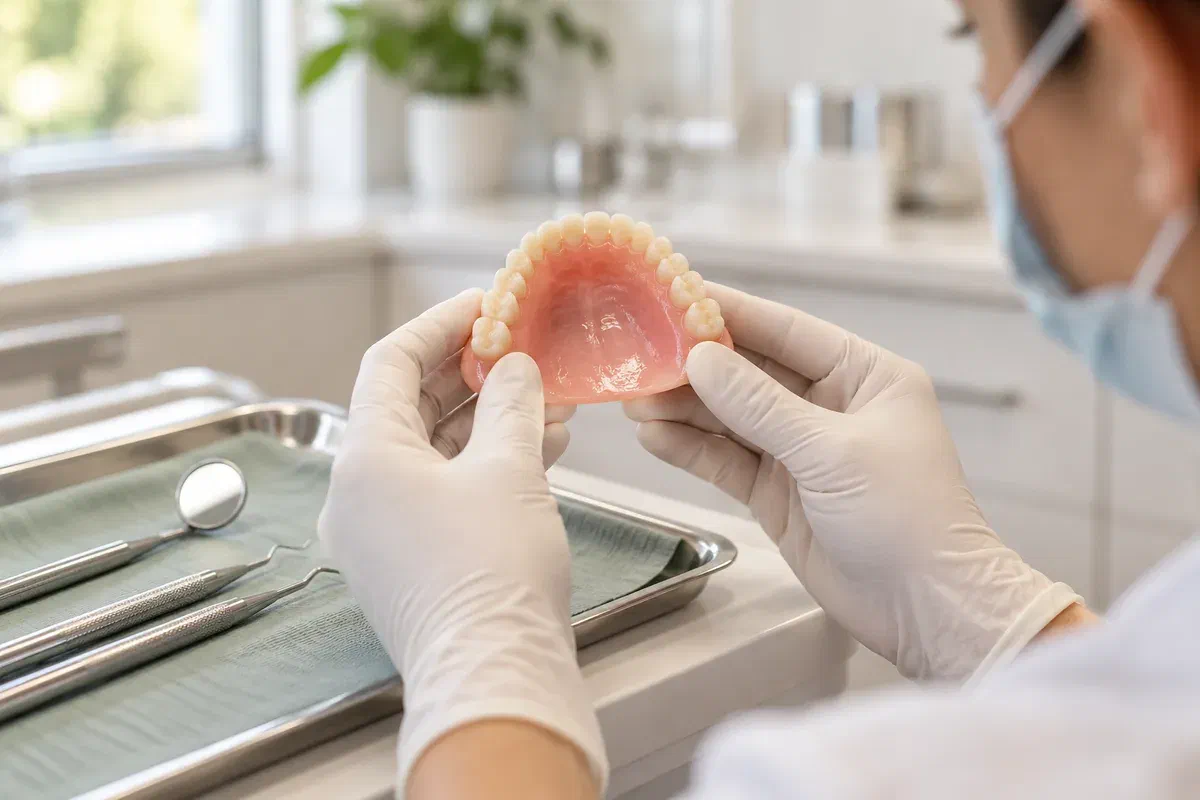
A short, specific description goes a long way. Say whether the trouble happens while you eat, talk or simply wear the denture around the house, and how long it has been going on.
Describe where it rubs and whether the problem arrived with a new appliance or developed later. The dentist examines that patch of gum and the matching portion of the denture before choosing whether to refine it.
If one side seems to hit early, or the plate slides as you close, mention it. Contacts and stability are judged together, so no tooth is ground down just because the ache feels close to it.
A denture that lifts or shifts may have a fit, design or tissue cause, or several at once. Ask plainly whether a small adjustment can help or whether something broader is needed.
Call sooner rather than later about a sore that won’t heal, a new lump or patch, or a change in the mouth you can’t explain. These need examining, and not every symptom beneath a denture is a pressure point.
If the assessment finds a localized cause that adjustment can address, refining that area may help the appliance sit and work more comfortably. The dentist should tell you what is being altered and what improvement is reasonable.
There is a ceiling on what adjustments achieve. A worn, generally loose or poorly suited denture won’t be transformed by a small change. If you’ve had several adjustments without relief, ask whether the cause has been reassessed and whether another treatment could achieve more.
Patient information: Cambridge University Hospitals — denture care
A change based on a definite finding has a purpose. Gradually trimming at visit after visit without understanding the link to your symptoms is more likely to mean extra trips.
Areas that already fit well should be left that way. Mention them, so the work stays narrow and support elsewhere is kept.
If the visit shows the denture needs broader care, you can plan it alongside other errands and commitments rather than returning repeatedly for short-term fixes.
The denture is examined both in your mouth and outside it. If wearing it has turned painful, ask on the phone whether there’s anything to do before you arrive.
The team asks when the denture was made, what adjustments came before and what has changed recently. Describe where and when it hurts, the effect on meals or speech, and any area you can’t wear it against.
Suitable methods are used to assess pressure, stability and contacts, with your gums and the denture considered as a pair. That separates a local need from a broader fit or tissue issue.
An area may be eased, or another targeted change discussed. How that affects the rest of the denture is taken into account, and any need for lab work or a separate procedure is explained.
You wear the denture again and report how it feels. Find out how long tenderness may last, when a review would help and which symptoms should prompt a phone call.
Refining the appliance doesn’t instantly heal a sore gum; each recovers in its own time. Follow the advice on wear and mouth care, and phone if discomfort carries on.
A new denture, a recently extracted mouth or an old favourite may each come with different advice. Ask what applies to you rather than going by what a neighbour was told.
A line or two about whether the original problem has eased, and whether anything new appeared, makes the next call or visit more useful. Don’t keep testing a tender spot.
Keep up the recommended cleaning and handle the denture gently. If cleaning or insertion is painful, call for advice instead of scraping the fitting surface or shaping an edge yourself.
Advice depends on your mouth and appliance. These answers may help you decide when to call and what to expect from the visit.
Bring your denture and a note of what’s been happening to our Bronte Street practice. After the gums, fit and bite are examined, you’ll hear whether a focused adjustment or a different route is right for you.
Describe severe pain, a lingering sore or trouble wearing the denture when you phone, so the team can advise how soon to come in.
