The spot that rubs
Mark where it bothers you, and note whether it started when the denture was new or later. The dentist compares the gum in that area with the part of the appliance above it before choosing whether to refine anything.


A longer trip is easier to justify when the visit is well prepared. From Etobicoke, bring your denture and clear notes on the problem so the appliance, the supporting gums and your bite can be examined together before any adjustment is chosen.
When the drive is longer, nobody wants a vague appointment. The good news is that a denture adjustment rewards preparation. It is a focused change made once the dentist has seen how your appliance seats and functions, and it may concern a sore spot, a border or the way particular teeth meet.
Preparation matters because a tender area can have more than one source. Gum health, general fit, tooth contacts and the condition of the denture all count, and shaving the wrong surface could create a new problem or loosen an appliance that was stable.
So before you set out from Etobicoke, spend a day noticing when the discomfort appears and where. Bring the denture with you, even if you’ve stopped using it. With those details, the visit can establish whether a limited change will help or whether a reline, a repair, a new appliance or other care deserves discussion.
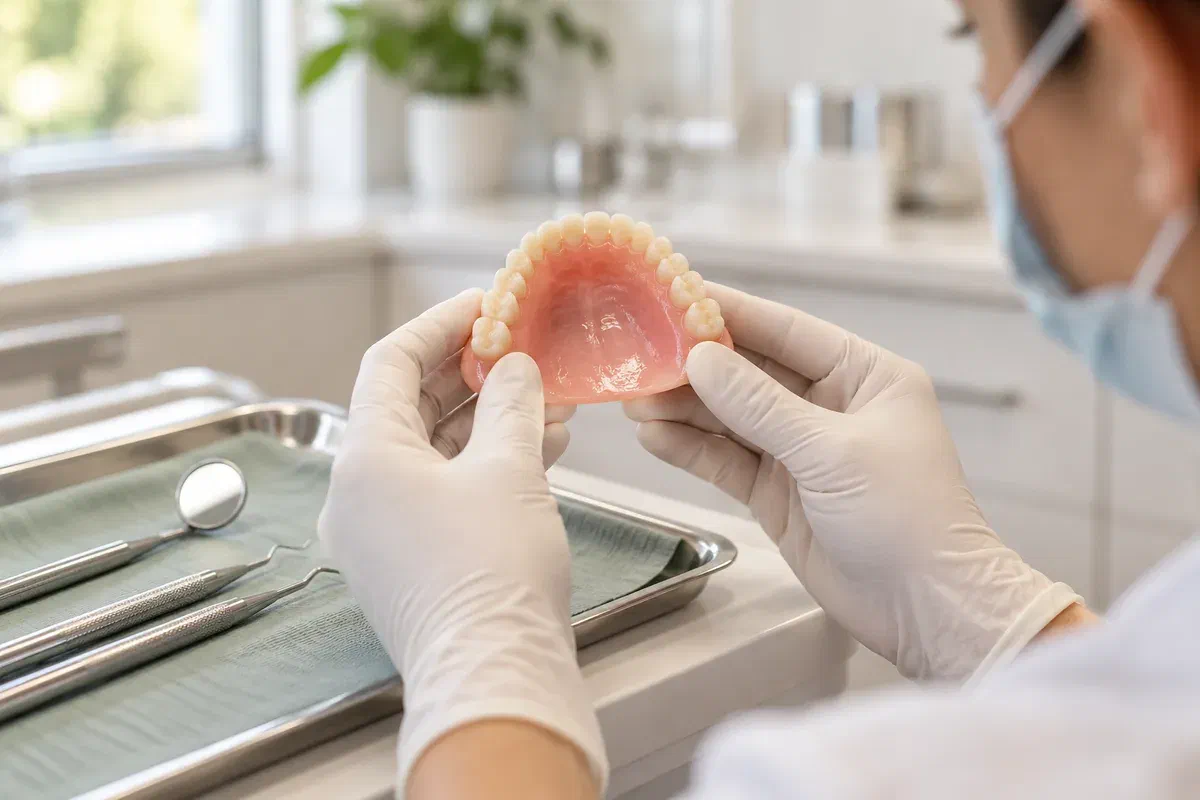
Write down what you feel rather than what you think is wrong. Does it hurt during speech, through a meal or when the denture simply sits in place? Each pattern helps the dentist decide which checks to start with.
Mark where it bothers you, and note whether it started when the denture was new or later. The dentist compares the gum in that area with the part of the appliance above it before choosing whether to refine anything.
Record whether one side touches first or the plate slides as you close. Contacts and stability are examined as a unit, so nobody reshapes a tooth just because it happens to be near the sore spot.
Note whether movement happens with talking, chewing or both. It can stem from fit, design, the tissues beneath, or a mix. Ask whether a small change is realistic or whether a different approach is needed.
A sore that hasn’t healed, a lump or patch you haven’t seen before, or an unexplained change in your mouth should be examined. Not everything beneath a denture is caused by pressure.
If the examination reveals a local cause that suits adjustment, refining that area may help the denture feel and work better. You should be told what is changing and what result to expect, so you can judge it once home.
There is a limit to what adjusting can achieve. It won’t correct a denture that is heavily worn, loose overall or a poor match for your mouth. If change after change hasn’t worked, ask whether the root cause has been reviewed and whether another treatment would do more for you.
Patient information: Cambridge University Hospitals — denture care
When a change is based on what the exam showed, it has a purpose. Trimming bit by bit across several trips, without understanding the source of the trouble, is far less useful.
Areas that already work well should stay that way. Tell the dentist what feels comfortable, too, so the change stays limited to the part that needs it.
Learning on the first visit that the denture needs broader work lets you plan the next steps and timing, instead of making repeated journeys for short-term fixes.
The appliance is examined in your mouth and in the dentist’s hand. If wearing it hurts, call before your trip to ask whether any preparation would help.
Share when the denture was made, previous adjustments and any recent changes. Your notes on timing, location and effects on eating or speaking are especially useful, along with any area you can no longer tolerate.
Using suitable methods, the dentist checks pressure, stability and how the teeth meet, with the appliance in and out. That helps separate a local adjustment need from a broader fit or tissue problem.
A particular area may be refined, or another focused change discussed. The effect on the whole denture is considered, and if laboratory work is required, the timing is explained so you can plan.
You wear the denture again and describe how it feels. Ask what to expect while the area settles, whether a review is needed, and which symptoms would mean calling sooner.
The denture change and the healing of a sore gum are related but different. Follow the wearing and care advice you receive, and arrange a review if discomfort continues.
Guidance for a new denture, recent extractions or a long-worn appliance can differ. Ask what applies to you instead of relying on someone else’s experience.
Record whether the original problem has improved and whether new discomfort has appeared. That record makes a follow-up more efficient. Don’t keep provoking pain to test the change.
If you develop severe pain, swelling or a problem that can’t wait, call the clinic for advice, and seek urgent care nearer home when a long trip isn’t sensible. Mention any denture changes made recently.
Your appliance and your mouth shape the advice. These answers can help you prepare and understand what may follow an adjustment.
Bring your denture and your notes to our Bronte Street practice. We will examine the gums, the fit and the bite, then explain whether a targeted adjustment or another approach makes sense and what follow-up, if any, to expect.
If you have significant pain, a sore that isn’t healing or you can’t wear the appliance, mention it when you call so timing and next steps can be discussed.
