A pinch along the border
Note where the edge presses and whether it started on the first day or came on as the gums healed. The dentist examines the tissue and the matching part of the appliance before deciding whether easing it is appropriate.


The first months with a new denture often bring sore spots and small surprises as your mouth adapts. From anywhere in Halton Hills, book a review so the appliance, your healing gums and the bite are checked together before refinements are made.
Getting used to a new denture is rarely a straight line. One week a cheek feels pinched; the next, chewing seems uneven. An adjustment is how the dentist responds to that, with a specific change made after checking how the appliance fits and functions. It might involve an area of pressure, a border or a tooth contact.
Still, early discomfort isn’t a signal to take material off wherever it aches. The gums may still be settling, especially after extractions, and the general fit, bite and appliance all need consideration. Reducing the wrong part can trade one irritation for another or make the denture less secure.
From Georgetown, Acton, Glen Williams or a smaller Halton Hills hamlet, bring the denture and describe where it hurts and when the discomfort starts. Bring it even if you have stopped wearing it for now. We can then judge whether a small refinement suits or whether a reline, repair, replacement or other care needs discussing.
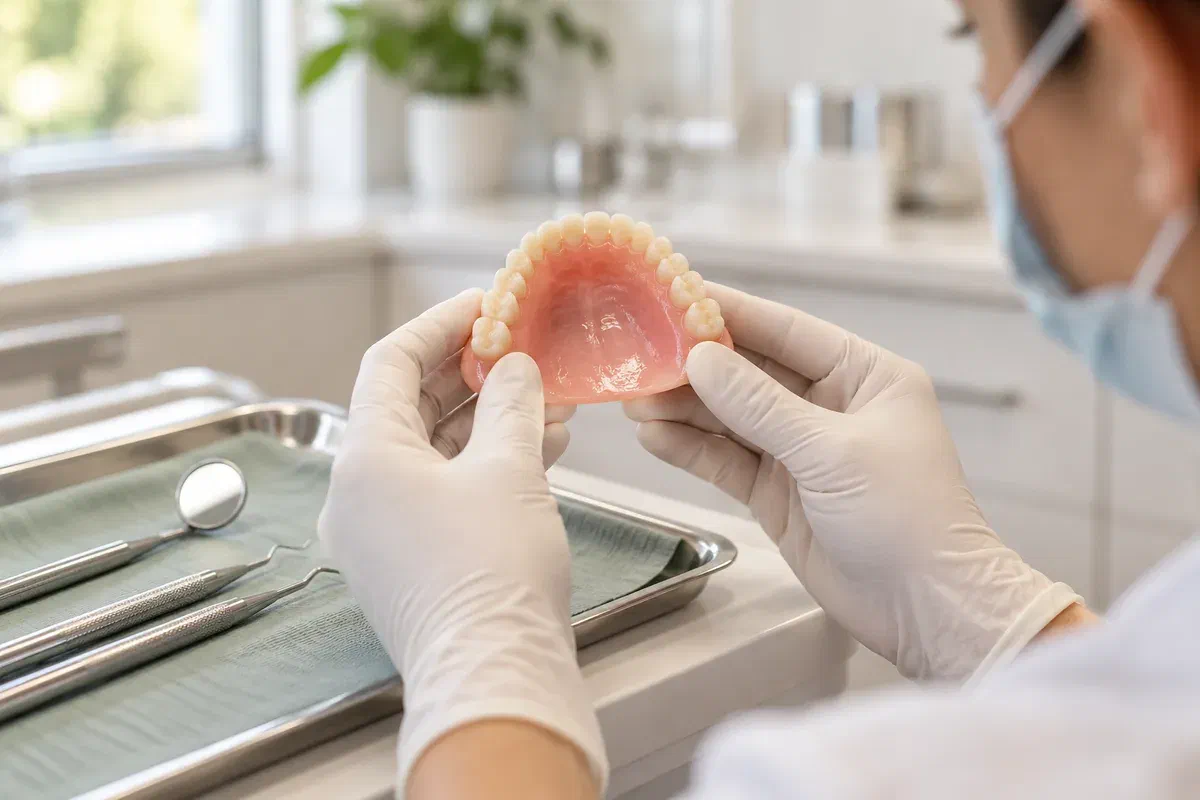
In the first weeks it is tempting to blame one obvious spot. It is more useful to describe the experience, including whether the trouble comes on while speaking, chewing or resting, so the clinician knows where to look.
Note where the edge presses and whether it started on the first day or came on as the gums healed. The dentist examines the tissue and the matching part of the appliance before deciding whether easing it is appropriate.
If one side meets first or the denture shifts as you close, describe that. Bite and stability are assessed together, so a tooth surface is not reduced only because the soreness seems to be close by.
As gums change shape after extractions, a denture can start to move. That may relate to fit, design or the healing tissue itself. Ask whether a small change can help for now or whether a reline or another approach is planned.
Any sore that is slow to heal, an unusual patch, a lump or an unexplained change in the mouth should be examined. Not every new symptom under a denture is just part of getting used to it.
During this settling-in period, a well-placed refinement can take the edge off a pressure spot the exam has found, so you can keep wearing the appliance while your gums finish healing. Ask the clinician to describe what is being smoothed and what improvement is reasonable.
Even early on, adjustments have limits. A refinement won’t rescue a denture that was poorly suited from the start, and healing gums can keep shifting the fit. If repeated changes haven’t helped, ask whether the cause has been reconsidered and whether a reline or other treatment is the better next step.
Patient information: Cambridge University Hospitals — denture care
A clear reason gives the adjustment purpose. Removing a little more material at every visit without understanding the relationship between appliance and symptoms is a different, less helpful approach.
Good fit, support and function in other areas should be kept. Let the dentist know what feels comfortable so the change stays small and targeted.
A review may show a refinement is enough for now, or that a reline will be needed once healing settles. Knowing that helps you plan instead of expecting a single visit to finish the job.
Your denture gets looked at in place and in the dentist’s hand. When a sore spot makes wearing it hard, a quick call beforehand can tell you how to prepare.
Share when the denture was fitted, whether teeth were removed, earlier adjustments and any changes you have noticed. Describe the location and timing of discomfort, its effect on eating or speech, and areas you can’t tolerate.
The dentist examines your gums and the appliance together, using suitable methods to look at pressure, stability and contacts. That helps tell a local refinement need from a wider fit or tissue concern.
Where a refinement suits, the dentist smooths the agreed spot and keeps an eye on how it affects the rest of the denture. If a temporary or permanent reline is likely once healing settles, you’ll hear why.
The denture is checked again and you describe how it feels. Ask how long a sore patch might take to calm, when the next review should be, and which ongoing symptoms mean you should call.
A smoothed edge helps, but healing gum still needs its own time. Stick with the wear and mouth-care plan you were given, and call for a review if things aren’t improving.
Wearing advice after extractions or with a first denture can differ from advice for an established appliance. Ask what applies to you instead of following a relative’s routine.
Note whether the first problem has improved and whether discomfort has moved. Those notes are helpful at review, but don’t keep pressing on a sore spot to test it.
Healing gums appreciate a clean appliance, so keep up the routine you were shown and handle the denture gently. Pain while cleaning or inserting it is a reason to call, not to start scraping.
Every mouth heals and adapts differently. These answers may help you prepare for a review and know what to expect afterwards.
Come to our Bronte Street practice with the denture and a description of what you’ve noticed. Our team checks the healing tissues, fit and bite, then talks through whether a targeted refinement or another approach suits this stage.
Let us know about strong pain, a sore that isn’t healing or difficulty wearing the appliance when you call, so the next step can be discussed.
