

Illustrative patient describing denture comfort concerns to a dentist
Restorative Dentistry

Denture Adjustments in Milton

When a denture pinches, wobbles, or lands on one side first, the answer starts with a proper look. Book a denture adjustment visit in Milton so the appliance, the gums beneath it, and your bite are checked side by side before anything is changed.

Small changes, careful reasons

A sore spot is a clue, not a diagnosis.

Most people book after a specific moment: a meal cut short, or a spot that stings by evening. An adjustment is a focused change made once the dentist has seen how the appliance sits and works in your mouth. It might involve a pressure point, a border, or the way the teeth meet.

What feels like one tender area can have several explanations. The gum tissue, the general fit, the contacts between teeth, and the state of the denture itself all play a part. Taking material away from the wrong place can shift the problem elsewhere or leave the appliance less steady than before.

For a visit here in Milton, come ready to point to where it hurts and say when it starts. Bring the denture with you, even if it has been sitting in a drawer for a while. From there we can judge whether a modest adjustment makes sense or whether a reline, repair, new appliance, or other care is worth talking through.

Have your denture comfort checked
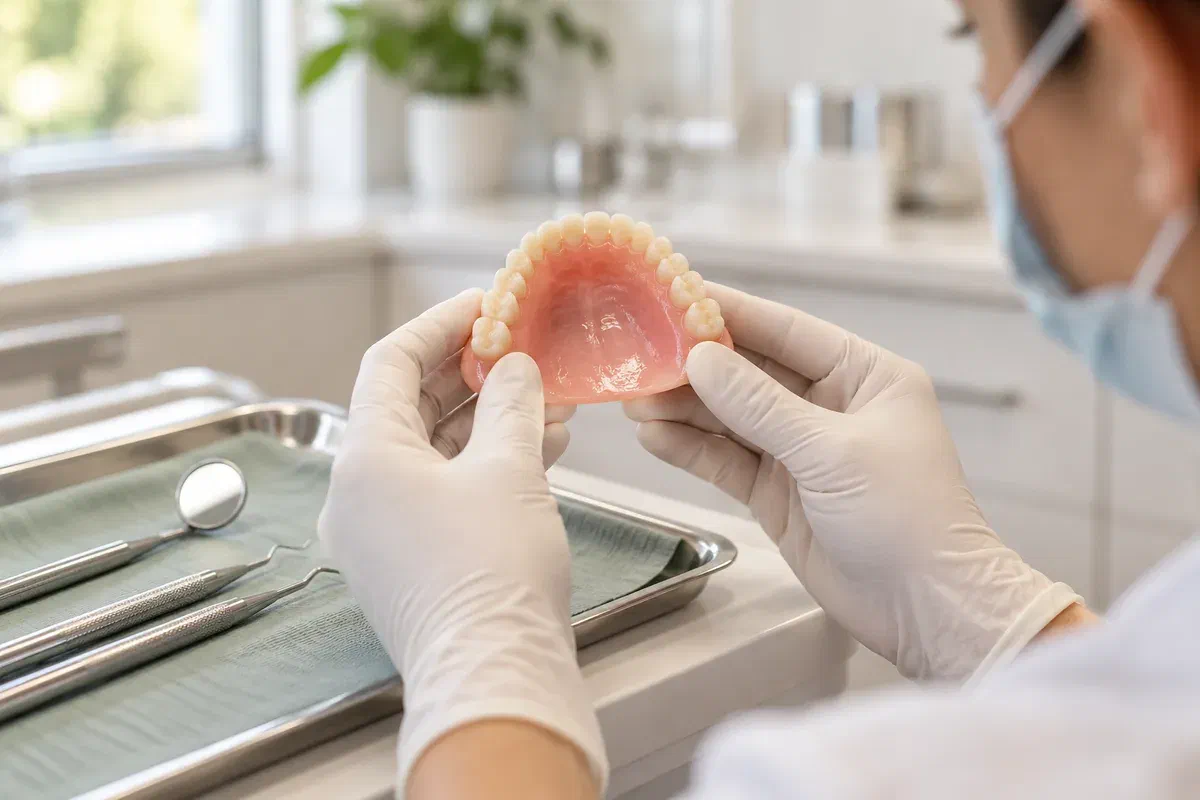
Gloved dental professional examining the fitting surface of an upper denture
Details worth mentioning

Where it hurts and when it hurts both matter.

You don’t need to work out the cause. Describe what you notice instead, because a denture can behave differently while you talk, chew, or rest, and each pattern points toward different checks.

One border keeps rubbing

Let us know the exact place and whether the rubbing started with a newly made denture or crept in over months. The dentist looks at the gum in that area and the matching part of the appliance before deciding if a refinement is the right step.

One side touches before the other

Maybe the teeth seem to meet on the left first, or the denture slides a little as you close. Describe it as you feel it. Bite and stability are reviewed together, rather than grinding down a surface just because that is where the ache seems to sit.

The denture shifts while you eat or talk

Movement can come from the fit, the design, the shape of the supporting gums, or a mix of things. It is fair to ask whether a minor change can realistically help, or whether the relationship between appliance and mouth calls for a different plan.

A sore that won’t heal, an unfamiliar patch, a lump, or any change in the mouth you can’t explain should be examined. Not every symptom under a denture comes from a simple pressure point.

Why aim small

Each change should answer a finding.

If the examination points to a localized cause that suits an adjustment, the change may help your denture sit or work more comfortably. You should hear what is being altered and what improvement, if any, is reasonable to expect.

There are limits, though. An adjustment can’t fix every problem with a denture that is worn out, loose overall, or poorly suited to your mouth. If several rounds of changes haven’t helped, it is worth asking whether the root issue has been looked at again and whether another treatment would serve you better.

Patient information: Cambridge University Hospitals — denture care

Treat the pressure point that was found

A clear finding is what gives the change its purpose. That is quite different from shaving away material visit after visit without knowing how the appliance relates to the discomfort.

Keep what already feels right

The goal is to ease the trouble while holding on to good fit, support, and function elsewhere. Mention the areas that feel comfortable too, especially if only one spot is bothering you.

Learn whether more is needed

The review may show an adjustment will do, or that the denture needs broader attention. Knowing which applies can spare you a cycle of quick fixes.

What happens at the appointment

Listen first, then look, then change only what is needed.

The denture is assessed both in your mouth and in the clinician’s hands. Ask whether there is anything useful to do beforehand, particularly if wearing it has become painful.

  1. Talk through the background

    Share roughly when the denture was made, any earlier adjustments, and recent changes in your mouth. Explain where it bothers you, at what point in the day, and how it affects eating or speech, including any area you can no longer bear to wear it against.

  2. Check the gums, fit, and bite together

    The dentist examines your mouth and the appliance as a pair, using suitable methods to look at pressure, stability, and tooth contacts. This helps separate a local adjustment need from a wider fit or tissue concern.

  3. Carry out the agreed change, if it suits

    A specific area may be refined, or a different targeted modification discussed. The effect on the whole denture is considered, and if laboratory work or another procedure would be more appropriate, that is explained to you.

  4. Recheck and plan any follow-up

    After the change, the denture is reassessed and you can say how it feels. Ask what to expect while a tender spot settles, when a return visit makes sense, and which symptoms would mean the plan needs another look.

In the days that follow

Pay attention, but leave the fine-tuning to the clinic.

Adjusting the denture and letting a sore area heal are connected but separate things. Follow the advice you are given about wearing the appliance and caring for your gums, and book a review if the discomfort lingers.

Use the wearing guidance meant for you

Advice can differ for a brand-new denture, a mouth that has recently had extractions, or an appliance you have worn for years. Ask what fits your case rather than following a routine a friend or relative used.

Jot down what still bothers you

Note whether the original issue has eased and whether discomfort now shows up somewhere new. A short description helps at the review, but there is no need to keep pressing on a sore area to see if the adjustment worked.

Keep up a gentle cleaning routine

Carry on with the recommended cleaning and handle the denture with care. If putting it in or cleaning it hurts, ask for advice instead of scraping the fitting surface or reshaping an edge yourself.

Sizing the solution

A small problem gets a small fix. A bigger one needs more.

A single pressure spot and a denture that no longer matches your mouth call for different thinking. Ask what the examination found and why the option on the table is likely to help.

For one area that needs refining

A focused adjustment

A targeted change can suit a denture that is otherwise still appropriate. The dentist should name the finding being treated and explain how the result will be checked afterwards.

For changes beyond a small surface

Reline, rebase, or repair

A shifted fitting surface or a broken component may need a different procedure. Ask what each option alters and whether the existing teeth and overall design are still suitable for you.

For a denture with real limitations

A replacement or a wider review

Heavy wear, recurring problems, or a design that doesn’t suit you may make a new appliance the better route. A gum or tissue issue may also need its own care before the final plan is settled.

Common denture adjustment questions

Answers to help you plan the visit.

Your mouth and your appliance shape the advice you receive. These answers can help you prepare and understand what follow-up might involve.

(905) 876-4488
Do I need to keep wearing my denture right up to the appointment?
Ask the clinic what suits your situation. In some cases wearing it beforehand makes pressure areas easier to see, but you shouldn’t push through serious pain without guidance. Tell the team how long you can manage it and whether a sore is visible.
How long does a typical denture adjustment visit take?
It depends on what the examination shows. One localized change may be fairly quick, while several concerns take longer. Describe the problem when you book so a suitable time can be planned.
My denture is brand new. Is it normal to need an adjustment?
Some refinement after a new denture is common, because the gums and bite respond to the appliance once it is in daily use. Mention new sore spots or uneven contacts at your review rather than waiting for them to settle on their own.
Can I use denture adhesive to cover a poor fit until I’m seen?
Ask the dentist before relying on adhesive to manage a fit problem. It isn’t a substitute for an assessment, and a denture that needs more and more adhesive to stay in place may have a fit change worth reviewing.
What makes a dentist suggest a reline rather than another small change?
An adjustment alters chosen spots, while a reline reshapes how the fitting surface meets your mouth. If the overall fit has changed, taking off a little more material is unlikely to solve it. You should hear which finding led to the recommendation.
Should I bring both dentures if only my lower one hurts?
Yes. Upper and lower appliances work together when you bite, so a problem felt in one may relate to how the two meet.
Close to home in Milton

Bring the denture in and we’ll take a careful look.

Stop by our Bronte Street practice with your denture and a short description of what you’ve noticed. We will check your gums, the fit, and your bite, then talk through whether a focused adjustment or another option suits you.

When you call, tell us about strong pain, a sore that won’t heal, or trouble wearing the appliance at all, so we can discuss the right next step.

Visit Milton Dental Clinic
Unit 1, 342 Bronte St. S, Milton, ON L9T 5B7
Get directions Clinic hours
Monday–Thursday
11am–7pm
Friday–Sunday
By appointment only

Areas we serve

  • Milton
  • Oakville
  • Mississauga
  • Georgetown
  • Halton Hills
  • Acton
  • Campbellville
  • Brampton
  • Burlington
  • Puslinch
  • Rockwood
  • Erin
  • Caledon
  • Etobicoke
  • Old Milton
  • Bronte Meadows
  • Timberlea
  • Dorset Park
  • Dempsey
  • Clarke
  • Beaty
  • Coates
  • Harrison
  • Scott
  • Willmott
  • Ford
  • Bowes
  • Cobden
  • Walker
  • Mountain View
  • Milton Heights
  • Hawthorne Village
  • Valley View
  • Fallingbrook
  • Nassagaweya
  • Trafalgar
  • Esquesing
  • Nelson
  • Brookville
  • Moffat
  • Glen Williams
  • Norval
  • Limehouse
  • Stewarttown
  • Ashgrove
  • Hornby
  • Silver Creek
  • Speyside
  • Scotch Block
  • North Oakville
  • River Oaks
  • Glen Abbey
  • West Oak Trails
  • Palermo
  • Bronte Creek
  • College Park
  • Joshua Creek
  • Uptown Core
  • Preserve
  • Iroquois Ridge
  • Lisgar
  • Meadowvale
  • Meadowvale Village
  • Churchill Meadows
  • Erin Mills
  • Central Erin Mills
  • Streetsville
  • East Credit
  • Creditview
  • Heartland
  • Sheridan
  • Mount Pleasant
  • Credit Valley
  • Huttonville
  • Churchville
  • Springbrook
  • Northwest Brampton
  • Bram West
  • Fletcher's Meadow
  • Fletcher's Creek South
  • Alton Village
  • Orchard
  • Millcroft
  • Headon Forest
  • Tansley
  • Brant Hills
  • Tyandaga
  • Kilbride
  • Lowville
  • Aberfoyle
  • Morriston
  • Arkell
  • Hillsburgh
  • Freelton
  • Carlisle
  • Waterdown
  • Flamborough
  • Mountsberg

How can we help?

Milton Dental Clinic

Have a question about your smile? Choose the option that works best for you.

For urgent dental concerns, please call.
Messages are reviewed during clinic hours.