

Illustrative patient describing denture comfort concerns to a dentist
Restorative Dentistry

Denture Adjustments in Mississauga

Some dentures behave at home and misbehave the moment you sit down to a proper meal. If yours rubs, tilts or bites unevenly, come from Mississauga for an assessment of how the appliance, your gums and your bite work together before anything is altered.

Eating with confidence again

Why does it only hurt when I chew?

Chewing puts loads on a denture that sitting quietly never does. That is why a spot can feel fine at breakfast and raw after dinner. An adjustment is a small, deliberate modification to the appliance, chosen after the dentist has looked at how it seats and works. It could relate to a pressure area, a flange or a bite contact.

Here is the catch: pain under one area doesn’t tell the whole story. Gum condition, how evenly the base sits, where the teeth touch, and wear or damage on the denture all feed into it. Cutting back the wrong surface may trade one sore for another, or leave you with a looser plate.

Travelling in from Mississauga, it helps to arrive ready to describe which foods or moments bring the discomfort on. Bring the denture, worn or not. Then we can say whether a limited refinement suits it or whether a reline, a repair, a new appliance or some other care is the more honest recommendation.

Ask about mealtime denture discomfort
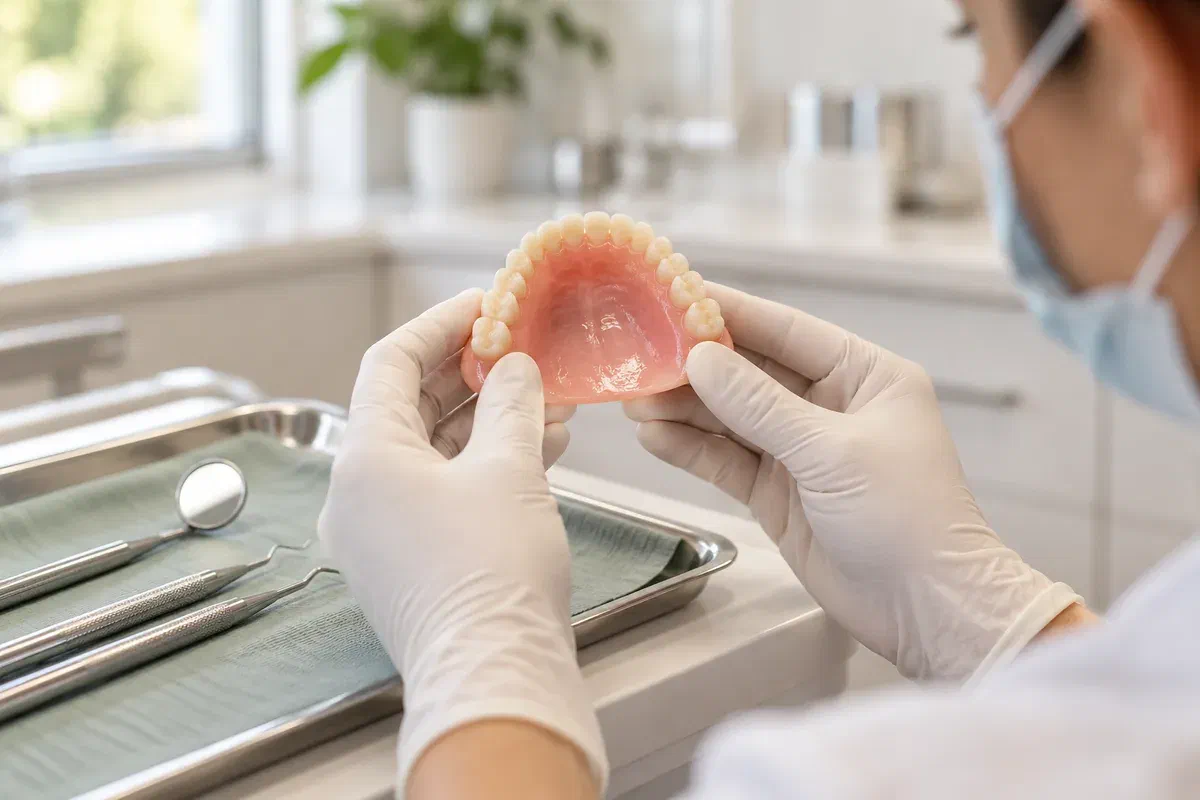
Gloved dental professional examining the fitting surface of an upper denture
Mealtime clues

Notice what happens at the table.

Your observations are more useful than a guess at the cause. Pay attention to whether problems start with the first bite, build through a meal, or show up only when you speak, because each tells the clinician something different.

A sore that follows one edge

Show where it hurts and mention whether it began straight after a denture was made or came on later. Both the gum and the corresponding part of the appliance are examined before anyone decides that easing that edge is the answer.

Biting that feels off-balance

Food may seem to catch on one side, or the plate may tip as you bring your teeth together. Explain the sensation. Stability and contacts get checked as one question, rather than shaving a tooth simply because it sits near the sore.

A denture that lifts as you chew

Lifting or sliding can trace back to the fit, the design, the ridges underneath or a combination. Ask openly whether a small adjustment is realistic or whether the whole fit needs a fresh approach.

Sores that don’t settle, a new lump or patch, or any change you can’t explain should be looked at by a professional. It isn’t safe to assume every problem under a denture is just pressure.

What a good adjustment aims for

Purposeful changes only

If the exam turns up a local cause that suits this kind of work, refining the appliance may let it sit more comfortably and handle chewing better. Ask the dentist to describe the change and what improvement is likely.

It is worth knowing the limits in advance. No adjustment can rescue a denture that is badly worn, loose all over or wrong for your mouth. When repeated visits haven’t brought relief, it is fair to ask whether the real cause has been revisited and whether a different treatment would help more.

Patient information: Cambridge University Hospitals — denture care

Aim at the actual problem

An adjustment earns its place when it responds to something the dentist found. Grinding away bit by bit, visit after visit, with no clear link to the symptoms, is a habit worth avoiding.

Keep the fit you rely on

Good support and function in other areas should be preserved. Tell the dentist which parts of the denture you’re happy with, so the fix stays focused on the area that is actually troublesome.

Spot when bigger care is due

Sometimes the visit confirms a small change will do. Sometimes it shows the appliance has outgrown quick fixes. Either answer is useful, because it stops you investing in repeated tweaks that won’t last.

Inside the appointment

A conversation, an exam, a change, a check

The dentist will look at the denture while you wear it and after it comes out. If keeping it in has become painful, call ahead to ask about any preparation.

  1. Tell the story of the problem

    Mention the denture’s age, earlier refinements and anything recent in your mouth. Explain which meals or moments cause trouble, how it affects chewing or speech, and any area you simply can’t wear it against anymore.

  2. Examine mouth and appliance as one

    Using suitable methods, the dentist checks pressure, stability and tooth contacts with the denture in place and out. That shows whether the need is local or part of a broader fit or tissue concern.

  3. Ease or modify the agreed area

    Where it is appropriate, a specific area is refined or another focused change is talked through. The impact on the denture as a whole is kept in view, and if lab work or another procedure is wiser, you’ll hear why.

  4. Bite, test, and plan the follow-up

    You put the denture back in and say how it feels when you bite. Ask how long a sore spot may take to calm down, when to come back, and which symptoms should send you back sooner.

Back to normal meals

Let the gums recover and keep your tools away.

The denture change is one part; gum healing is another. Follow the advice you are given on wear and mouth care, and book a review if discomfort keeps returning.

Ask what routine applies to you

Instructions for a newly made denture, a mouth that has just had extractions, or a well-used appliance can differ. Get the guidance for your case rather than repeating what worked for a friend.

Notice which foods still bother you

Write a line or two about whether the original sore has improved and whether new discomfort shows up with certain foods. It is useful at review. Just don’t keep biting on a tender spot to test it.

Stay consistent with cleaning

Clean the denture as recommended and handle it carefully over a towel or basin. If inserting or cleaning hurts, ask for help instead of scraping the inner surface or adjusting the border at home.

Your possible next steps

Scale the treatment to the cause.

One pressure spot calls for different thinking than a denture that has stopped matching your mouth. Ask what the exam found and why a given option is expected to work.

If a single spot is responsible

Refining one area

When the denture is otherwise sound, a focused change may be appropriate. You should hear which finding is being treated and how the result will be confirmed.

If more than the surface needs work

A reline, rebase, or repair

A fitting surface that has drifted, or a part that is cracked or worn, may need a different procedure. Ask what each one changes and whether the existing teeth and design are still a good fit for you.

If the appliance has reached its limits

A new denture or broader exam

Heavy wear, recurring trouble or a design that no longer suits you may point to replacement. A gum or tissue condition may also need care on its own before a final plan is agreed.

Chewing, comfort and fit

Questions we hear from denture wearers

Your mouth and your appliance shape the answer. These may help you prepare for an adjustment and understand what could come next.

(905) 876-4488
Which foods tend to make a poorly fitting denture worse?
Firm, sticky or chewy foods often put more strain on an appliance, so discomfort may show up with them first. Make a note of what triggers it. That pattern can help the dentist work out where the pressure is coming from.
Should I avoid eating on the sore side until my visit?
Ask the clinic for advice suited to you. Changing how you chew for a short time may ease discomfort, but it isn’t a fix. Mention any change in your eating habits so the dentist understands how the denture is being used.
Could my bite be the reason my denture tips when I eat?
It might be one reason. The dentist checks the bite along with the fit, the supporting tissues and the design, since tipping can have several causes. Ask whether an adjustment or another procedure is the better match.
Do lower dentures usually need more adjusting than upper ones?
Lower dentures often have less surface to rest on, so some people find them harder to settle. Every mouth differs, though. Describe what you feel in each, and the dentist can explain what is likely in your case.
Is one adjustment usually enough to fix a sore spot?
Sometimes a single targeted change is all it takes, but it depends on the cause and how the gum responds. A further review may be needed. If problems keep coming back, the overall fit deserves another look instead of more trimming.
How do I plan follow-up visits from Mississauga?
Ask when you book whether a review is likely, and try to schedule it while the details are fresh. Bringing notes about what improved and what didn’t makes each appointment more productive.
Welcoming Mississauga denture wearers

Let’s work out what changed.

Bring your denture to our Bronte Street practice along with a short account of when it bothers you. We will examine the gums, the fit and your bite, then explain whether a focused adjustment or a different approach is right.

If you’re dealing with sharp pain, a sore that won’t heal or you can’t wear the denture, mention it when you call so we can discuss the next step.

Visit Milton Dental Clinic
Unit 1, 342 Bronte St. S, Milton, ON L9T 5B7
Get directions Clinic hours
Monday–Thursday
11am–7pm
Friday–Sunday
By appointment only

Areas we serve

  • Milton
  • Oakville
  • Mississauga
  • Georgetown
  • Halton Hills
  • Acton
  • Campbellville
  • Brampton
  • Burlington
  • Puslinch
  • Rockwood
  • Erin
  • Caledon
  • Etobicoke
  • Old Milton
  • Bronte Meadows
  • Timberlea
  • Dorset Park
  • Dempsey
  • Clarke
  • Beaty
  • Coates
  • Harrison
  • Scott
  • Willmott
  • Ford
  • Bowes
  • Cobden
  • Walker
  • Mountain View
  • Milton Heights
  • Hawthorne Village
  • Valley View
  • Fallingbrook
  • Nassagaweya
  • Trafalgar
  • Esquesing
  • Nelson
  • Brookville
  • Moffat
  • Glen Williams
  • Norval
  • Limehouse
  • Stewarttown
  • Ashgrove
  • Hornby
  • Silver Creek
  • Speyside
  • Scotch Block
  • North Oakville
  • River Oaks
  • Glen Abbey
  • West Oak Trails
  • Palermo
  • Bronte Creek
  • College Park
  • Joshua Creek
  • Uptown Core
  • Preserve
  • Iroquois Ridge
  • Lisgar
  • Meadowvale
  • Meadowvale Village
  • Churchill Meadows
  • Erin Mills
  • Central Erin Mills
  • Streetsville
  • East Credit
  • Creditview
  • Heartland
  • Sheridan
  • Mount Pleasant
  • Credit Valley
  • Huttonville
  • Churchville
  • Springbrook
  • Northwest Brampton
  • Bram West
  • Fletcher's Meadow
  • Fletcher's Creek South
  • Alton Village
  • Orchard
  • Millcroft
  • Headon Forest
  • Tansley
  • Brant Hills
  • Tyandaga
  • Kilbride
  • Lowville
  • Aberfoyle
  • Morriston
  • Arkell
  • Hillsburgh
  • Freelton
  • Carlisle
  • Waterdown
  • Flamborough
  • Mountsberg

How can we help?

Milton Dental Clinic

Have a question about your smile? Choose the option that works best for you.

For urgent dental concerns, please call.
Messages are reviewed during clinic hours.