Rubbing along one edge
Mention where it rubs and whether the problem arrived with a new denture or later on. The gum in that area and the section of the appliance over it are both examined before a decision is made about refining it.


Clicking while you talk, a plate that drops mid-sentence, or a rub that flares at the end of the day can all be signs worth checking. From Oakville, book a denture adjustment assessment so your bite, gums and appliance are reviewed together first.
A denture often reveals its problems in conversation. You notice a faint click, or you find yourself pressing the plate up with your tongue between words. A denture adjustment is a careful, specific change made once the dentist has assessed how the appliance fits and functions. It may focus on a pressure area, a border, or a point where the teeth meet.
Discomfort in one spot isn’t proof that the denture should be ground down there. The health of the gums, the general seating, the bite and the condition of the appliance all need weighing. Reducing the wrong surface can unsettle a denture that was otherwise stable, or simply move the sore somewhere new.
When you come from Oakville, bring the appliance and a sense of when the trouble shows up: talking, chewing, or resting. Bring it even if you have set it aside. We can then explain whether a limited adjustment fits or whether a reline, repair, replacement or other care should be considered.
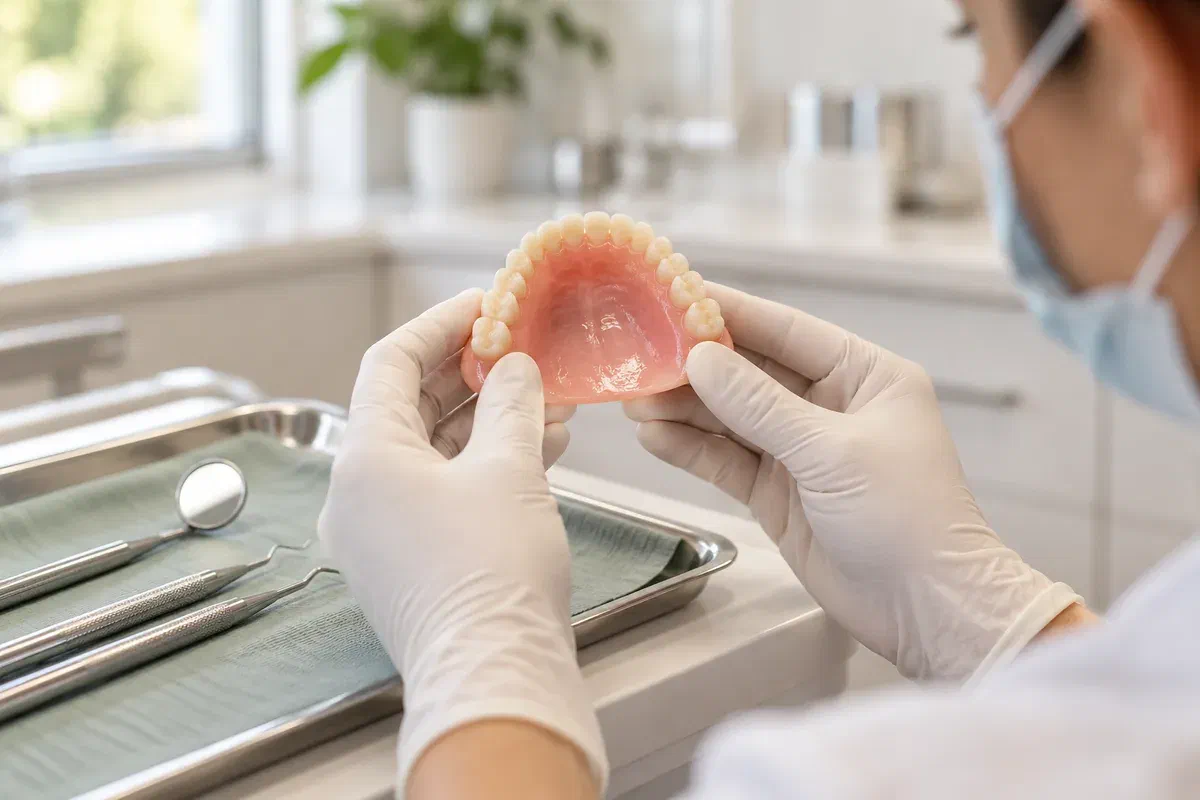
Describe the experience in your own words. A denture that stays put while resting may move during speech or chewing, and knowing which situations cause trouble helps the clinician choose what to examine.
Mention where it rubs and whether the problem arrived with a new denture or later on. The gum in that area and the section of the appliance over it are both examined before a decision is made about refining it.
You might feel one side contact first, or sense the denture slide as you close. Describe that. The bite and the denture’s stability are considered together, rather than reshaping a tooth only because the ache seems to sit nearby.
A denture can shift because of its fit, its design, the gums beneath it or a combination. It’s reasonable to ask whether a modest change is likely to help, or whether the fit as a whole needs another approach.
A sore that persists, a patch or lump, or a change in the mouth you can’t account for should be examined. Some symptoms under a denture have nothing to do with a pressure point.
When the assessment shows a localized cause suited to adjustment, the change may help the denture sit more comfortably or work better while eating and speaking. You should be told what is being altered and what response to expect.
Adjustments do have a ceiling. They can’t correct every problem with a denture that is worn, loose throughout, or not well matched to the mouth. If several changes haven’t made a difference, ask whether the underlying cause has been reviewed and whether another treatment could be more useful.
Patient information: Cambridge University Hospitals — denture care
A specific finding is what makes the adjustment purposeful. Removing material repeatedly without understanding how the appliance and the discomfort connect is a different, less helpful pattern.
The aim is to ease the problem while keeping fit, support and function that already work. Say which areas feel fine, not only the ones that hurt, especially if the trouble is limited to one spot.
Your review may show that an adjustment is sufficient, or that broader attention is needed. Seeing that difference early can save you repeated short-term fixes on a denture that needs another plan.
The appliance is checked both in your mouth and out of it. If wearing it has become painful, ask the clinic whether any preparation would help the visit.
Tell the team when the denture was made, any earlier adjustments and recent changes. Describe where you feel it, whether it shows up as you talk or eat, and any area you can no longer bear to have it press on.
The dentist reviews your mouth and the denture together, using appropriate methods to look at pressure, stability and contacts. This helps tell a local adjustment need apart from a wider problem with fit or the gums.
A specific spot may be eased, or another targeted change discussed. The impact on the whole appliance is considered, and if lab work or a different procedure makes more sense, the reasons are explained.
With the change made, the denture is reassessed and you can report how it feels while speaking and biting. Ask what to expect as a tender area settles, when to come back, and which symptoms call for a fresh look.
Changing the denture and healing a sore patch go hand in hand, but they aren’t the same. Follow the advice on wearing the appliance and caring for your gums, and arrange a review if discomfort continues.
Guidance can vary for a new denture, a mouth with recent extractions or a long-worn appliance. Ask what suits your case instead of borrowing someone else’s schedule.
Record whether the original problem has improved and whether anything new has come up while talking or eating. Notes help at review, but don’t keep provoking pain to test the result.
Continue the recommended cleaning and handle the appliance gently. If putting it in or cleaning it hurts, ask for advice rather than scraping the inside or trimming an edge at home.
Your mouth and your appliance shape the advice. These answers can help you get ready for an adjustment visit and understand what may follow.
Bring your denture and a short description of the problem to our Bronte Street practice. We will examine the tissues, the fit and the bite, and then discuss whether a targeted adjustment or a different option is appropriate.
If you have severe pain, a persistent sore or can’t wear the appliance, say so when you contact us so we can talk about timing and next steps.
