An edge that digs in
Point out where it presses and whether it began suddenly or built up gradually. The dentist compares the gum in that spot with the part of the denture that sits over it before deciding whether smoothing or refining makes sense.


A denture you have worn for years can start to feel different without any obvious reason. From Old Milton, bring it in for an adjustment review, where your gums, the appliance and the way your teeth close are looked at together before any change is made.
Plenty of people living around Milton’s historic downtown have worn the same denture for a long stretch. Then one day it catches on the cheek, or chewing on one side becomes a chore. An adjustment is a deliberate, limited change, made only after the dentist has watched how the appliance behaves in your mouth. The target could be a tight spot, a flange, or a contact between teeth.
Over time, gums, bone and the appliance all change, and not always at the same pace. So a tender area doesn’t automatically mean the denture needs trimming there. The supporting tissue, the overall seating, the bite and any wear on the teeth are all part of the picture, and removing material from the wrong place can make a denture feel looser.
Bring the denture to your visit, along with any older one you still keep, and describe where and when it hurts. With that information we can tell you whether a small refinement is reasonable or whether relining, repairing, replacing, or a different kind of care deserves a conversation.
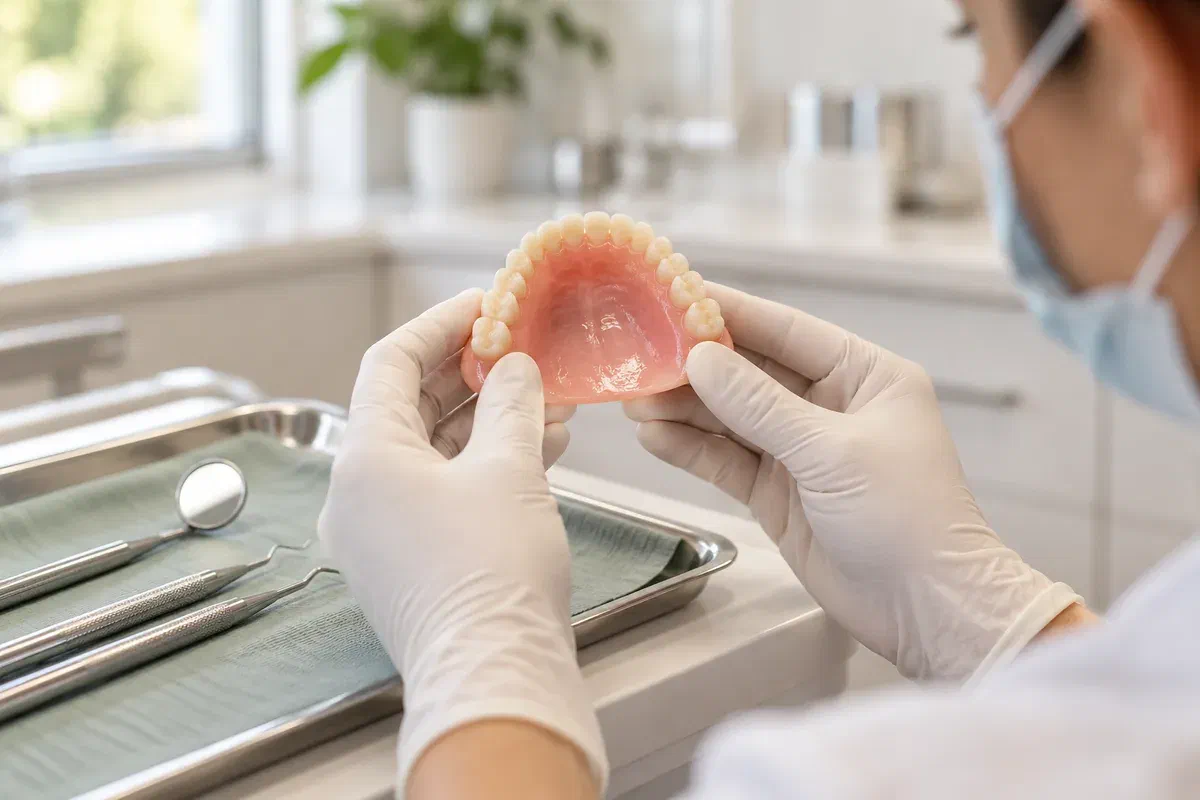
Think of it as reporting symptoms rather than naming a cause. Notice whether the trouble shows up at breakfast, during a long conversation, or only once the denture has been in for hours. Those patterns help decide which checks come first.
Point out where it presses and whether it began suddenly or built up gradually. The dentist compares the gum in that spot with the part of the denture that sits over it before deciding whether smoothing or refining makes sense.
Perhaps the back teeth on one side meet first, or the plate tips when you close. Say so plainly. Bite and stability are assessed as a pair instead of reducing a tooth simply because that is where the soreness seems to come from.
Looseness can come from fit, design, changes in the gums underneath, or several of these at once. Ask whether a minor adjustment is likely to help, or whether the way the appliance meets your mouth needs rethinking.
Any sore that lingers, a patch or lump you haven’t seen before, or an unexplained change in the mouth should be checked. A long-worn denture doesn’t mean every symptom beneath it is just a rub.
Where the exam finds a local cause that an adjustment can address, the denture may sit and work more comfortably afterward. Expect the clinician to tell you what is being modified and what kind of improvement is realistic.
Still, a refinement can only do so much. It won’t solve every issue with a denture that is heavily worn, generally loose or a poor match for your mouth now. If repeated tweaks haven’t brought relief, ask whether the bigger picture has been reassessed and whether a different treatment might work better.
Patient information: Cambridge University Hospitals — denture care
A definite finding is what makes an adjustment worthwhile. Trimming the appliance again and again without understanding why it hurts is a very different approach, and rarely a helpful one.
An older denture may still fit well in most places. Tell the dentist which parts feel fine as well as which don’t, so useful support and function are kept while the problem area is treated.
The visit can reveal that a refinement is all you need, or that the appliance needs wider work. Knowing which is true helps you avoid patching a denture that would be better served by another plan.
Your denture is examined in place and out of the mouth. If wearing it has become painful, call ahead and ask whether there is anything you should do before the appointment.
Tell us how old the appliance is, who made it if you know, past adjustments, and anything new in your mouth or health. Say where it hurts, when, and how it affects meals or speech, including spots you can no longer tolerate.
The dentist examines the appliance and your mouth together, using suitable techniques to judge pressure, stability, and how the teeth meet. That separates a local adjustment need from a wider fit or tissue issue.
A particular area may be eased, or another focused change suggested. Its effect on the whole denture is weighed, and if laboratory work or a separate procedure is the better route, you will hear why.
Once the change is made, the denture goes back in and you describe how it feels. Ask how long a tender spot might take to calm down, when to return, and which signs mean the plan should be revisited.
The adjustment itself and the healing of irritated gum are linked but not identical. Follow the guidance about wearing the denture and caring for your mouth, and arrange a review if discomfort carries on.
Someone with a new appliance, recent extractions, or a decades-old denture may each get different advice. Ask what applies to you rather than adopting a routine that worked for a neighbour.
Write down whether the first problem has improved and whether anything new has appeared. A brief note is handy at the review, but avoid testing the area over and over by pressing on it.
Keep to the cleaning routine you were given and avoid dropping the appliance. If inserting or cleaning it is painful, ask for help instead of scraping the inside or altering a border yourself.
Advice depends on your mouth and the appliance you wear. These answers may help you prepare for the visit and understand possible follow-up.
Bring your denture and a few notes about what has changed to our Bronte Street practice. We will examine your gums, how the appliance seats, and your bite, then explain whether a small adjustment or something else makes sense.
If the pain is severe, a sore isn’t healing, or you can’t wear the denture, mention it when you call so the next step can be talked through.
