An edge that still rubs
Point to the area and say whether it rubbed from the start or only later, and whether it has been smoothed at home. The dentist inspects that gum and the corresponding part of the appliance before any refinement.


Already tried a nail file, a dab of glue or some adhesive to get through the week? You’re not alone. From Puslinch, bring the denture in as it is, and we’ll examine the appliance, your gums and your bite before deciding what, if anything, should change.
Practical people solve problems themselves, and a denture that rubs invites a quick sanding job. The trouble is that a denture adjustment is meant to be a targeted change chosen after examining how the appliance fits and works. It may involve a pressure point, a border or a contact between teeth, and the right spot is not always the one that hurts.
A painful area can come from the gum, the general fit, the bite or the condition of the denture, often in combination. Taking material from the wrong place, at home or anywhere else, can create a new sore or loosen a plate that used to stay put.
So if you’re coming from Puslinch with an appliance that has already been filed, glued or bent, bring it in exactly as it is and tell us what was done. Bring it even if it now sits unused. We can then explain whether a limited adjustment is still possible, or whether a reline, repair, replacement or other care makes more sense.
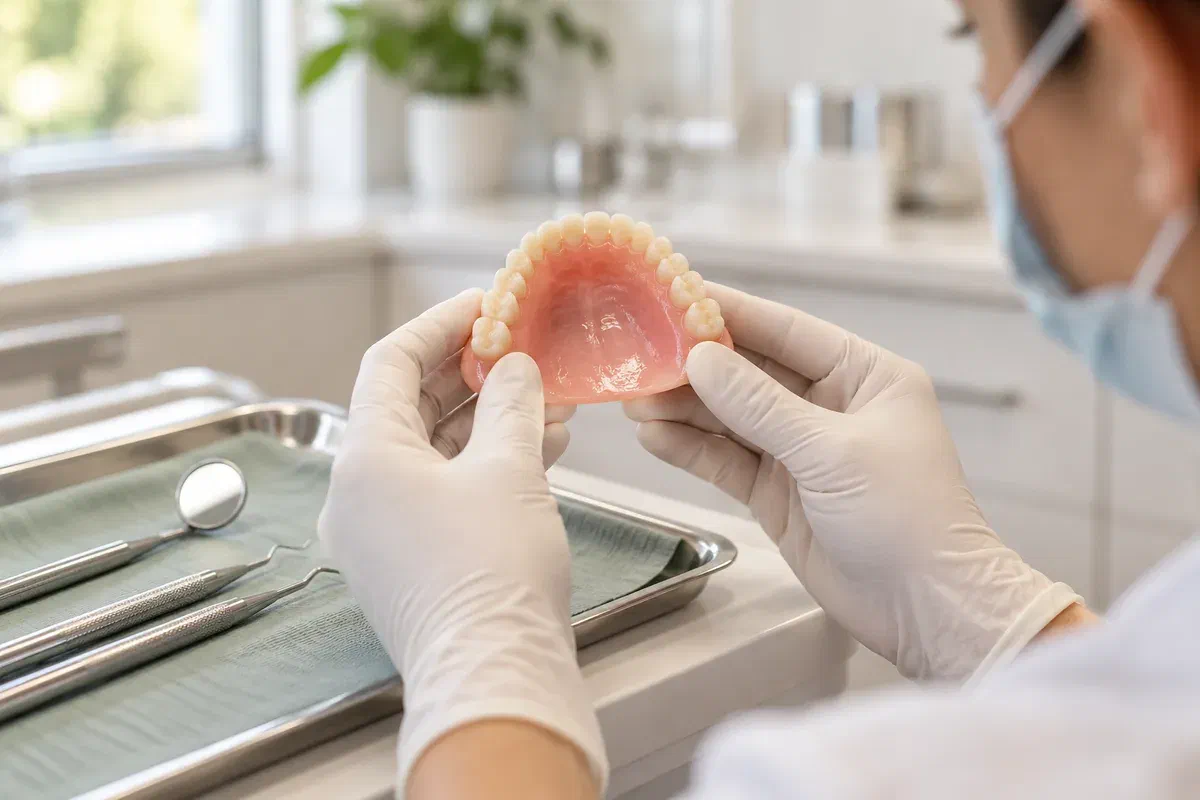
Explain the symptoms and any changes made to the denture since it was fitted. Mention whether discomfort shows up while you speak, chew or rest, because each pattern steers the exam differently.
Point to the area and say whether it rubbed from the start or only later, and whether it has been smoothed at home. The dentist inspects that gum and the corresponding part of the appliance before any refinement.
If a tooth was glued back or the plate was bent, the way the teeth meet may have shifted. Describe what feels different. Contacts and stability are judged together instead of grinding where the ache seems to be.
Movement can come from fit, design, the supporting gums or alterations made along the way. Ask whether a modest change can still help or whether the denture needs a different approach.
A sore that persists, a lump or patch, or an unexplained change in your mouth should be examined. Don’t treat every symptom under a denture as a pressure point to sand away.
When the exam identifies a localized cause that suits adjustment, a precise refinement may help the appliance sit and work more comfortably. The dentist should tell you what is being changed and why that area was chosen.
Some denture problems can’t be adjusted out, and home alterations can narrow the options. A worn, loose or unsuitable appliance needs more than a surface change. If earlier changes haven’t helped, ask whether the real cause has been reconsidered and whether a different treatment would work better.
Patient information: Cambridge University Hospitals — denture care
A refinement matters when it answers something the exam found. Shaving away a bit more every time it hurts, without knowing why, usually just moves the problem.
Useful areas of fit, support and function should be preserved. Mention which parts still feel right, so they aren’t disturbed while the trouble spot is treated.
The visit may show that an adjustment is enough, or that earlier alterations mean the denture now needs repair, relining or replacement. Knowing that early saves time and frustration.
The appliance is looked at in your mouth and in the dentist’s hands. If wearing it has become painful, call to ask whether any preparation would help.
Share when it was made, past professional adjustments and anything done at home. Describe where it hurts, when, and how eating or speaking is affected, including spots you can no longer tolerate.
With suitable methods, the dentist assesses pressure, stability and the bite, examining the appliance and your mouth together. Any earlier alterations are checked as part of this.
A specific area may be refined, or another targeted change discussed. If home changes or damage mean a lab repair or reline is wiser, the dentist explains why and what it involves.
You wear the denture again and say how it compares. Ask how long a sore may take to settle, when to return, and which signs would mean calling the clinic.
A refined denture and a healing gum recover on separate timelines. Follow the advice you’re given about wear and care, and book a review if discomfort doesn’t ease.
Advice for a new denture, a mouth after extractions or a long-used appliance can differ. Ask what fits your case rather than adapting someone else’s routine.
Note whether the original problem eased and whether anything new appeared. Those notes help at review. There’s no need to keep pushing on the area to see if it still hurts.
Follow the recommended cleaning and keep the denture somewhere it won’t be dropped or chewed by pets. If cleaning or inserting it hurts, call instead of reshaping it yourself.
Advice depends on your appliance and your mouth. These answers may help you prepare and understand what may follow.
Come to our Bronte Street practice with the denture and a quick account of what’s been tried. Once the gums, fit and bite have been examined, the dentist will explain whether a careful adjustment, a repair or another step suits you.
If there’s strong pain, a sore that won’t settle or you can’t wear the appliance, mention it when you call so we can discuss timing.
