It dug in along one side
Tell us roughly where and whether it did so from the beginning or only later. The gum in that region and the matching part of the appliance are both examined before a refinement is considered.


A denture that ended up in a drawer isn’t necessarily a lost cause. From Rockwood, bring it in so the appliance, the gums it rests on and the way your teeth close can be assessed together, and find out whether a careful adjustment could get it back into use.
It happens more often than people admit. A denture hurt, so it came out for a day, then a week, and now it lives in its case. An adjustment may be one way back. It means a focused change made after the dentist has examined how the appliance fits and works, and it could involve a pressure area, an edge or a bite contact.
Whether that’s enough depends on why it stopped being wearable. Gums can change shape while a denture is out of use, and the fit, the bite and the appliance itself may each be part of the story. Trimming the place that once hurt, without checking the rest, can leave the denture loose or sore somewhere new.
From Rockwood, bring the denture even if you haven’t worn it for months, and try to remember what made you stop. With that, we can explain whether a limited adjustment is a reasonable first step or whether relining, repairing, replacing the appliance or another kind of care would serve you better.
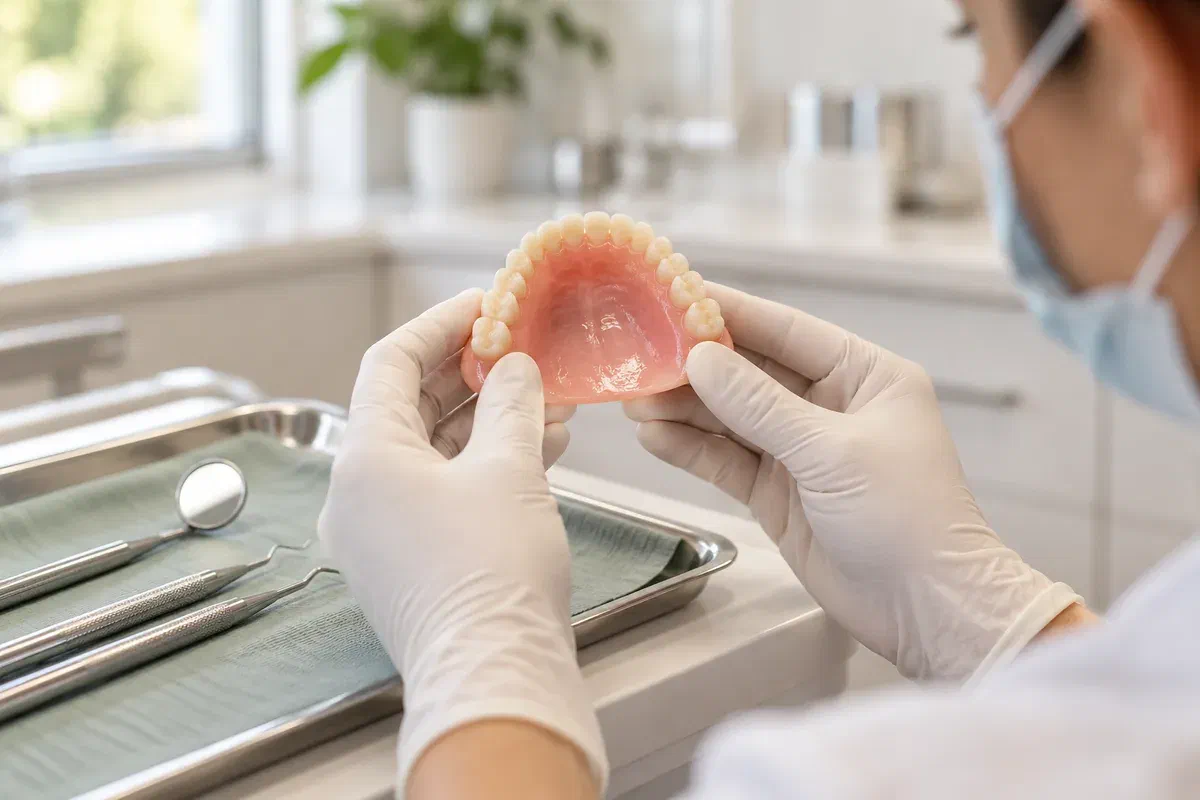
Think back to the problem in plain terms. Did it hurt while eating, feel loose when talking or ache just sitting in place? Those memories, however rough, help the dentist decide what to check first.
Tell us roughly where and whether it did so from the beginning or only later. The gum in that region and the matching part of the appliance are both examined before a refinement is considered.
If the teeth met unevenly or the plate rocked when you closed, describe it. The dentist looks at the bite and the denture’s stability as one question rather than reshaping whatever tooth sits nearest to the old sore.
Looseness can be about fit, design, gum changes during the months out of use, or a combination. Ask whether a modest change can realistically help or whether the denture needs a broader fix.
Have any sore that hasn’t healed, a new lump or patch, or a change you can’t account for examined. Time out of a denture doesn’t rule out other causes for symptoms in the mouth.
If the exam finds a localized cause suited to refinement, adjusting that area may make the denture comfortable enough to try again. The dentist should explain what is being altered and how much improvement is realistic.
Sometimes the honest answer is that a small change won’t be enough. A denture that is worn, no longer matches the gums or was never a good fit may need different treatment. If adjustments in the past didn’t help, ask whether the cause has been reconsidered and whether another option would be more effective.
Patient information: Cambridge University Hospitals — denture care
When a refinement is tied to something the exam found, it has a real chance of helping. Removing material in hope, without that link, rarely gets a denture back into daily use.
The aim is to ease the trouble spot while holding on to fit and function elsewhere. Mention what felt fine back then, as well as what didn’t.
The visit may show that an adjustment is a sensible starting point, or that a reline or new denture would be the better investment of your time.
The denture is examined in place and in hand. If trying it in has become painful, ask the clinic whether you should wear it before the visit at all.
Share when the denture was made, any adjustments it had, how long it has been out of use and anything that has changed in your mouth or health since. Describe what made wearing it difficult.
Using suitable methods, the dentist looks at pressure, stability and contacts with the appliance in place. Gums can change during months without a denture, so this is checked carefully.
A particular area may be refined, or another targeted modification discussed. If the fit has changed too much for adjustment alone, the dentist explains options such as a reline or lab work.
You wear the denture again and say how it feels. Ask how gradually to build up wearing time, when to come back, and which symptoms should prompt a call.
Getting used to a denture again takes some patience, and an adjusted area may still feel tender at first. Follow the dentist’s guidance on wearing time and care, and book a review if discomfort continues.
The right pace depends on your mouth, the appliance and how long it was out. Ask what suits you rather than jumping straight back into all-day wear.
Note whether the original problem has gone and whether anything new has come up. That record helps at review. Avoid wearing it through pain just to prove it works.
After months in storage, the appliance needs proper cleaning before and during use. Follow the recommended routine and ask for advice if insertion or cleaning hurts, rather than filing or scraping it.
Advice depends on the appliance and the current state of your mouth. These answers may help you prepare and know what follow-up could involve.
Bring the denture, however long it has been stored, to our Bronte Street practice. After checking your gums, the fit and the bite, the dentist will tell you whether a careful adjustment or another approach gives you the best chance of wearing it again.
Mention significant pain, a sore that won’t heal or difficulty keeping the appliance in when you call, so the next step can be discussed.
