It feels foreign as well as hard to manage
Struggling with handling can make an unfamiliar denture feel worse. Separate sensations that are only new from pain or trouble eating and speaking, so the dentist can decide whether the fit needs attention.


Stiff fingers, a tremor or fading eyesight can turn denture care into a daily struggle. Denture aftercare for Erin adapts handling and cleaning to what your hands can manage, and checks fit and comfort as you settle in.
Instructions given at a fitting often assume steady hands and good close-up vision. For many denture wearers, neither is a given. Aftercare is a chance to rework insertion, removal and cleaning so they fit your abilities, not the other way round.
Any adapted routine still has to respect your treatment stage. A denture fitted immediately after extractions has early rules about wearing and rinsing, while one made for healed gums follows a long-term plan. If you are not sure which you are on, ask before changing anything.
Show us what is hard and what you can already do. The visit can include checking the fit, trying alternative handling methods and deciding whether further assessment is needed. Persistent pain or a sore that keeps returning deserves attention, never silent endurance.
Think about the moments when things go wrong: gripping the denture, seeing whether it is clean, lining it up in your mouth. Describe them, or bring the person who helps you, so the advice fits real life.
Struggling with handling can make an unfamiliar denture feel worse. Separate sensations that are only new from pain or trouble eating and speaking, so the dentist can decide whether the fit needs attention.
Tell the team about arthritis, weakness, shaking or low vision at the outset. They can demonstrate alternative holds and set-ups, and include a family member or caregiver in the explanation if you wish.
Ask when to take the denture out, where to keep it and whether extractions change the first period. A simple, written schedule may be easier to follow than remembering verbal instructions.
When surgery accompanied your denture fitting, the treating clinician’s postoperative directions and contact plan come before any general handling tips described here.
Living with a denture shows you exactly where the routine breaks down. A review looks at your mouth and the appliance together, so a handling struggle is not confused with a fit problem, and vice versa.
Settling in takes a different time for everyone. The appliance, your earlier experience, healing, dexterity and general health all affect it. Ask what progress is realistic and what should bring you back sooner than planned.
Patient information: Guy’s and St Thomas’ — getting used to dentures
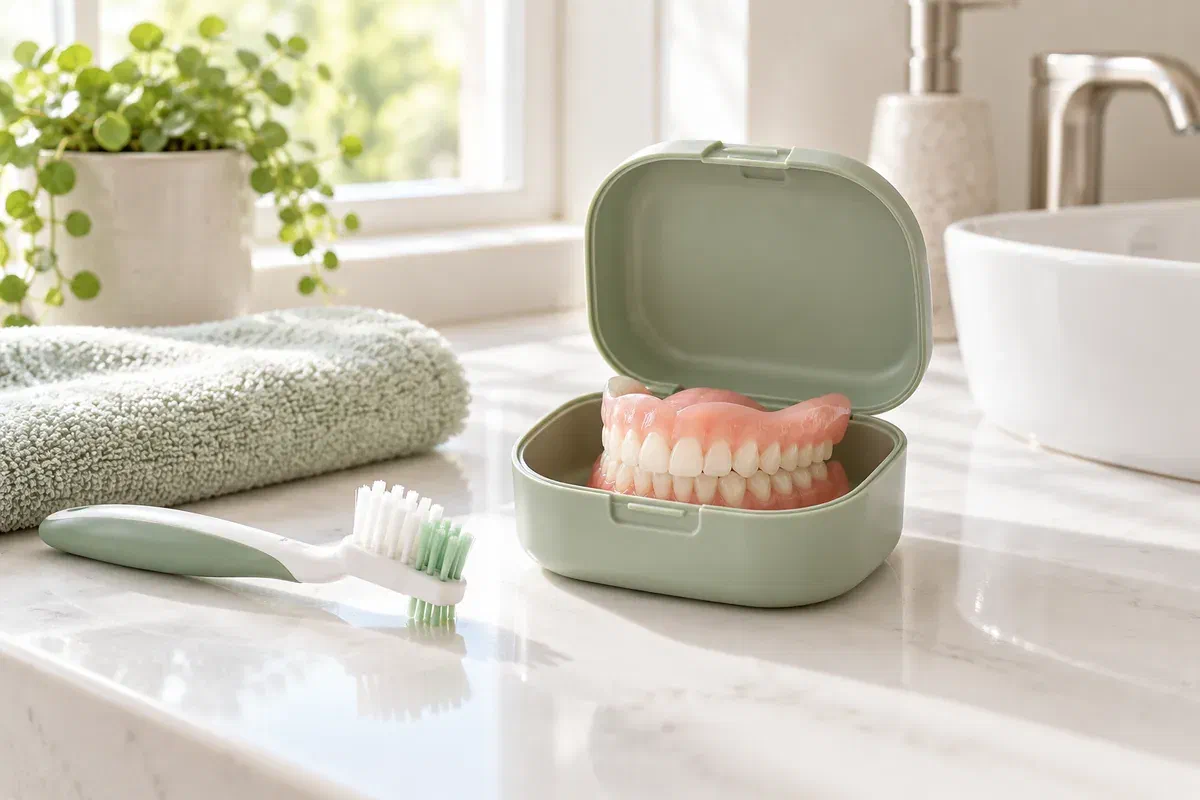
Bring your denture, case, brush and cleaner. The team can try different grips, brush types and working positions with you and suggest storage that is easy to reach and open.
A sore point, an uneven bite or a loose feel can make handling harder. Review allows the dentist to decide whether an adjustment or another step would help.
Gums keep changing, especially after extractions, and so can your hands. Ask about likely review points and whether a reline or replacement might be considered later.
The review centres on your experience since fitting. Showing us how you handle the denture is often more useful than describing it, and no diagnosis is expected from you.
Describe wearing time, problem foods or sounds, and any soreness. Mention extractions, health conditions that affect your hands or eyesight, and any instruction you have been unable to follow.
The dentist checks your gums, the fit and the bite. That helps distinguish adaptation from pressure, a healing issue or another concern needing treatment.
You may try a new way to insert, remove or clean the appliance, receive updated advice or have an adjustment. Any additional procedure is explained, including how it fits your plan.
Agree on the routine, the next appointment and the warning signs to watch for. Ask for large-print or written instructions if that makes them easier to use.
Care involves both the appliance and your mouth. Follow surgical instructions first, then the regular wearing, cleaning and storage plan the dentist recommends.
Begin with soft foods and the chewing technique you were shown, and read aloud for short spells. If eating or talking stays difficult, raise it at your review so the fit and tooth arrangement can be looked at.
Sit down to clean if that feels steadier, with a towel or a bowl of water beneath you and good lighting. Use a case that is easy to open, and never leave the denture in tissue or near pets.
Use fluoride toothpaste on remaining teeth, perhaps with a brush that has a thicker handle. Denture cleaners are only for the appliance, not for use in your mouth.
Nobody should feel embarrassed about needing a different approach. These answers address common questions from people who find handling difficult.
Arrange a visit at our Bronte Street practice so we can see how handling is going in practice. Bring the denture, the brush and case you use, and anyone who helps you at home.
Call about significant pain, a sore that keeps coming back or worries following an extraction. The team will help you decide whether to be seen earlier.
